Forget charging cables and battery anxiety. Scientists at Northwestern University have developed a new fuel cell that powers itself using the most abundant resource on Earth: dirt.
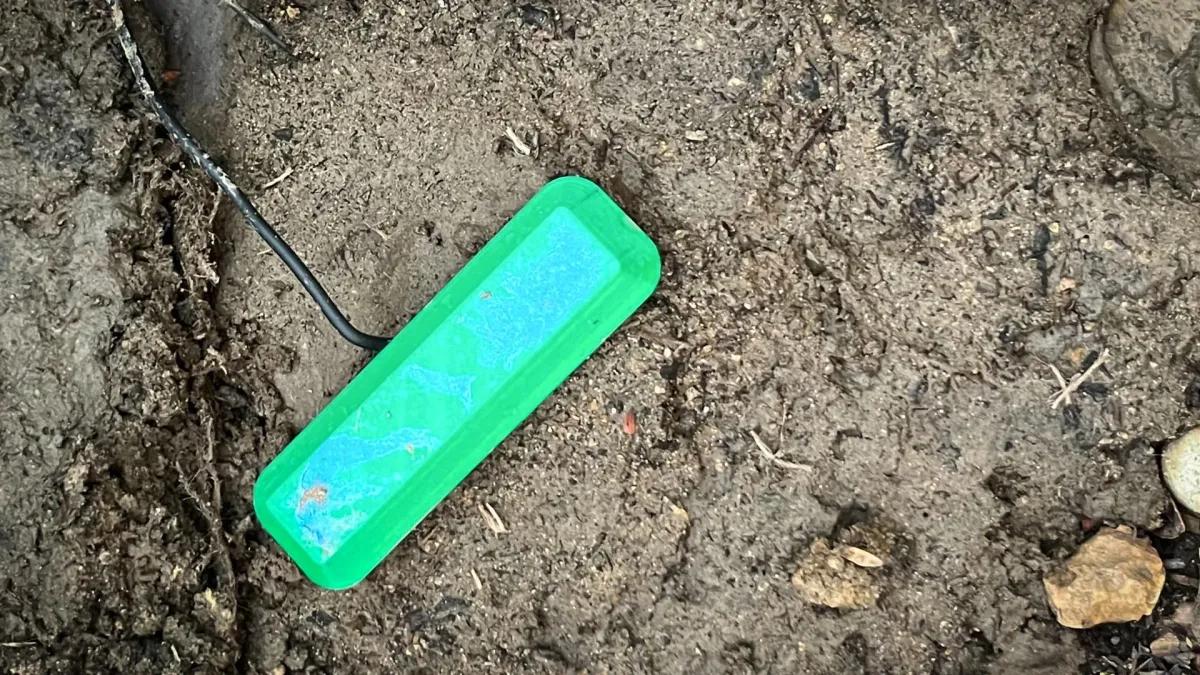
Measuring about the size of a paperback book, this microbial marvel harnesses electricity from the tiny organisms in soil as they break down organic matter. Think of it as a miniature, perpetually hungry power plant, quietly humming beneath your feet.
Powering the Unseen
This isn't about powering your smart home, or even your phone. This is for the unsung heroes of the digital age: underground sensors. These little workhorses are crucial for everything from precision farming (telling farmers exactly when to water or fertilize) to environmental monitoring (tracking everything from soil moisture to wildlife movement).
We're a new kind of news feed.
Regular news is designed to drain you. We're a non-profit built to restore you. Every story we publish is scored for impact, progress, and hope.
Start Your News DetoxAnd unlike traditional batteries, which are a toxic cocktail of heavy metals, complex supply chains, and eventual e-waste, this dirt-powered system is a breath of fresh air. Or, more accurately, a gulp of fresh soil.
The team even demonstrated its prowess by powering sensors that measure soil moisture and detect touch. That touch sensor could, theoretically, tell you when a badger just strolled through a field. Because apparently that's where we are now.
The device performed admirably in a range of conditions, from parched earth to flooded fields, and lasted an impressive 120% longer than similar systems. It even sends data wirelessly, reflecting existing radio signals to conserve energy. Clever.
The Immortal Battery (Almost)
Bill Yen, who led the research, pointed out that the world is drowning in Internet of Things (IoT) devices, and we desperately need alternatives to lithium and other heavy metals. Enter the soil microbial fuel cell.
These cells use specific microbes to munch on soil, releasing a tiny but consistent trickle of electrons. That's your electric current, right there. And the best part? "As long as there is organic carbon in the soil, the fuel cell could last forever," Yen explained. Let that satisfying thought sink in.
George Wells, a senior author, put it plainly: these microbes are everywhere, and simple engineering can capture their electricity. It won't light up cities, but it's perfect for low-power, remote devices.
A Century in the Making
Microbial fuel cells aren't exactly new; they've been around since 1911. But for over a century, they've been, well, a bit finicky. They need both moisture and oxygen, which is a tricky balance to maintain underground, especially if things dry out.
The Northwestern team spent two years tweaking and testing, ultimately landing on a crucial design change: instead of placing the anode and cathode side-by-side, they positioned them perpendicularly. The carbon felt anode lies flat in the moist soil, while the conductive metal cathode stands vertically, reaching for the surface.
This ingenious setup solves the age-old problems. The top of the cathode gets air for oxygen, while the bottom stays hydrated in the soil. A cap keeps debris out, and a clever air chamber ensures airflow. Even floods don't stop it; a waterproof coating keeps the cathode working, and its vertical design helps it dry out slowly after the water recedes.
The final prototype generated 68 times more power than its sensors needed, even in moderately dry soil. That's robust enough for actual farms and wild environments. Next up, the team is working on fully biodegradable versions, aiming to ditch complex supply chains and conflict minerals altogether. Because if you can power it with dirt, why not make it disappear back into it, too?
It's not about powering your house, but it's a quiet revolution for the tiny tech that underpins our world. And if that's not enough to make you want to tell someone, I don't know what is.