Researchers at Trinity College Dublin have figured out how to coax diffuse light—from the sun, a lamp, even an LED—into behaving like laser light. The discovery could eventually mean capturing more electrical energy from solar panels, or powering microscopic devices directly from radiation.
The mechanism is called photon condensation. When light gets trapped in a tiny optical device, something unexpected happens: individual photons start acting collectively, like a crowd moving in unison. Their energy concentrates into a single, intensely pure beam—essentially creating laser-like light from messy, scattered input.
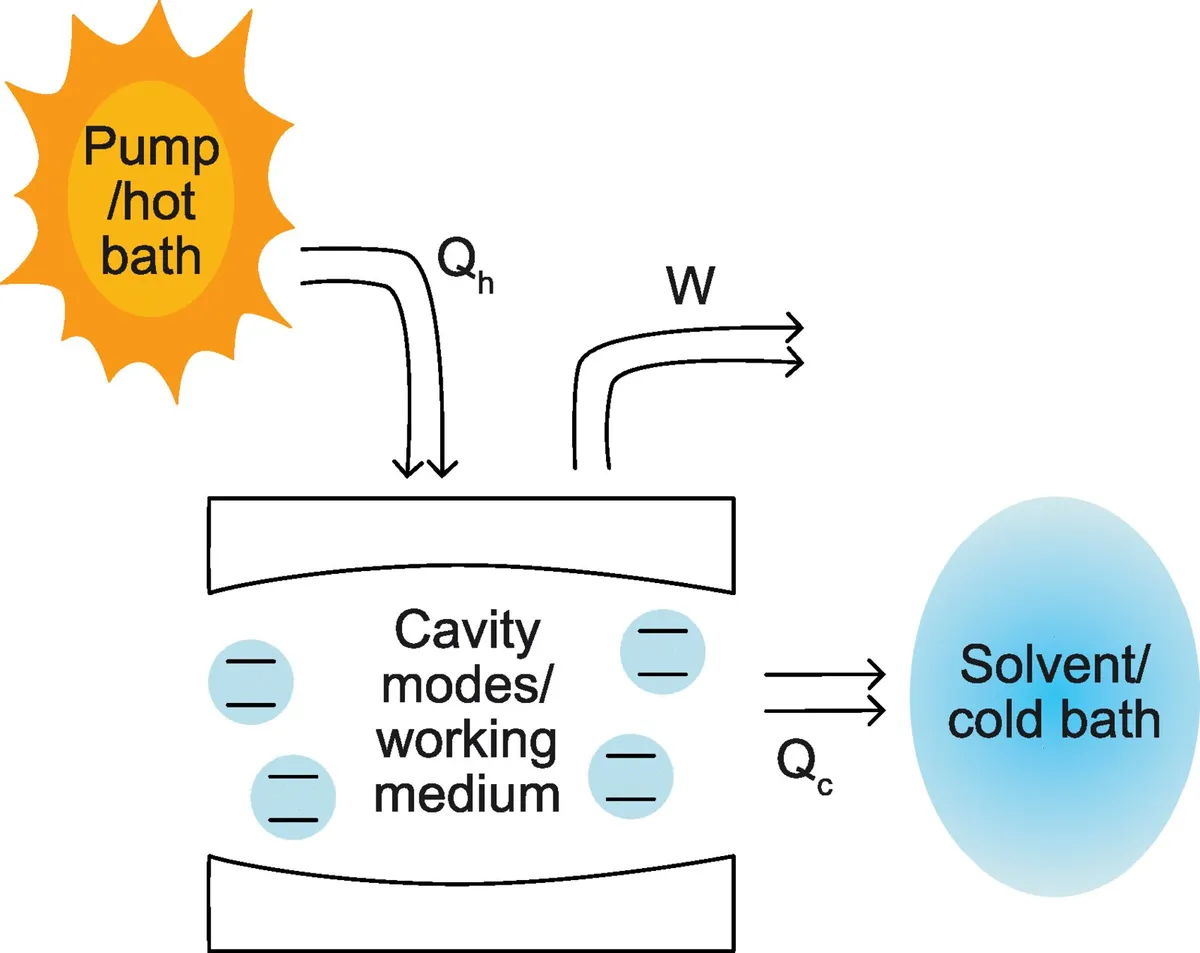
Until now, scientists thought this only worked if you fed the system already-concentrated energy (like an actual laser). Paul Eastham, a physicist at Trinity, and his team modeled what happens inside these light-trapping devices and realized the physics was identical to heat engines—machines that take disorganized energy and turn it into something useful. "The behavior is related to the general properties of heat engines," Eastham explains. "Machines that convert disorganized energy, which we call 'heat,' into a useful form, which we call 'work.'" That realization suggested the same condensation could work with diffuse sources.
We're a new kind of news feed.
Regular news is designed to drain you. We're a non-profit built to restore you. Every story we publish is scored for impact, progress, and hope.
Start Your News DetoxWhy this matters
Laser-like light is easy to convert into electricity or use to power tiny machines. If you could generate it from sunlight instead of requiring a laser as input, you'd have a new tool for solar energy capture. Current solar cells are already pretty efficient, but there's always waste—heat that escapes unused. A device that could convert that scattered heat energy into concentrated light might unlock gains that have seemed stuck for years.
Luísa Toledo Tude, who led the research, is careful not to oversell what's still theoretical. "The next step is to test this in a lab setting," she says. "It's important not to over-speculate at this point." But she sees genuine potential: this work could influence how the next generation of optical devices channels light energy at the quantum level, from solar cells to microscopic engines powered by radiation.
The physics is sound. Now comes the harder part—building something that actually works.