Physicists just demonstrated something that shouldn't work: they've altered a material's superconductivity without applying heat, pressure, magnetic fields, or even shining a light on it. Instead, they simply stacked two materials together in just the right way.
The breakthrough, published in Nature by a team at Columbia University led by Itai Keren, suggests that quantum properties—the weird, powerful behaviors that emerge at the atomic scale—can be engineered into materials before they're even made, rather than coaxed out afterward through external manipulation.
How you build an invisible cavity
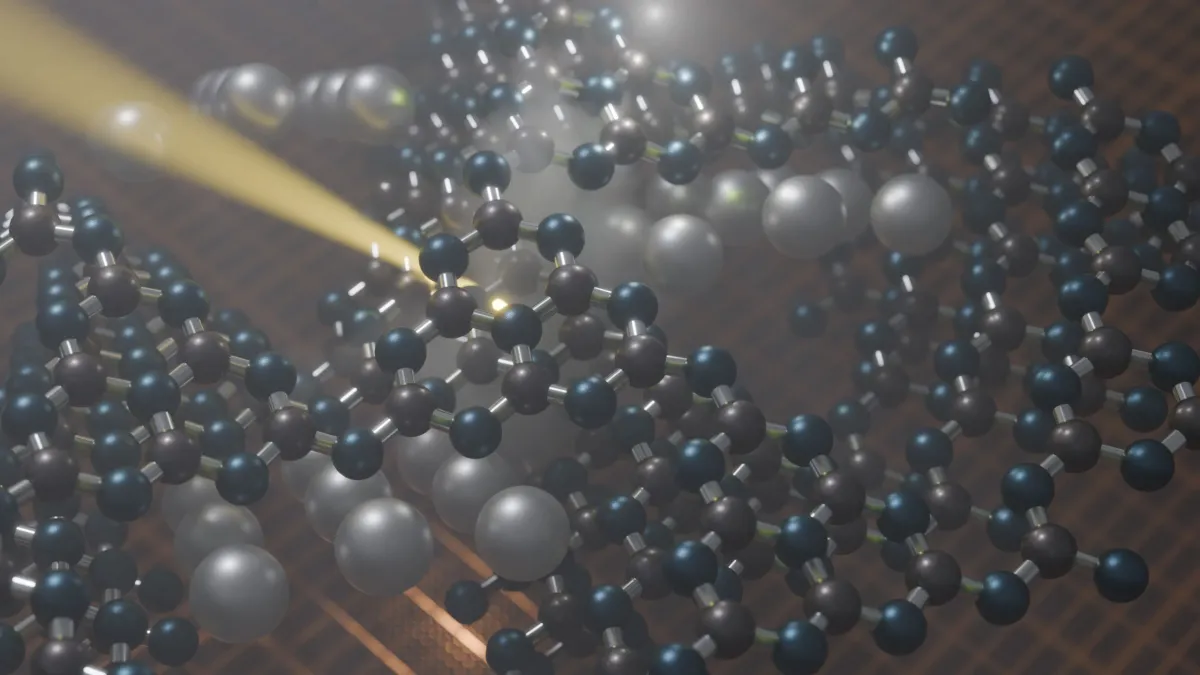
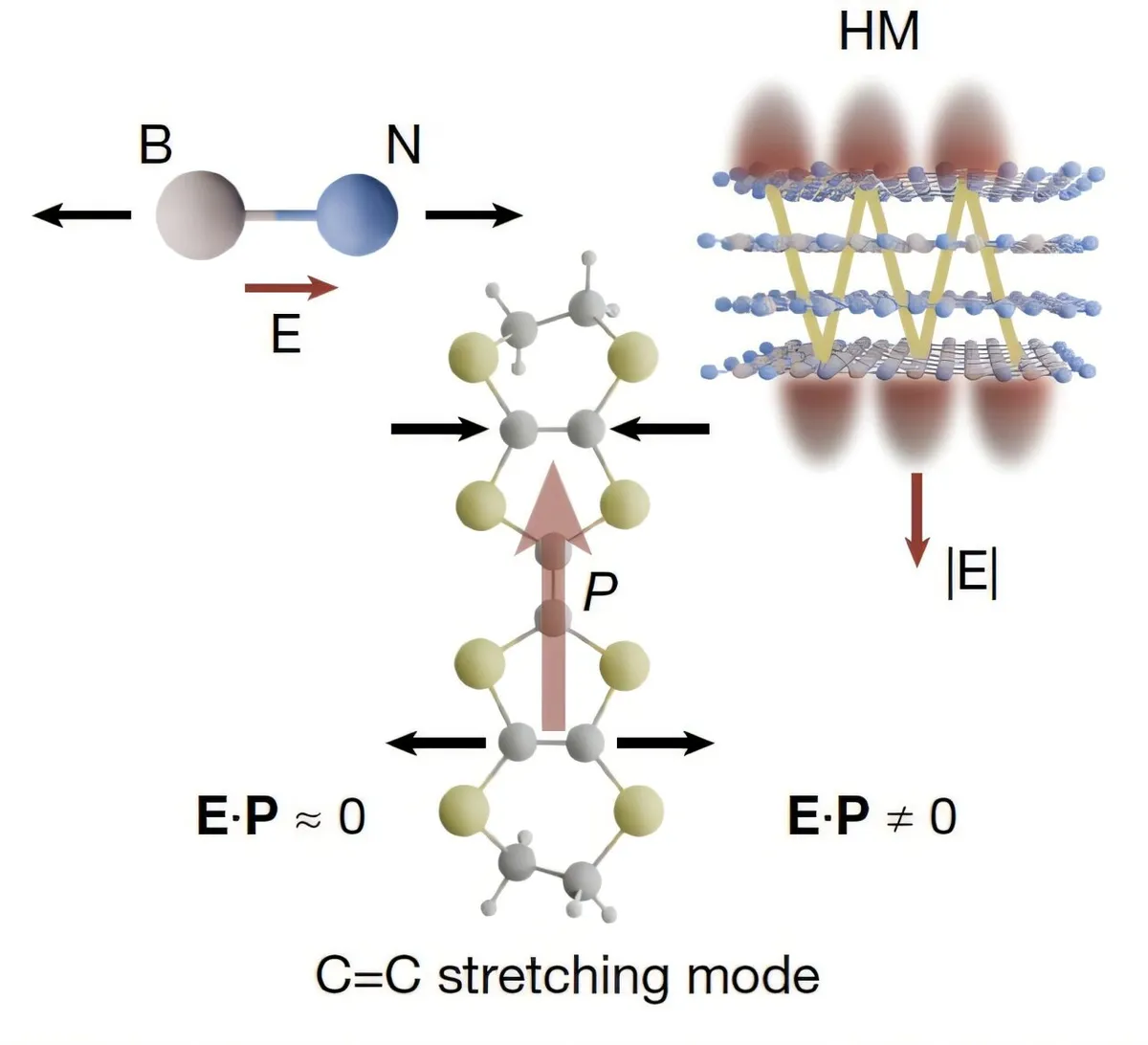
Here's where it gets interesting: the team started with hexagonal boron nitride (hBN), a crystal made of atom-thin sheets stacked like a microscopic lasagna. The sheets are held together loosely by van der Waals forces—essentially the quantum equivalent of sticky notes. Within this material, infrared light naturally bounces around and couples with vibrations in the atomic lattice, creating a hybrid light-matter excitation that gets trapped inside the slab. Effectively, they'd created an invisible cavity that confines light at specific frequencies, all without mirrors or external equipment.
We're a new kind of news feed.
Regular news is designed to drain you. We're a non-profit built to restore you. Every story we publish is scored for impact, progress, and hope.
Start Your News DetoxThen they placed this hBN sheet on top of a molecular superconductor—a compound made of large carbon-based molecules arranged in conducting layers. Here's the crucial part: the carbon-carbon bonds in those molecules naturally vibrate at infrared frequencies, and those vibrations are known to help superconductivity emerge in the first place.
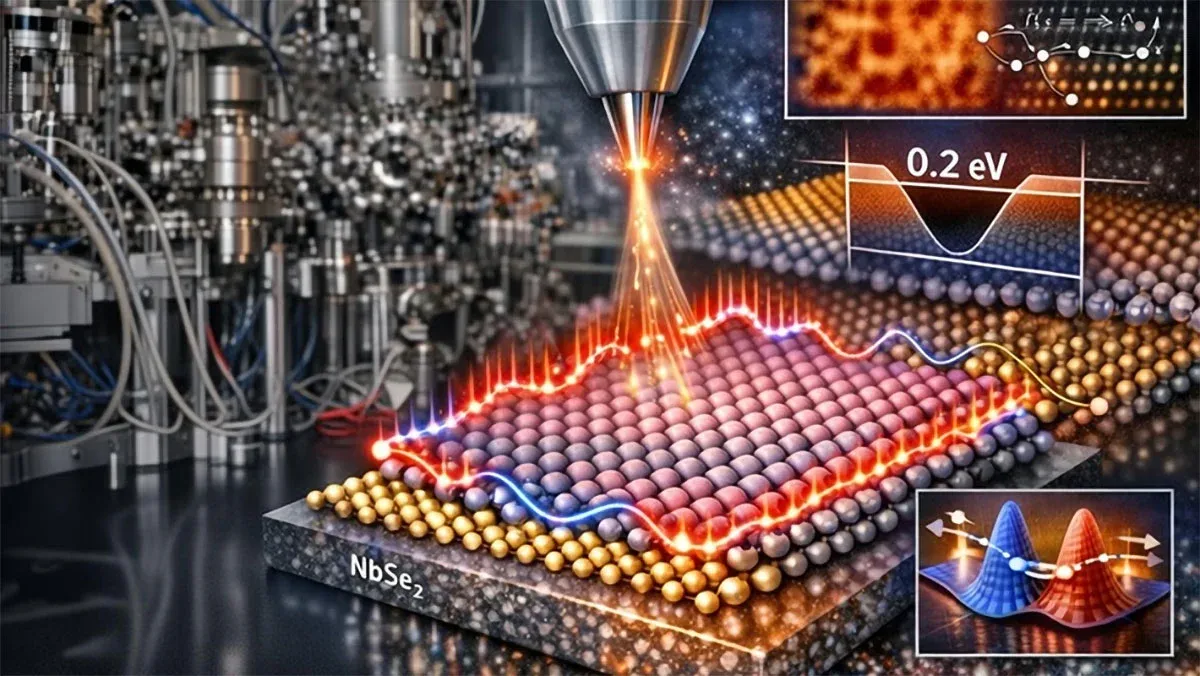
When the two materials touched, something unexpected happened. The infrared modes from the superconductor resonantly coupled with the confined modes of the hBN cavity. The local electromagnetic environment at their interface got reshaped. And the superconductor's superfluid density—a measure of how well it conducts electricity without resistance—dropped noticeably. All of this happened in complete darkness. No external laser. No tweaking from outside.
Why this matters beyond the lab
Most quantum materials we've studied so far are temperamental. To get them to do interesting things, you have to constantly adjust their external conditions: cool them down, apply pressure, turn up a magnetic field. It's like having a finicky instrument that only works when you're actively playing it.
What Keren's team has shown is that you can bake quantum behavior directly into a material's structure—into its "vacuum environment," as physicists call it. You design the right materials, stack them in the right way, and the quantum properties you want emerge naturally. You're not tuning the instrument anymore; you're building a better one.
This opens a path toward materials engineered from the ground up with specific quantum properties already encoded into their design. Instead of discovering a material works and then trying to optimize it, you could design the optimization in from the start. For superconductors—materials that could revolutionize power grids, transportation, and computing if we could make them practical—this could mean finding new ways to enhance their performance without the constant need for external control.
The next question is obvious: what other quantum properties can be engineered this way. If superconductivity responds to this kind of cavity coupling, what about magnetism, or charge ordering, or other exotic quantum behaviors waiting to be discovered.