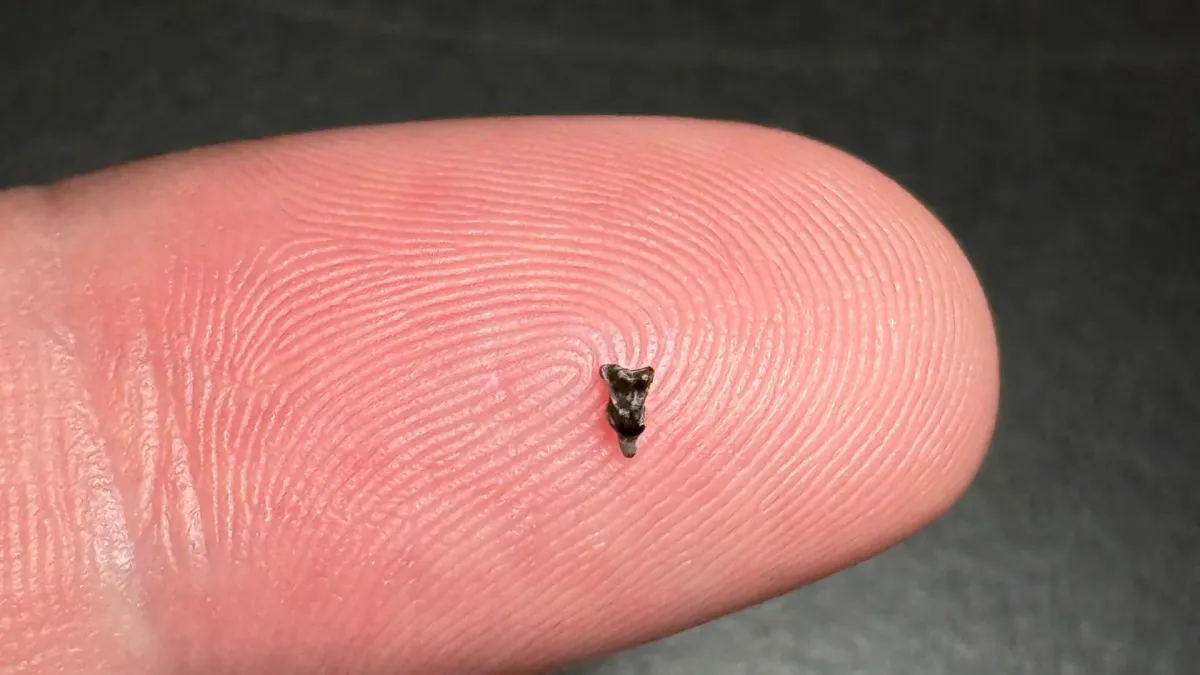
Teeth smaller than a baby's fingertip have just rewritten the map of primate origins. Paleontologists working in Colorado's Denver Basin have found the southernmost fossils ever discovered of Purgatorius—the earliest-known ancestor of all primates, including humans—pushing the geographic range of this shrew-sized mammal 400 miles further south than anyone thought possible.
For decades, scientists knew Purgatorius existed shortly after the asteroid wiped out the dinosaurs 66 million years ago. But the fossil record kept telling the same story: this tree-dwelling creature lived in Montana and parts of Canada, and nowhere else. Meanwhile, other early primate relatives showed up in the American Southwest—but roughly two million years later. That gap bothered paleontologists. Either Purgatorius never made it south, or we simply hadn't found the evidence.
The answer, it turns out, was hiding in plain sight. For nearly 150 years, fossil hunters in the American West relied on surface collecting—spotting larger bones and teeth visible to the naked eye. Anything smaller got overlooked. When Dr. Stephen Chester's team at Brooklyn College decided to look harder, they brought in an intensive screen-washing technique: researchers painstakingly sifted through tons of sediment, washing and sorting by hand. The work was tedious and unglamorous. But it worked.
We're a new kind of news feed.
Regular news is designed to drain you. We're a non-profit built to restore you. Every story we publish is scored for impact, progress, and hope.
Start Your News DetoxThe team, supported by a nearly $3 million National Science Foundation grant, eventually uncovered several Purgatorius teeth at the Corral Bluffs study area in Colorado's Denver Basin. These weren't just any teeth—they showed a unique combination of features that suggests they might belong to an even earlier species than the ones already known. "The specimens have characteristics we haven't seen before," notes Dr. Jordan Crowell, a postdoctoral fellow on the team. "We're waiting for more material to confirm whether we've found a new species."
What makes this discovery particularly significant is what it reveals about how life recovered after the dinosaurs vanished. Scientists once suspected that widespread forest destruction from the asteroid impact might have prevented Purgatorius from spreading south. But paleobotanists had already shown that plants bounced back quickly across North America. So why hadn't anyone found Purgatorius fossils in Colorado until now?
The answer points to a broader lesson in paleontology: absence of evidence isn't evidence of absence. Our understanding of deep time is fundamentally shaped by where we look and how hard we look. By using a more systematic approach—one that captures the tiniest specimens—researchers are discovering that early primates spread and diversified much faster after the mass extinction than the fossil record had suggested. The geographic distribution of Purgatorius tells us that our earliest ancestors were adaptable, mobile, and quick to colonize new territory in a world transformed by catastrophe.
This shift from surface collecting to intensive screening represents a quiet revolution in paleontology. As Dr. Chester puts it: "Small fossils can easily be missed. With more intensive searching, we will undoubtedly discover many more important specimens." In other words, the story of our origins isn't finished being written. We're just finally learning how to read the parts we'd overlooked.