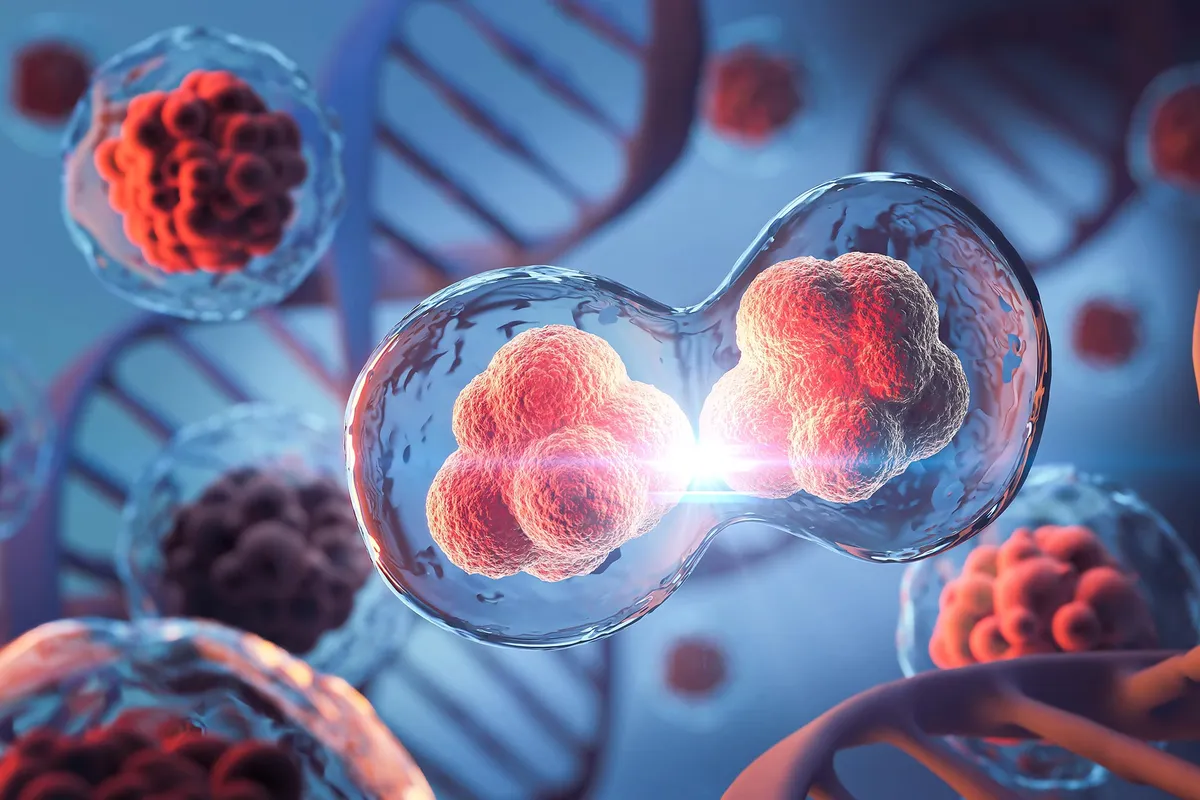
For decades, biology textbooks have taught the same story about how cells split in two: a protein ring tightens around the cell's middle like a drawstring, squeezing until it separates into two. It's elegant, it's simple, and it works for most cells.
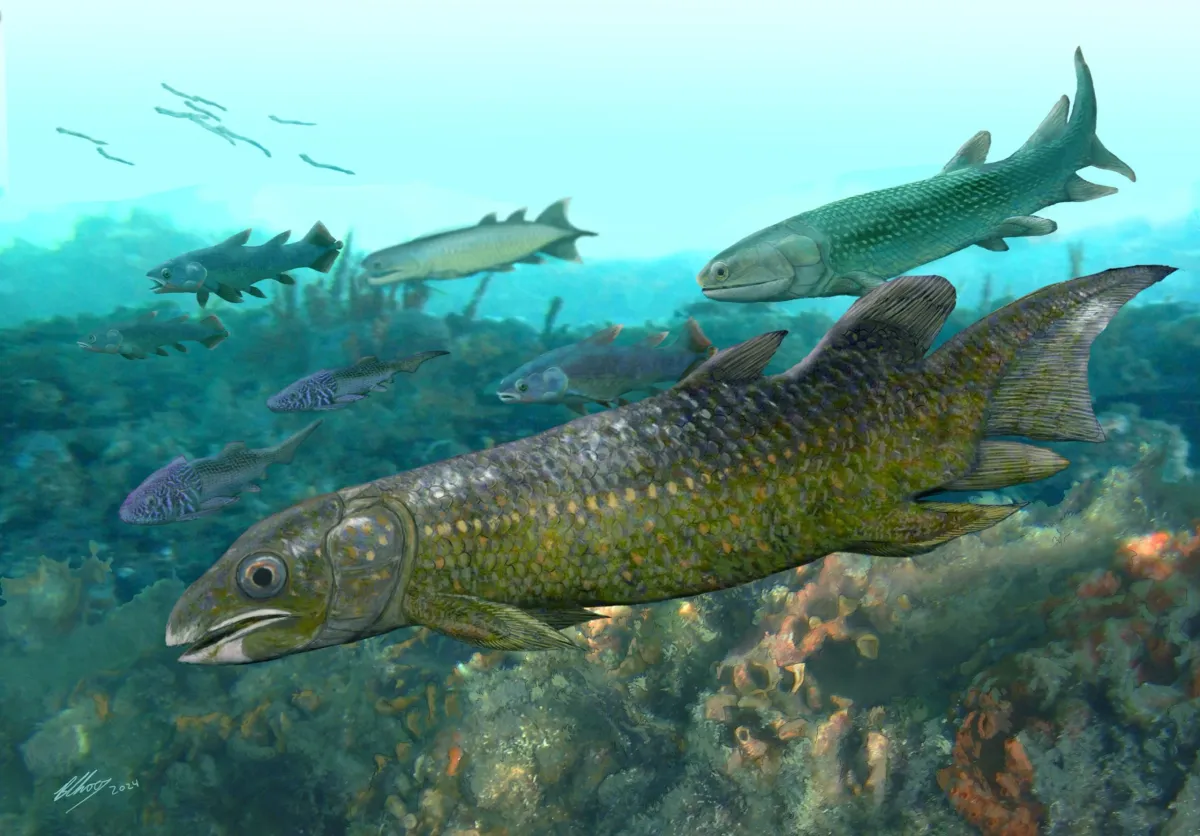
But it doesn't work for zebrafish embryos, shark eggs, or platypus cells — which are so massive and yolk-heavy that a contractile ring can't fully close around them. For years, researchers couldn't explain how these oversized cells managed to divide at all.
Now, scientists at Dresden University of Technology have discovered they don't need a complete ring. Instead, these giant embryonic cells use a mechanical ratchet — a back-and-forth cycle of stiffening and softening — to gradually squeeze themselves apart over multiple division cycles.
We're a new kind of news feed.
Regular news is designed to drain you. We're a non-profit built to restore you. Every story we publish is scored for impact, progress, and hope.
Start Your News DetoxThe Problem With Size
Alison Kickuth, a recently graduated PhD student, was studying zebrafish embryos when she decided to cut through the actin band (the protein structure that normally drives division) using a laser. She expected it to collapse. It didn't. The band kept moving inward even after being severed, which meant it wasn't relying on its own tension alone.
That's when the team realized microtubules — another part of the cell's internal skeleton — were holding the band in place. When they chemically disabled these microtubules in separate experiments, the actin band fell apart. The microtubules weren't just supporting the structure; they were essential to it.
But there was still a puzzle. The cytoplasm (the cell's interior) changes dramatically during division. During certain phases, it stiffens up. During others, it becomes more fluid. How could the actin band stay stable through these shifts?
The Temporal Ratchet
Using magnetic beads to measure cytoplasmic stiffness at different stages, the team discovered the answer: the cell doesn't divide all at once. Instead, the actin band makes tiny incremental progress during the fluid phases, then gets re-stabilized when the cytoplasm stiffens again. This cycle repeats over several rounds of cell division — each time advancing the band a little further — until the cell finally splits completely.
It's like a mechanical ratchet: one direction of motion is locked in, while the reverse motion is released. In this case, the cell harnesses the natural rhythm of its internal stiffness to drive division forward, even when the conventional machinery can't function.
"The temporal ratchet mechanism fundamentally alters our view of how cytokinesis works," said Jan Brugués, the study's corresponding author. The finding, published in Nature, suggests this mechanism may apply broadly across species with yolk-rich embryos — anywhere the standard contractile ring simply won't fit.
This discovery does more than solve a textbook mystery. It reveals that cells can accomplish major tasks through temporal control — coordinating the timing of physical changes rather than relying on a single, permanent structure. That insight may reshape how scientists understand other cellular processes that have long seemed inexplicable.