A student researcher in Japan was working on something entirely different when he spotted it: a Portuguese man o' war in a shade of cobalt blue he'd never seen before in Sendai Bay. Yoshiki Ochiai scooped it into a ziplock bag, hopped on his scooter, and brought it back to the lab. What he'd found was a species no one had documented before.
The discovery, published in Frontiers in Marine Science in October 2024, has been named Physalia mikazuki — the "crescent helmet man-o-war" — a tribute to Date Masamune, a Japanese samurai whose helmet bears a crescent moon symbol. The team at Tohoku University, led by Professor Cheryl Ames, spent months examining the creature's morphology and running DNA analysis to confirm what Ochiai had intuited: this was genuinely new to science.
The real puzzle came next. How did a tropical creature end up in the waters off Japan? Lead researcher Chanikarn Yongstar explained the challenge: "It was a very involved process recording all the unique body structures that distinguish it from the other four species of Physalia." The team needed to trace not just what the jellyfish was, but where it came from.
We're a new kind of news feed.
Regular news is designed to drain you. We're a non-profit built to restore you. Every story we publish is scored for impact, progress, and hope.
Start Your News DetoxTracking an Ocean Traveler
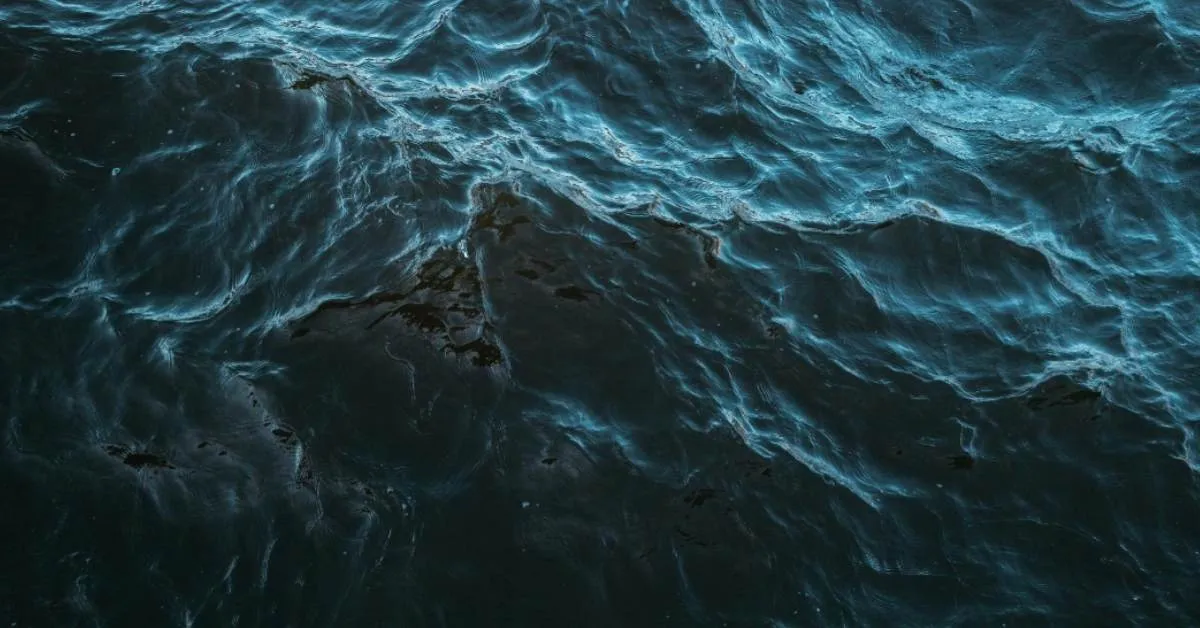
Kei Chloe Tan, who led the DNA work, and student researcher Muhammad Izzat Nugraha tackled this question with particle simulations — essentially dropping virtual beach balls into ocean current models and watching where they drifted over weeks and months. The simulations revealed a plausible path: warm water from the Kuroshio Current, flowing from the south, could have carried the creature northward from Sagami Bay all the way to where Ochiai found it. "All the beach balls essentially made a trail from Sagami Bay up to right where we found the crescent helmet man-o-war," Nugraha said.
What makes this discovery worth attention isn't just that a new species exists — it's what it reveals about how ocean life moves. Climate patterns shift, currents change, and creatures that have never been seen in a region suddenly appear. This particular jellyfish is technically not a jellyfish at all, but a siphonophore: a colony of individual organisms working in concert, each with its own function. It's a reminder that the ocean remains far less catalogued than we might assume.
Student researcher Ayane Totsu put it simply: "These jellyfish are dangerous and perhaps a bit scary to some. But they're also beautiful creatures that are deserving of continued research and classification efforts." The team's work suggests there's still plenty of ocean left to explore — even in well-studied regions — if you're paying attention.