Turns out, our ancestors might have been way ahead of us on the whole cremation thing. New evidence from Ethiopia suggests humans were burning their dead as far back as 100,000 years ago. Yes, a hundred millennia. Let that satisfying number sink in.
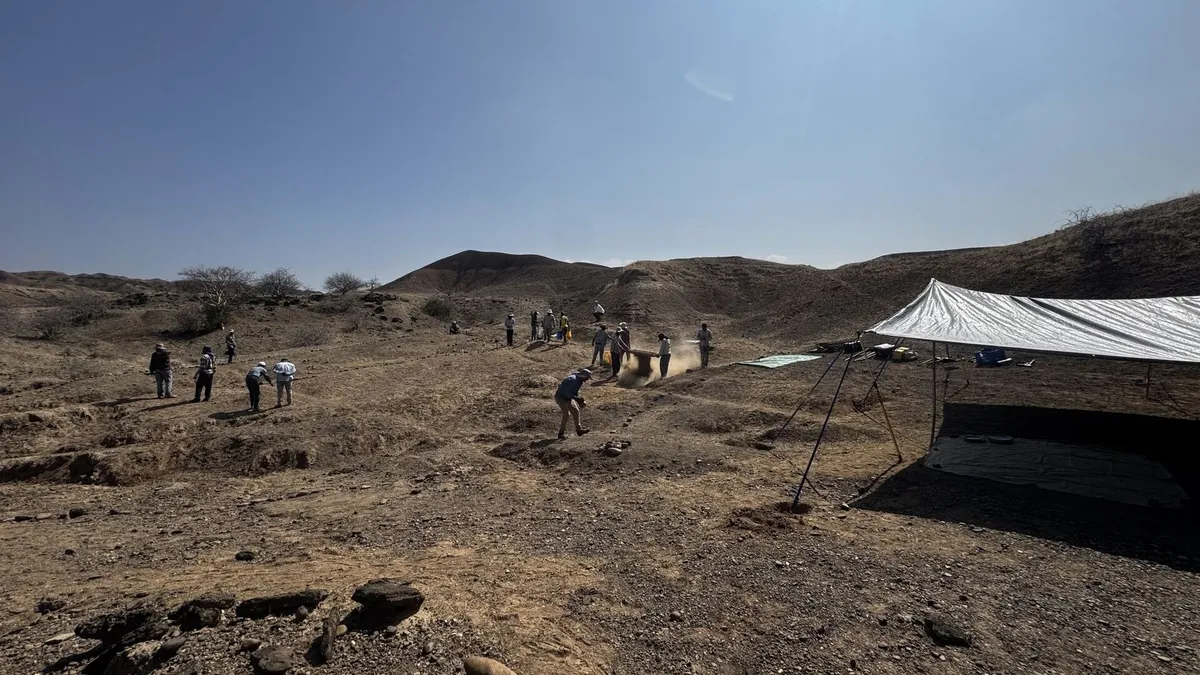
An international team, including Academy Research Fellow Ferhat Kaya from the University of Oulu, Finland, dug up burned human bones in Ethiopia's Afar Rift. This isn't just a casual campfire; it's potentially the earliest known evidence of human cremation, pushing our understanding of ancient rituals back tens of thousands of years.
The team, who've been meticulously studying the Afar Rift since 1981 (talk about dedication), published their findings in the Proceedings of the National Academy of Sciences. Their work offers a surprisingly detailed snapshot of what life was like for early humans a hundred millennia ago.
We're a new kind of news feed.
Regular news is designed to drain you. We're a non-profit built to restore you. Every story we publish is scored for impact, progress, and hope.
Start Your News DetoxAnd just in case you thought ancient life was quaint, some of these human remains also showed bite marks from predators. Others were just… suddenly buried. Because, apparently, even 100,000 years ago, life was complicated and sometimes involved becoming dinner.
Life by the River (and the occasional flood)
The study also revealed that it wasn't global climate shifts dictating everything. Instead, local water cycles, like the seasonal flooding of the ancient Awash River, played a much bigger role in shaping daily human life. Think less Ice Age, more 'did I pack my waders?'
Thousands of stone tools found at the site suggest people kept returning to this seasonally flooded area for short stays. Clearly, the fishing was good, or perhaps they just really liked the challenge of setting up camp on a flood plain.
Ferhat Kaya noted that this research offers a rare peek into how early Homo sapiens actually interacted with their environment. And spoiler alert: local water factors trumped global climate changes, which is a surprisingly relevant observation even today.
Digging Up the Past
The site wasn't just about bones and floods. Researchers also unearthed stone tools and some remarkably rare obsidian objects. Obsidian, for the uninitiated, is a volcanic glass that often comes from distant regions. Its presence here means early humans were not exactly homebodies; they were moving around, covering significant distances, and probably trading. The ancient equivalent of a road trip for fancy glassware.
They also analyzed over 3,000 animal fossils, from tiny rodents to massive mammals. This helps paint a picture of how these early humans adapted to the ever-shifting landscapes of the East African Rift. The sheer amount of undisturbed artifacts and fossils found in the soil is exceptional, providing a pristine record untouched by geological or water forces that usually mess everything up.
Africa, as it turns out, is still the key to unlocking much of human evolution. While many insights come from limited cave deposits, well-preserved open-air sites like this one are incredibly rare. The Middle Awash project, focusing on the Halibee Member of the Dawaitoli Formation, combines geological, paleontological, and archaeological data. It’s a full-spectrum investigation, piecing together the environment and behaviors of our ancestors, one perfectly preserved shard at a time.
Which, if you think about it, is both impressive and slightly terrifying. Imagine someone digging up your ancient selfies 100,000 years from now. Best behavior, everyone.