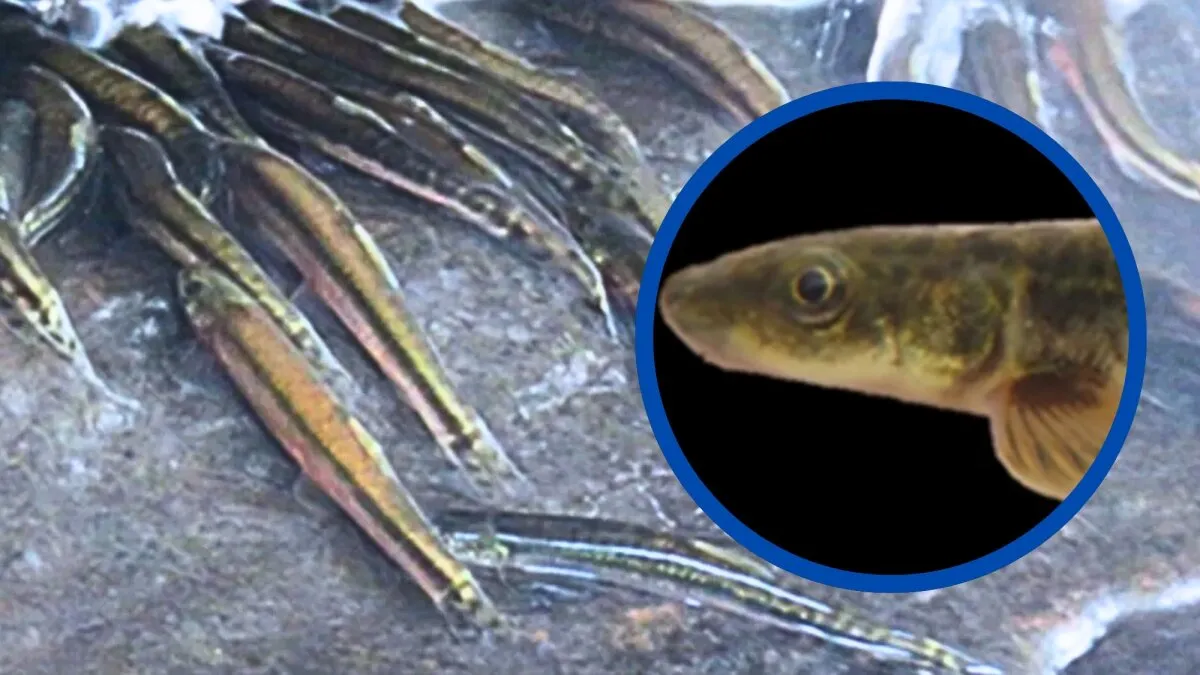
Imagine being a two-inch fish. Now imagine looking at a 50-foot waterfall and thinking, "Yeah, I've got this." Thousands of tiny shellear fish in the Democratic Republic of Congo do exactly that, scaling a vertical rock face at the end of every rainy season. Because apparently, that's where we are now.
Scientists have long known that Parakneria thysi fish could climb waterfalls, but until now, it was more of a rumor whispered amongst ichthyologists. No one had ever actually seen it, let alone filmed it. Pacifique Kiwele Mutambala, a lead author from the University of Lubumbashi, called it a "spectacle," which, given the circumstances, feels like an understatement.
Here's the kicker: typically, fish populations above and below a waterfall are genetically distinct. It's like a natural bouncer, keeping the gene pools separate. But for these shellear fish? "No genetic difference," according to co-author Emmanuel Vreven. Which begs the question: are they just that good at climbing, or are they doing it for the sheer thrill?
We're a new kind of news feed.
Regular news is designed to drain you. We're a non-profit built to restore you. Every story we publish is scored for impact, progress, and hope.
Start Your News DetoxThe Secret Life of Fishy Climbers
This isn't some fishy extreme sport; it's pure biological necessity mixed with a dash of impressive physical skill. The fish use the waterfall's "splash zone" – that perpetually wet, misty area – as their personal climbing wall. It keeps them moist, allows them to breathe, and, crucially, keeps them from being swept away by the main current.
Their secret weapon? Pectoral and pelvic fins equipped with microscopic, hook-like projections called unculi. They press these against the wet rock, grip, and then wiggle their way upwards. It's less a sprint and more a nine-hour, eight-to-nine-rest-stop marathon. Thirty seconds of active climbing, then up to 30 minutes of chilling out. Repeat for most of the day.
So why do they do it? It's not for breeding; larger, presumably reproductive fish opt out of this aquatic Everest attempt. It seems the smaller, more adventurous shellears are seeking less crowded waters, fewer predators, and better food options upstream. And perhaps, a wider selection of mates who appreciate a good climber.
It's a bold move that can even lead to evolution. In 2022, a related study found that waterfall climbing in another Parakneria species actually led to the creation of a new species. Because when you're literally climbing against the current, you tend to stand out. And if that's not enough to make you rethink your own morning commute, what is?