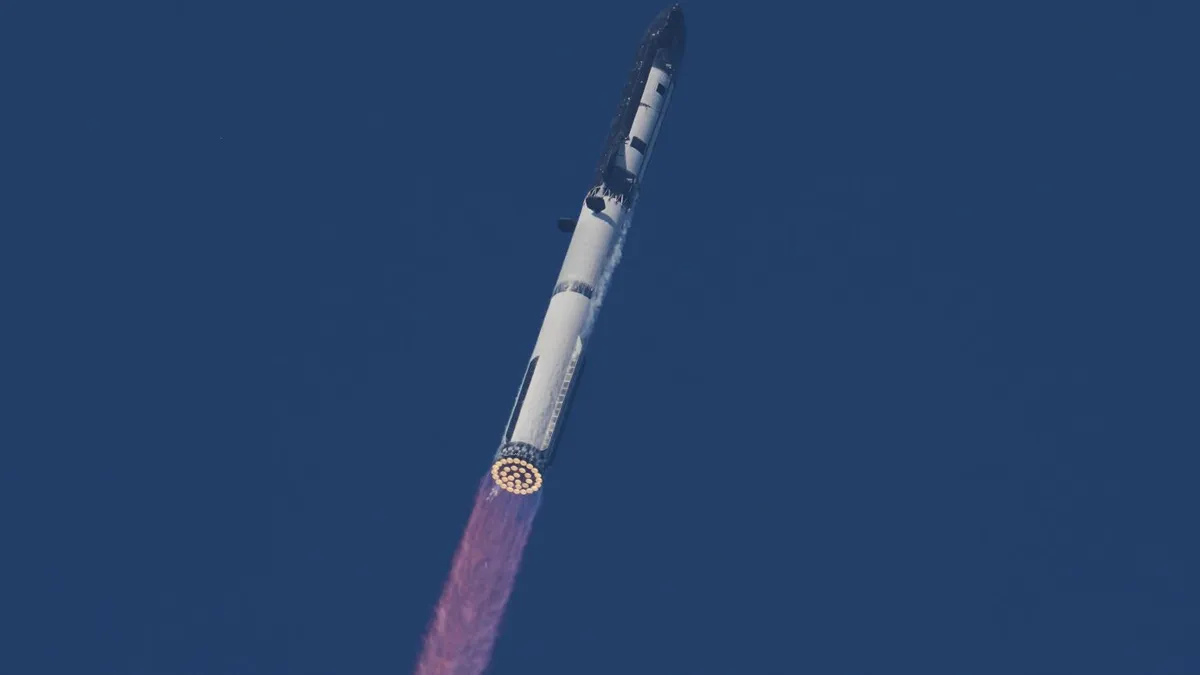
SpaceX just sent its beefed-up Starship rocket, dubbed V3, into the skies. This isn't just any test flight; this 12th iteration is a crucial piece of NASA's ambitious plan to put astronauts back on the moon. So, no pressure.
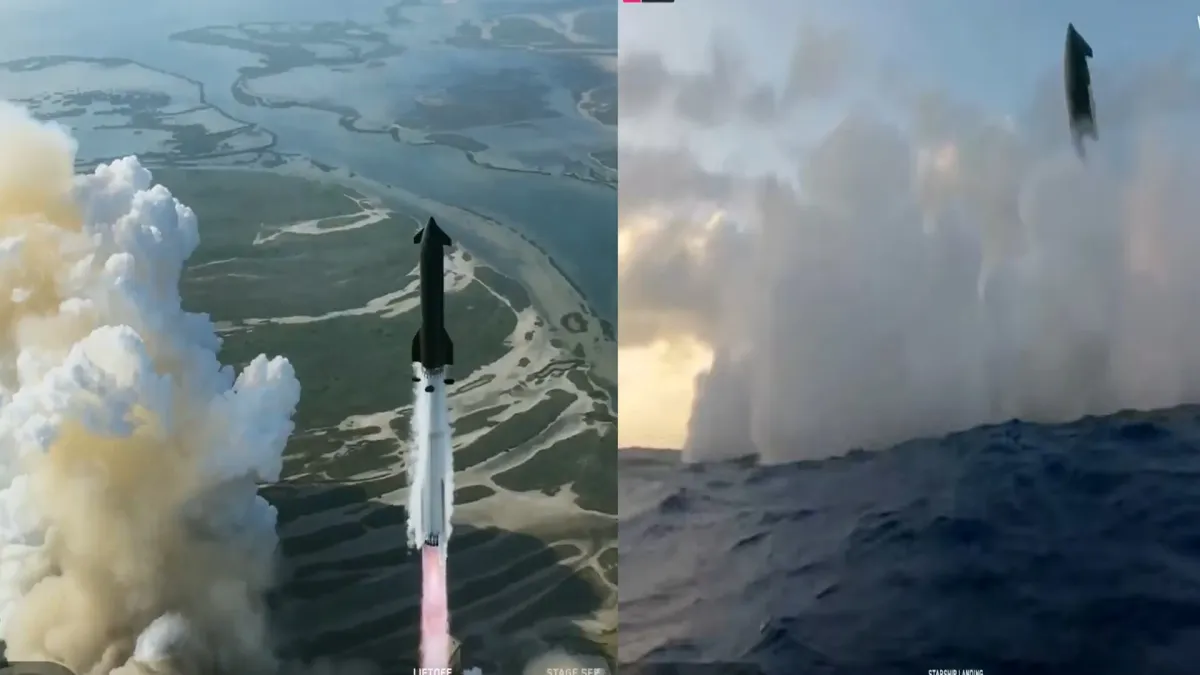
The 407-foot-tall behemoth, carrying 20 mock Starlink satellites, blasted off from Starbase in southern Texas. It then embarked on an hour-long journey that took it halfway around the globe.
From Texas to the Indian Ocean (with a detour)
Despite a few engine hiccups, the V3 Starship hit its target: the Indian Ocean. And then, as planned (apparently), it caught fire upon impact. SpaceX CEO Elon Musk, ever the understated observer, called the launch and landing "epic" on X, declaring to his team they'd "scored a goal for humanity." Which, if you think about it, is both impressive and slightly terrifying for a rocket that just incinerated itself.
We're a new kind of news feed.
Regular news is designed to drain you. We're a non-profit built to restore you. Every story we publish is scored for impact, progress, and hope.
Start Your News DetoxThis isn't just about showing off; this Starship is the moon-bound workhorse for NASA's Artemis program. NASA Administrator Jared Isaacman was on hand for the launch, noting that Starship is now a considerable step closer to the moon. Because apparently that's where we are now.
The V3 model isn't just taller; it's got more engine thrust and a revamped booster featuring fewer, but larger and stronger, grid fins for steering. Its fuel transfer line for the 33 main engines is now so big it rivals the entire first-stage booster of SpaceX's Falcon 9. It's like upgrading your garden hose to a fire hose, but for rocket fuel.
Oh, and the stainless steel spacecraft is also loaded with more cameras, navigation, and computer power. Plus, docking cones for future rendezvous and moon missions. Because you can't just show up to the moon without proper parking assistance.
The Race to the Moon (and Mars)
Starship is designed to be fully reusable, with giant mechanical arms at launch pads meant to catch returning rocket stages. However, this test flight didn't quite stick the landing – the first-stage booster ended up in the Gulf of Mexico, and the spacecraft (and its satellites) settled into the Indian Ocean. So, maybe a few more practice runs on the catching part.
NASA is pouring billions into both SpaceX and Jeff Bezos' Blue Origin to develop lunar landers. It's a high-stakes race, with Starship already having several hour-long flights to the edge of space under its belt. Blue Origin's Blue Moon, meanwhile, is still on the launchpad, though a prototype is gearing up for a moonshot later this year. Next year, NASA plans a docking trial run in Earth orbit for the Artemis III mission, where astronauts will practice linking their Orion capsule with Starship, Blue Moon, or both. A crewed moon landing, Artemis IV, could happen as early as 2028 – the first time humans have set foot on the moon since Apollo 17 in 1972. The goal? To establish a moon base near the lunar south pole, complete with astronauts and robots. Because who wouldn't want to live at the South Pole of the moon?
SpaceX isn't waiting around for NASA, though. They're already booking private flights to the moon and Mars. Dennis Tito, the world's first space tourist, and his wife signed up for a moon flight years ago. And more recently, bitcoin investor Chun Wang announced he'll be flying to Mars on Starship's inaugural interplanetary mission. The price and date for his Mars trip? Undisclosed. Probably best not to ask.