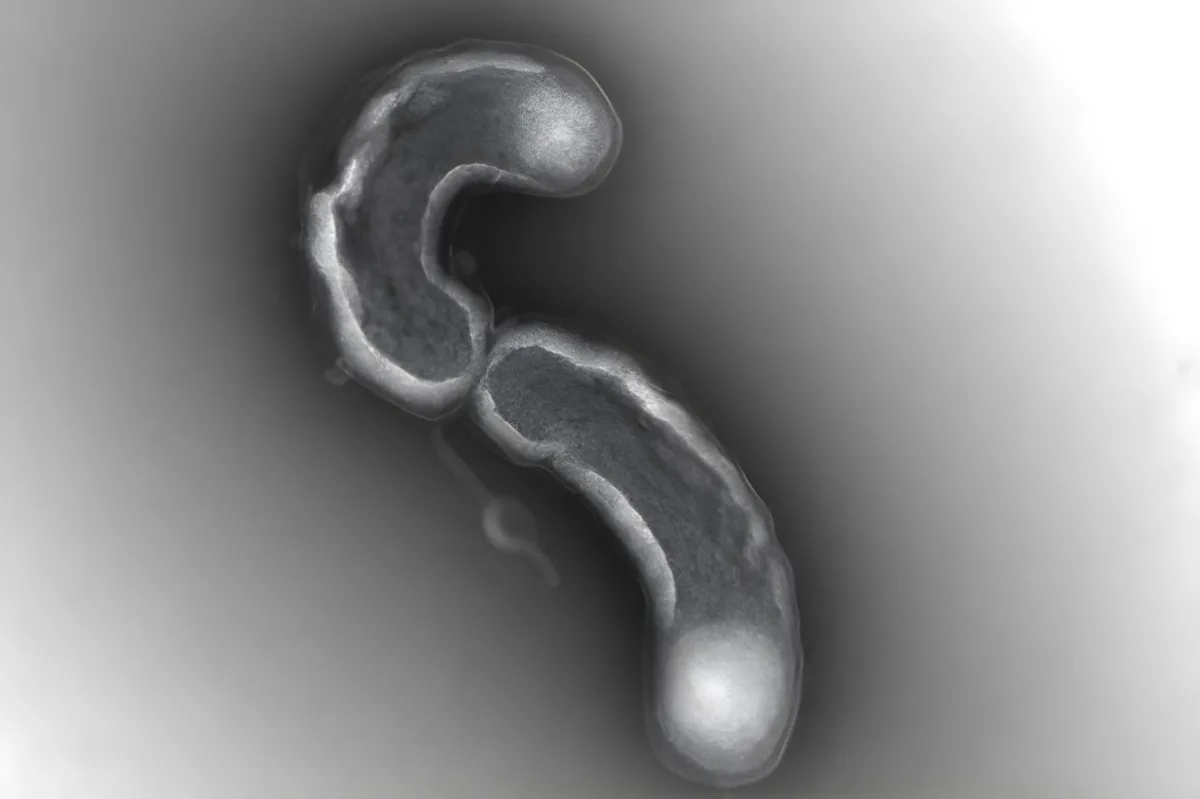
SAR11 bacteria are everywhere in the ocean—sometimes making up 40% of all bacterial cells in surface waters. They're the lean, mean efficiency machines of the microbial world, stripped down to the bare essentials through millions of years of evolution. But a new study suggests their greatest strength might become their greatest vulnerability.
These microbes conquered nutrient-poor seas by doing something radical: they deleted genes. Through a process called genome streamlining, SAR11 bacteria shed biological machinery they didn't immediately need, freeing up energy for survival in waters where food is scarce. It's like removing the backseat and trunk from a car to make it lighter and cheaper to run. That strategy has worked brilliantly—until now.
Researchers examining hundreds of SAR11 genomes found something unexpected. Many strains are missing genes that most bacteria use to manage the cell cycle—the carefully choreographed process that ensures DNA gets copied once, then split evenly between two daughter cells. When stress hits, these bacteria don't just pause and wait for better times. Instead, their DNA replication and cell division become uncoupled. They keep copying their genetic material but fail to actually divide, producing cells with wildly abnormal numbers of chromosomes.
We're a new kind of news feed.
Regular news is designed to drain you. We're a non-profit built to restore you. Every story we publish is scored for impact, progress, and hope.
Start Your News Detox"The surprise was that such a clear and repeatable cellular signature emerged," says Chuankai Cheng, the PhD candidate who led the study. "Their DNA replication and cell division became uncoupled."
This explains something marine scientists have puzzled over for years: SAR11 numbers crash during the late stages of phytoplankton blooms, when organic matter suddenly floods the water. In those chaotic moments, SAR11's streamlined genome becomes a liability. The bacteria that thrived by being lean and mean can't adapt quickly enough to handle the disruption.
What this means for the ocean
SAR11 bacteria are foundational to ocean carbon cycling—they're part of the machinery that pulls carbon dioxide out of the atmosphere and into the deep sea. If their abundance shifts as ocean conditions become more erratic, it could ripple through marine ecosystems in ways we're only beginning to understand.
Climate change isn't just warming the oceans or changing nutrient levels. It's making them less predictable. Blooms arrive earlier or later. Oxygen zones expand and contract. Currents shift. For an organism whose entire evolutionary strategy hinges on stability, that's a problem. SAR11's streamlined physiology—the trait that made it a winner—leaves it with fewer tools to handle surprise.
The researchers say future work will focus on understanding exactly how these disruptions happen at the molecular level. But the broader insight is already clear: environmental change doesn't just limit resources. It can break the internal machinery of organisms that have become too specialized for a stable world.