Turns out, animals aren't just bothered by our sprawling cities and farms. They're bothered by us. Just the sheer presence of a human, even a subtle shift in our movements, is enough to send ripples through the animal kingdom, making them change everything from how much space they use to where they hunt for dinner. Which, if you think about it, is both impressive and slightly terrifying.
Yale professor Walter Jetz explains that for years, we've focused on how things like urban development and agriculture mess with wildlife. But this new, six-year study — a massive undertaking involving over 50 groups and led by Ruth Oliver (UC Santa Barbara) and Scott Yanco (Smithsonian) — is the first to actually untangle the two: human presence vs. human-made changes. Their conclusion? To truly protect our wild neighbors, we need to think about where and when we show up, not just how much concrete we pour.
The Great Animal-Human Data Mashup
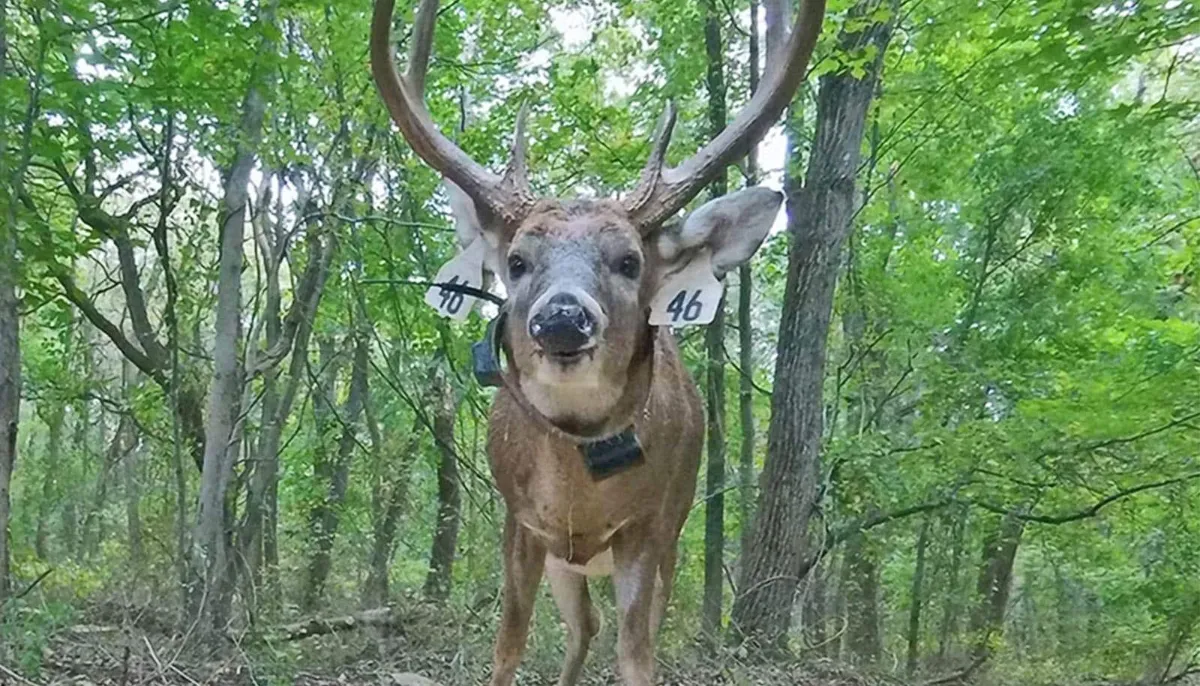
To figure this out, researchers slapped GPS trackers on 37 species across the U.S. — 22 birds and 15 mammals, including deer, wolves, coyotes, and raccoons. They collected a staggering 11.8 million location points from over 4,500 animals. Because apparently, that's what it takes to get some answers.
We're a new kind of news feed.
Regular news is designed to drain you. We're a non-profit built to restore you. Every story we publish is scored for impact, progress, and hope.
Start Your News DetoxThen came the genius part: they combined all that animal data with mobile phone data and satellite images of human-altered landscapes. Mobile data, usually harder to get than a unicorn's selfie, became accessible thanks to a special partnership during the COVID-19 pandemic. Lockdowns meant human movement patterns shifted dramatically between 2019 and 2020, offering a rare, real-world experiment to separate the effects of human presence from long-term habitat changes.
Some Run, Some Hunt, Some Just Chill
The findings were clear: over 65% of species changed their behavior because of us. The most noticeable shifts happened in less-developed natural areas, where animals probably expected a bit more peace and quiet. But the reactions? They were all over the map.
Many animals, as you might expect, started using less space, essentially trying to make themselves scarce. But not everyone got the memo. Gray wolves, for instance, actually covered more ground, perhaps to better avoid human contact. Ravens, those clever opportunists, also traveled farther, likely sniffing out human-linked food sources. Coyotes, on the other hand, just decided to move less. Because sometimes, the best defense is a good nap.
What's even wilder is that individual animals showed they could adapt their behavior year to year, adjusting to our ever-shifting activities. While habitat loss remains a biodiversity villain, this research highlights that our direct recreational presence also plays a huge role. Animals aren't just passively accepting our encroachment; they're actively strategizing around us.
This whole study is a masterclass in how modern tech — GPS, satellite imagery, and even phone data — can unlock new insights into the wild world. It suggests that beyond just preserving habitats, we might need to start managing when and how intensely we're out there. Maybe limiting traffic or reducing disturbances in sensitive areas could be the next big conservation frontier. Because sometimes, the most effective conservation plan is simply giving nature a little space.