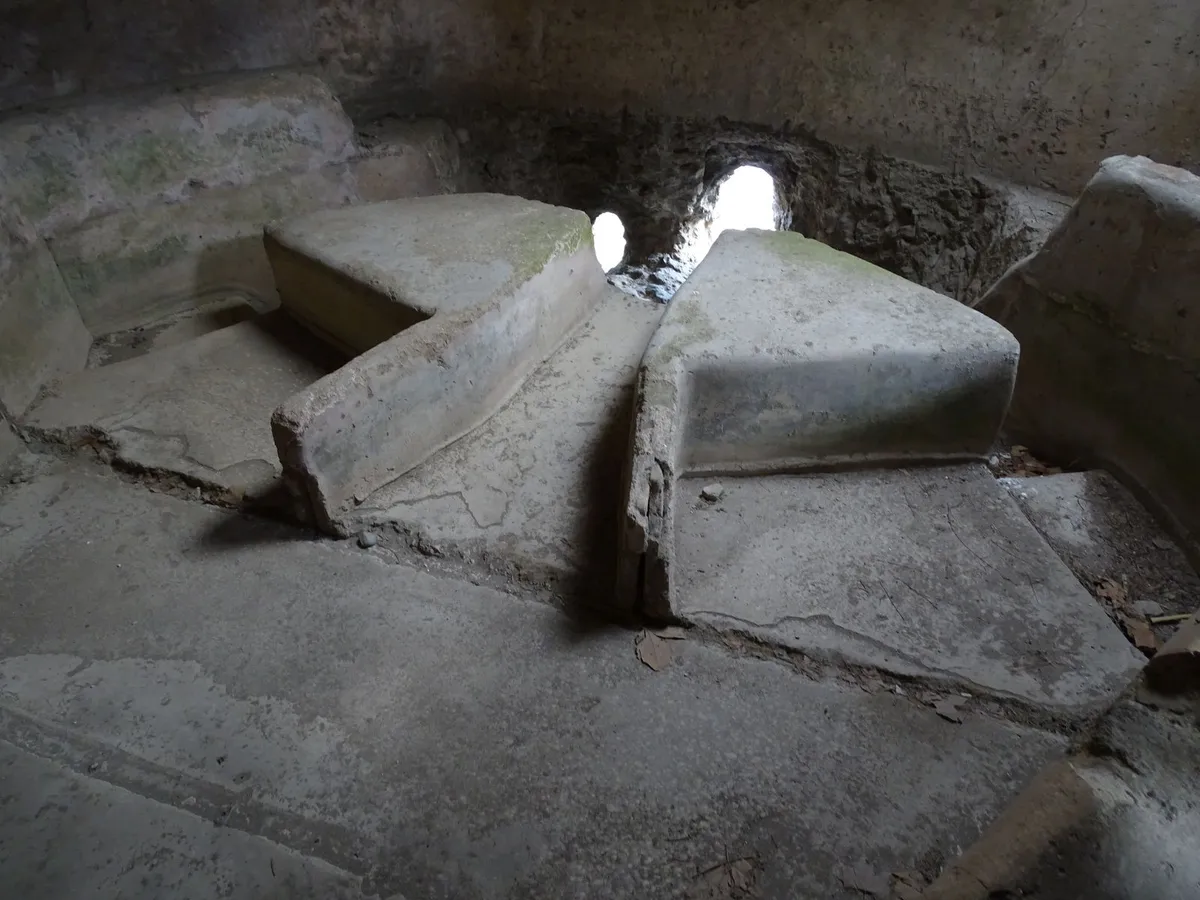
Pompeii's public baths were disgusting. Before the Romans arrived in 80 B.C.E., the Samnite residents filled their bathing pools by hand—enslaved workers hauling water up from deep wells using wheels and buckets, bucket after bucket. The water came in so slowly that it barely replenished before the next bather arrived. What accumulated was a cloudy layer of sweat, skin oil, urine, and the general residue of communal bathing. "Pretty grim by today's standards," as one historian put it.
We know this because researchers studying Pompeii's mineral deposits—the chemical fingerprints left behind in stone—found evidence of high levels of organic matter in the bath water from this era. Gül Sürmelihindi, one of the researchers, describes the conditions as "far from ideal." The baths were, in essence, slowly marinating in human biology.
Then came the aqueduct. Decades after Rome took control of the city, engineers built a channel to carry fresh water from a nearby natural spring directly into Pompeii. The numbers are staggering: 44,117 gallons per hour flowing continuously into the city's water system. This single infrastructure upgrade transformed the baths from a health hazard into something approaching cleanliness.
We're a new kind of news feed.
Regular news is designed to drain you. We're a non-profit built to restore you. Every story we publish is scored for impact, progress, and hope.
Start Your News DetoxThe mineral deposits from the Roman era show dramatically less organic matter. The water wasn't pristine—it was still a noisy, lively, possibly smelly social gathering place—but it was no longer a biological soup. People could actually bathe without soaking in the accumulated filth of hundreds of previous visitors.
There's a darker side to this story. The Romans distributed that clean water through lead pipes, exposing residents to a neurotoxin. Mineral buildup eventually reduced the lead leaching, but any pipe replacement would have made it worse again, likely hitting poorer residents hardest. Progress came with its own cost.
What makes this research remarkable is how it reveals the invisible architecture of daily life. Mineral deposits don't make headlines the way ruins do, but they tell us something we rarely get to know about the past: what ordinary people actually experienced in ordinary moments. Researchers are now planning similar studies across the Roman Empire, using these chemical records to understand how millions of people lived, bathed, and drank water two thousand years ago.