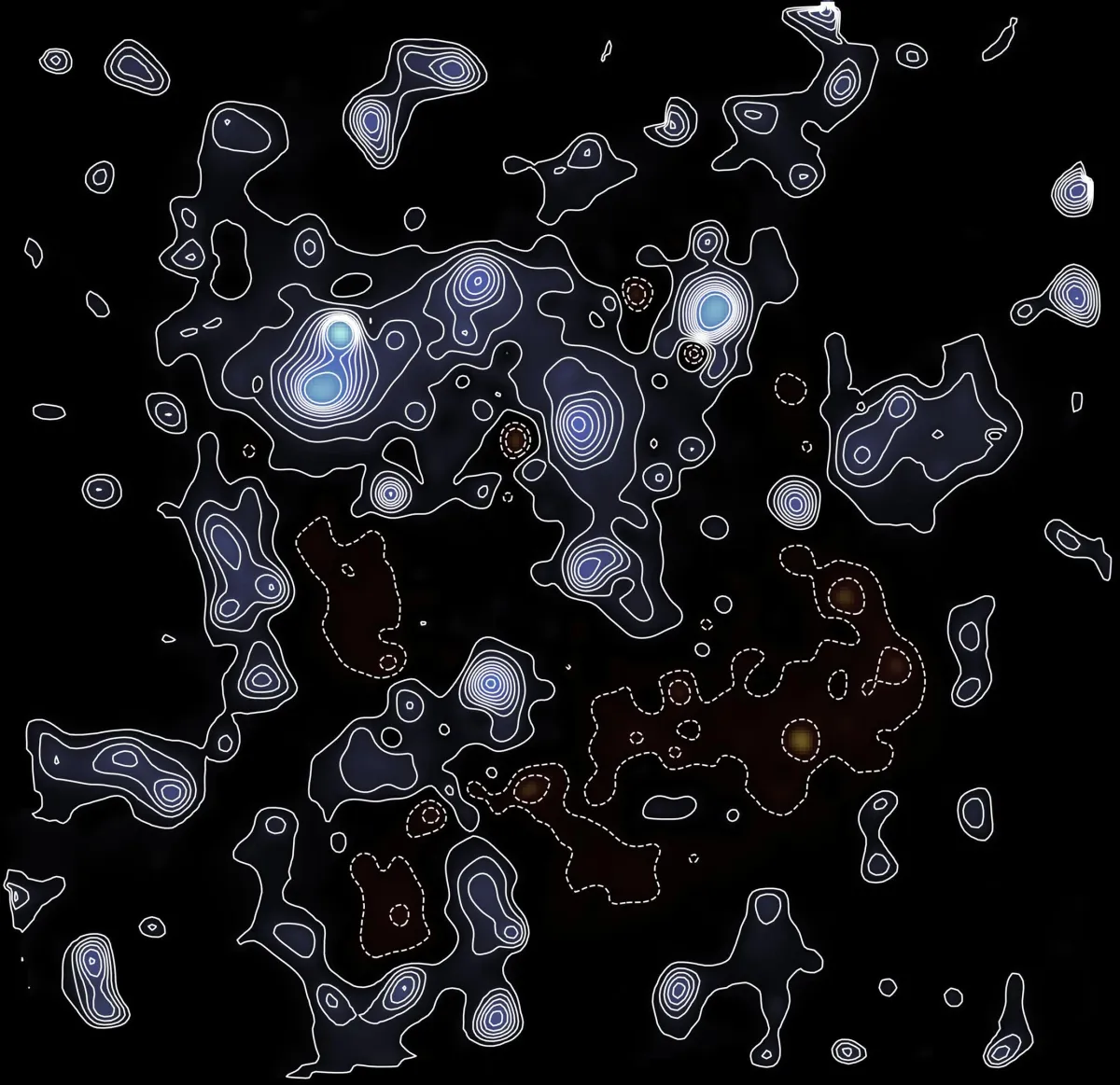
For decades, dark matter has been astronomy's most frustrating mystery—the invisible substance that makes up 85% of all matter in the universe, yet leaves no fingerprints of light. Now, after 255 hours of observation, the James Webb Space Telescope has produced the sharpest map of dark matter ever created, revealing the gravitational scaffolding that holds galaxies together.
The map covers a patch of sky in the constellation Sextans, about 2.5 times the size of the full Moon. What Webb found there matters because it answers a question scientists have been asking since dark matter's existence was first theorized: Does the invisible universe really shape the visible one?
How Invisible Matter Built the Universe
In the earliest moments after the Big Bang, both dark matter and ordinary matter were spread thin across space. Dark matter clumped first, its gravity creating wells that pulled in the regular matter we can see—hydrogen, helium, the stuff that would eventually become stars and galaxies. This head start mattered enormously. By jumpstarting galaxy formation earlier than would have happened otherwise, dark matter created the conditions for planets to form, and eventually, for life itself. Without it, the universe we know wouldn't exist.
We're a new kind of news feed.
Regular news is designed to drain you. We're a non-profit built to restore you. Every story we publish is scored for impact, progress, and hope.
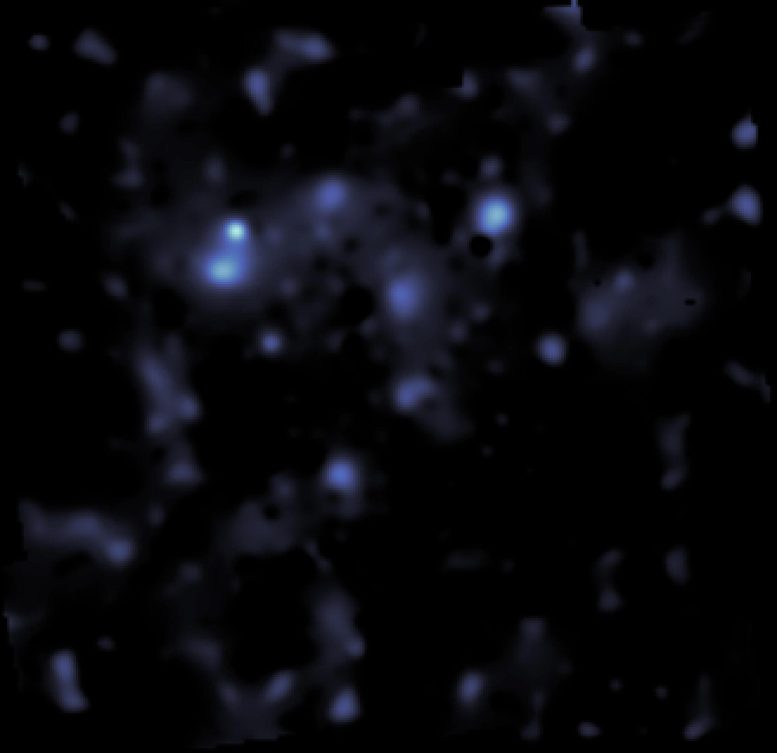
Start Your News DetoxThe new map confirms this picture with unprecedented detail. Webb identified nearly 800,000 galaxies in this small region alone—ten times more than previous ground surveys, twice as many as Hubble found. More importantly, it revealed the dark matter's distribution by measuring how its gravity warps space itself, bending light from distant galaxies like a lens made of glass.
When the research team compared the locations of dark matter to the locations of ordinary matter, they found an unmistakable match. This wasn't chance. It was the gravitational pull of dark matter, steadily drawing normal matter toward it across billions of years of cosmic history.
Seeing What We Cannot See
Dark matter is a ghost in the truest sense. It doesn't emit light, reflect it, absorb it, or block it. It passes straight through ordinary matter without interaction. For decades, its presence was only inferred—we knew it had to be there because galaxies spin too fast, because light bends in ways that shouldn't happen, because the math didn't work without it.
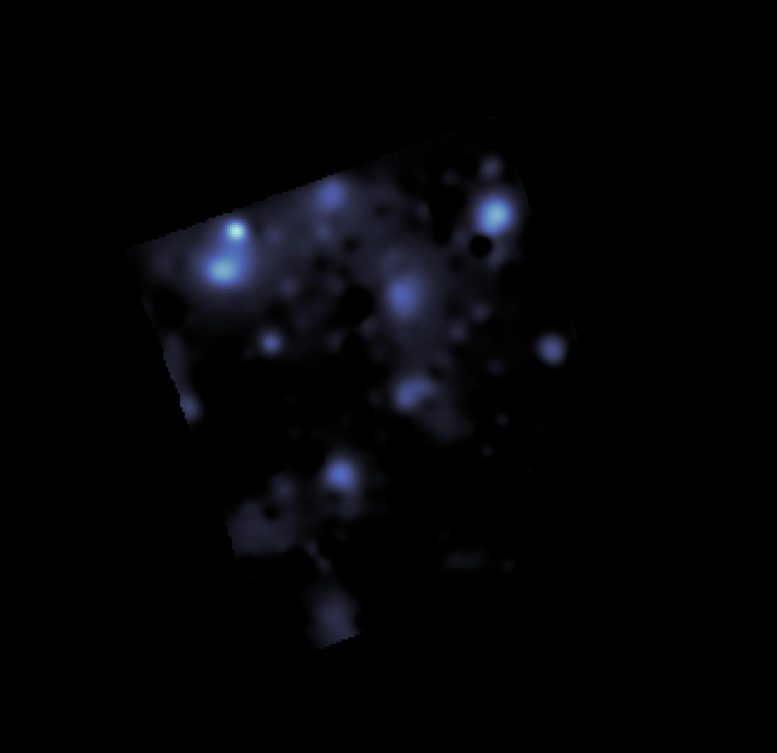
Webb changed that by using gravitational lensing to map dark matter's actual position and density. The telescope's Mid-Infrared Instrument proved especially valuable, able to detect galaxies hidden behind thick clouds of cosmic dust that would have been invisible to earlier telescopes. This precision revealed previously unknown concentrations of dark matter and showed familiar regions in far sharper detail.
What Comes Next
This map is not an ending, but a benchmark. The research team plans to expand the work using the European Space Agency's Euclid telescope and NASA's upcoming Nancy Grace Roman Space Telescope, eventually mapping dark matter across the entire observable universe. These missions will help answer questions that remain: What exactly is dark matter made of? How has it evolved over cosmic time? How does it cluster and flow?
For now, this single patch of sky—smaller than the full Moon—has revealed that the universe's skeleton is far more intricate and purposeful than we imagined. The invisible has finally become visible.