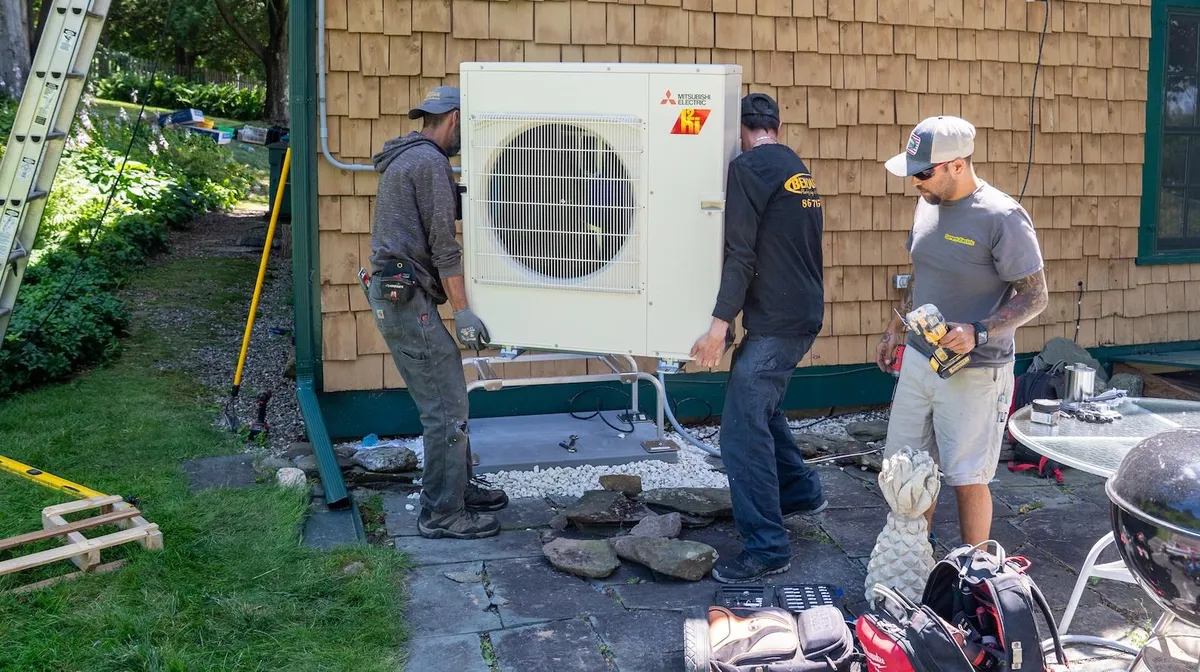
Remember when heat pumps were that niche thing your eco-conscious aunt wouldn't stop talking about? Well, it seems America is finally catching on. These clever contraptions are quietly but efficiently pulling warmth from the outside air and into our homes, using actual physics instead of, you know, just burning stuff.
And the best part? They moonlight as air conditioners in the summer. One device, two jobs. Because who doesn't love a good two-for-one deal, especially when it saves the planet and your wallet?
The Great Heat Pump Takeover
According to a new report from the Building Decarbonization Coalition, heat pump sales have doubled in the last 15 years. Let that satisfying number sink in. In the first three months of this year alone, shipments of heat pumps were a whopping 32% higher than old-school fossil-fuel furnaces. They even gave traditional AC units a run for their money.
We're a new kind of news feed.
Regular news is designed to drain you. We're a non-profit built to restore you. Every story we publish is scored for impact, progress, and hope.
Start Your News DetoxIn 2024, nearly half (46%) of new homes came equipped with a heat pump, almost tying with the 47% that opted for forced-air furnaces. Kevin Carbonnier, an analytics director at the coalition, put it plainly: all signs point to people choosing heat pumps over gas furnaces and single-function ACs. They're seen as better, more comfortable, more efficient, and inherently more versatile.
New Builds, New Rules
New housing is a major catalyst for this electric shift. Consider this: three-quarters of new apartments in the U.S. are now using electric heating. Once a builder goes all-electric for heating, it's a short hop to electric stoves. At that point, paying for natural gas pipes starts to feel... unnecessary. Kristin George Bagdanov, a research director, notes that building all-electric is fast becoming common sense for new constructions, purely due to efficiency.
Now, some builders still opt for less-than-stellar resistance heating (think baseboard heaters) which offer a dismal 1:1 heat-to-energy ratio. Heat pumps, however, are churning out 2 to 4 units of heat for every single unit of energy. That's at least twice as efficient. Apartment complexes, once heat-pump deserts, are now embracing them. The Northwest, for example, saw 18% of new apartment buildings install them since 2010. Multi-family housing is proving to be a surprisingly potent weapon in the fight against carbon emissions.
Underground Superpowers
Utilities are even getting in on the act, exploring something called networked geothermal systems. Imagine gas lines, but instead of natural gas, liquid flows through pipes drilled deep into the earth. Heat pumps then use this consistently 50-degree Fahrenheit water (even when it's freezing outside!) to extract or dump heat. This makes a utility's geothermal system seven or eight times more efficient than homes burning gas.
This could lead to a future where liquid, not natural gas, flows into neighborhoods with all-electric kitchens. Carbonnier points out that the skills needed for this — managing infrastructure, drilling, laying pipes — are exactly what gas workers already do. A career pivot, perhaps?
These ultra-efficient systems aren't just good for emissions; they're good for your wallet. As the U.S. electrifies everything from data centers to cars, demand for power goes up, and so do costs for new solar farms, transmission lines, and battery storage. Using less energy to heat and cool homes means less need for new infrastructure, which can help keep energy bills from spiraling.
Energy bills have become a surprisingly hot political topic. George Bagdanov observes a shift: instead of blaming consumers, the conversation is now digging into how utility commissions set rates, the true cost of new fossil-fuel infrastructure, and how utility investors profit. The market, however, has made its choice. For four years running, manufacturers have shipped more heat pumps than fossil-fuel furnaces. Carbonnier believes the U.S. is officially at a "tipping point." Your eco-conscious aunt, it turns out, was right all along.