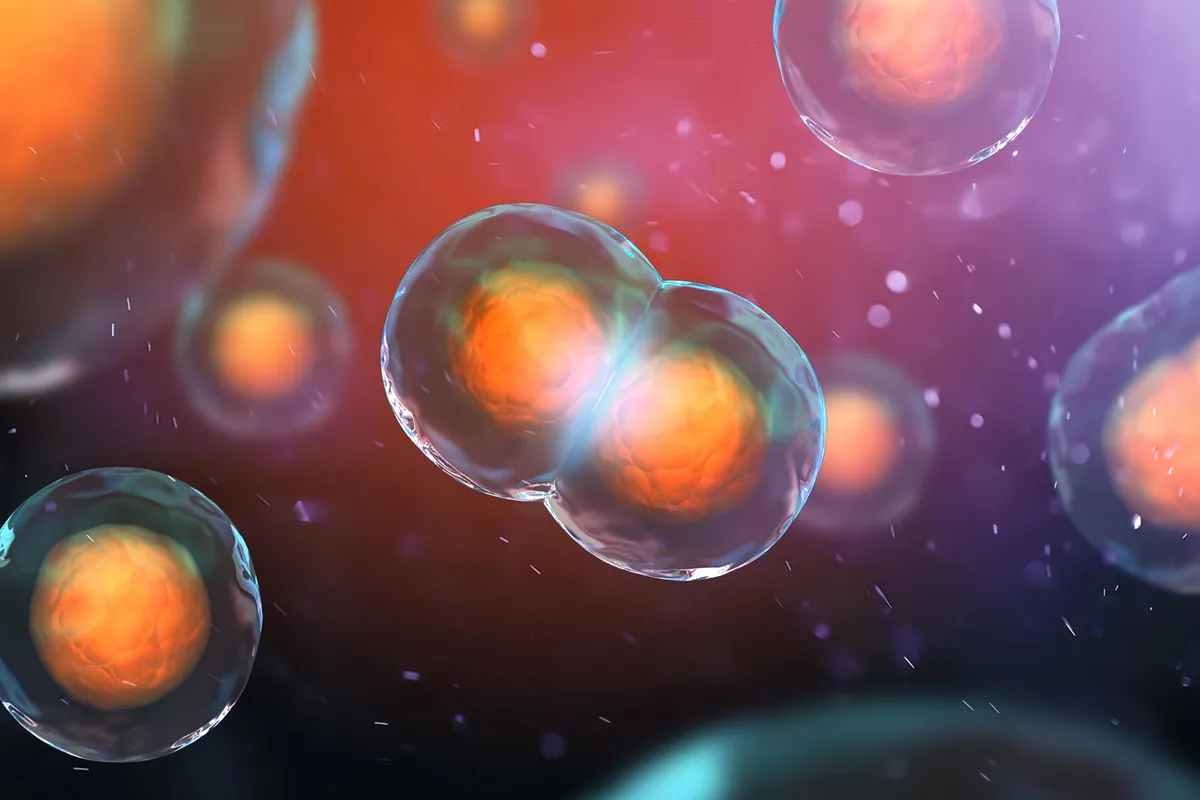
For decades, scientists believed that when a cell divides, its DNA loses the intricate three-dimensional structure that controls which genes switch on and off. The genome would supposedly go flat, then slowly rebuild itself once division was complete. MIT researchers just discovered that's not what happens at all.
Using a sharper mapping technique called Region-Capture Micro-C, they found that tiny regulatory loops—structures that link genes to the switches that control them—actually stay in place and strengthen as chromosomes pack tighter during cell division. It's like discovering that the filing system doesn't get dismantled during the move; it just gets compressed.
The discovery came almost by accident
The team was studying these "microcompartments," as they've named them, expecting them to vanish during mitosis (the process where a cell splits). Instead, Anders Sejr Hansen, an associate professor of biological engineering at MIT, found the opposite. "We went into this study thinking, well, the one thing we know for sure is that there's no regulatory structure in mitosis, and then we accidentally found structure in mitosis," he says.
We're a new kind of news feed.
Regular news is designed to drain you. We're a non-profit built to restore you. Every story we publish is scored for impact, progress, and hope.
Start Your News DetoxWhat makes this surprising is that it challenges a 60-year-old assumption. Since the 1960s, researchers thought gene activity completely stopped during cell division. But studies in 2016 and 2017 showed a brief, puzzling spike in gene activity near the end of mitosis—a burst that cells quickly shut down. The MIT work now suggests an explanation: as chromosomes compress, enhancers and promoters (the genetic "on" switches and the genes they control) get pushed close enough to accidentally link up, triggering that temporary activity spike. The cell then rapidly cleans up these unintended connections.
The research matters because it bridges a gap that's frustrated biologists for decades: understanding how the three-dimensional shape of DNA actually controls which genes turn on and off. Viraat Goel, the study's lead author, notes that "the findings help to bridge the structure of the genome to its function in managing how genes are turned on and off, which has been an outstanding challenge in the field for decades."
The implication is broader than just cell division. If DNA loops can persist and strengthen under compression, it raises new questions about how cells that change shape or size might reorganize their genetic control systems—questions that could eventually help explain why certain cell types behave the way they do, and possibly why things go wrong in disease.
The findings suggest that what we thought was a reset during cell division is actually more like a compression that preserves and even intensifies the genome's organizational logic.