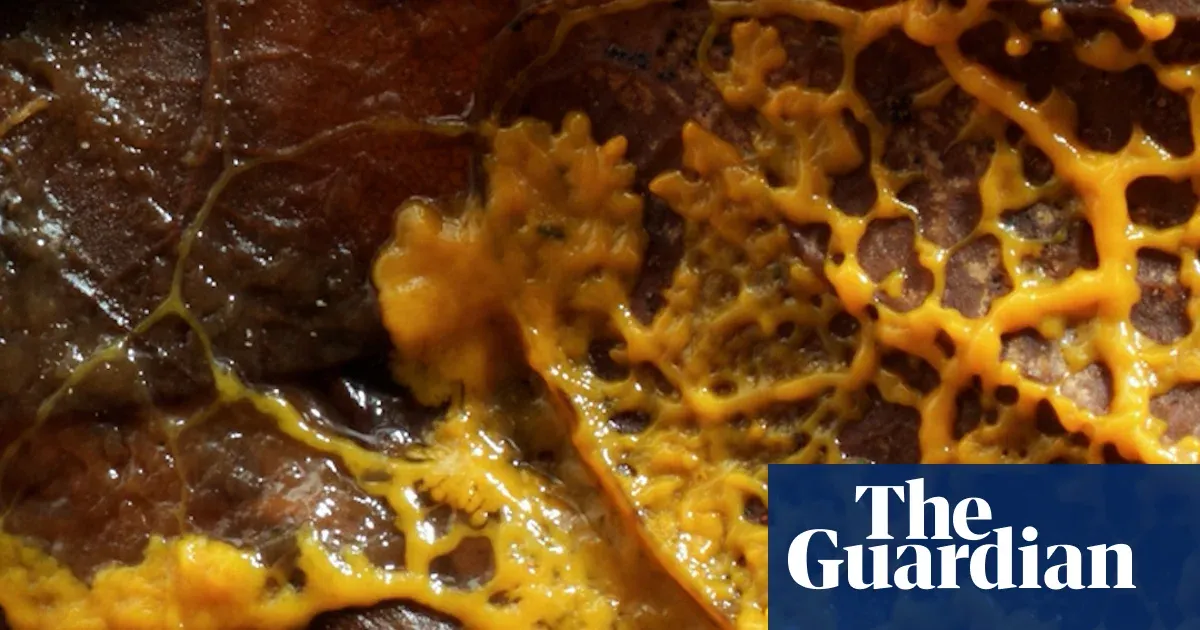
For decades, the word "intelligent" was reserved for creatures with brains, preferably large ones, and ideally, us. But then came the slime mould, a creature so unassuming it looks like a lemon-yellow stain in a petri dish. And now, scientists are locked in a surprisingly heated debate: Is this squishy, brainless blob... smart?
It all started about 40 years ago with Toshiyuki Nakagaki, then a student in Hokkaido, who became so captivated by this peculiar organism that he dedicated his life to it. His work has since blown the lid off our cozy definitions of life, consciousness, and what it even means to think.

Before Nakagaki, the idea of a slime mould being intelligent would have been met with a polite, bewildered chuckle. These things were the biological equivalent of background noise. An 1895 description called them "a simple mass of protoplasm." Another, equally dismissive, labeled them "among the most simple of organisms." And honestly, who could argue? A slime mould often looks like nothing more than a single, unassuming cell, content to eat and reproduce.
We're a new kind of news feed.
Regular news is designed to drain you. We're a non-profit built to restore you. Every story we publish is scored for impact, progress, and hope.
Start Your News DetoxBut Nakagaki saw something more. He was mesmerized by its speed. The species he studied, Physarum polycephalum, can glide along at a blistering one centimeter an hour. Which, for an amoeba, is practically breaking the sound barrier.
At first glance, Physarum seems to just ooze around aimlessly. But that's where the trick comes in. It's actually a master sensor, sniffing out bacteria and other tasty microbes. When it finds a snack, it extends a long, slender "finger" of protoplasm, not just to gobble up the food, but to scout for more, or, if the buffet is over, to gracefully retract. Watch one for a few days, and you can't shake the feeling it's making some very deliberate choices. Which, if you think about it, is both impressive and slightly terrifying for something that's essentially a sentient puddle.