You know the aurora borealis, right? Those mesmerizing, shimmering lights dancing across the polar skies? Turns out, they're not just a cosmic light show for our viewing pleasure. On early Earth, these vibrant displays might have been the ultimate chemistry lab, constantly brewing up the building blocks of life.
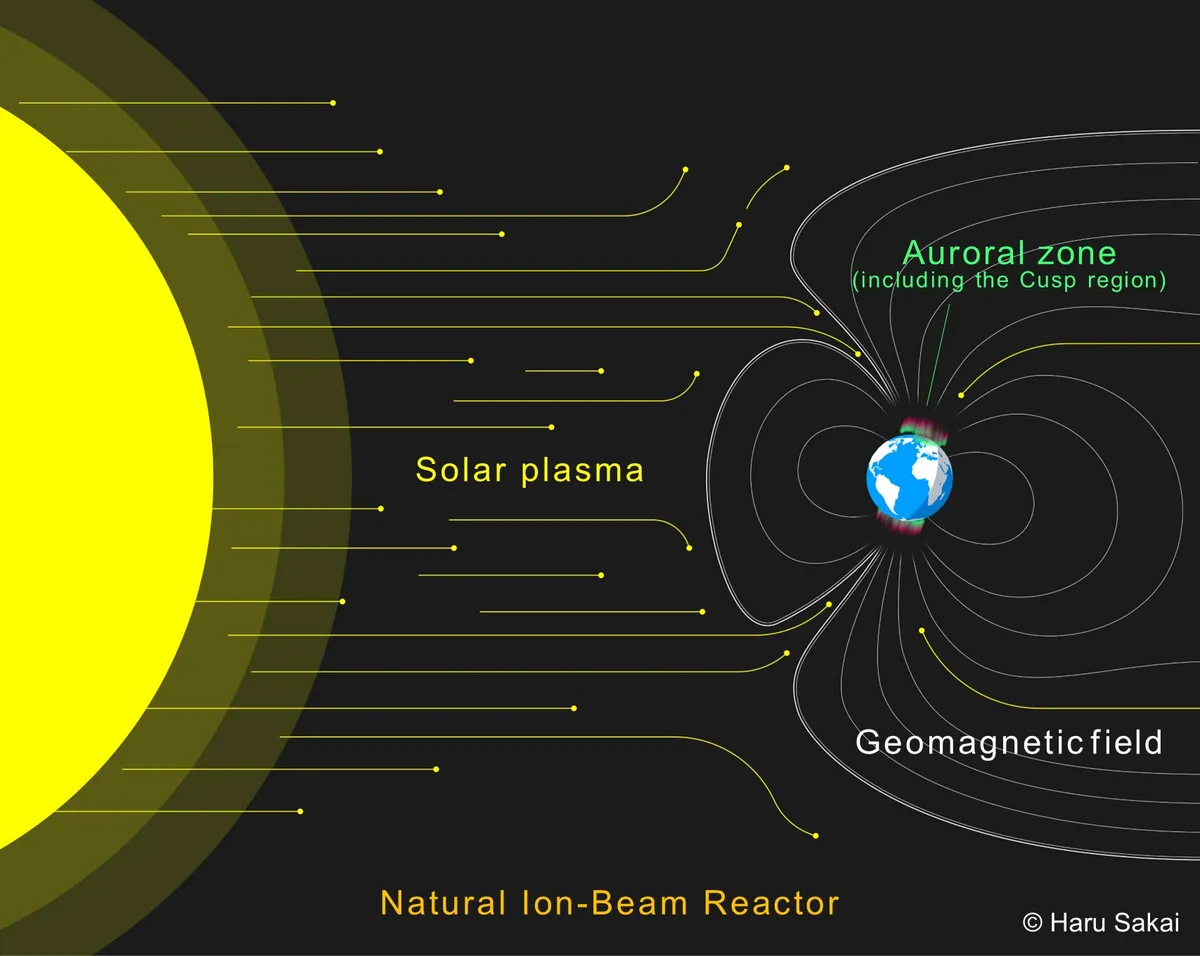
Scientists have long debated how the first organic molecules came to be. Was it lightning? Volcanoes? Asteroid impacts? A new study throws a rather dazzling contender into the ring: Earth's ancient auroral belts, acting as a kind of natural ion-beam reactor.
The Planet's Own Particle Accelerator
Imagine this: billions of years ago, our young sun was a feistier beast, constantly spewing out energetic particles. Earth, bless its heart, already had a magnetic field — a cosmic shield, really — that funneled these particles straight towards the poles. When these high-speed bits of solar wind slammed into our planet's early atmosphere (think nitrogen, CO2, water vapor), they didn't just create pretty lights. They created a chaotic, energized particle party.
We're a new kind of news feed.
Regular news is designed to drain you. We're a non-profit built to restore you. Every story we publish is scored for impact, progress, and hope.
Start Your News DetoxThis isn't just a theory pulled from thin air. Experiments have already shown that zapping early-Earth-like gas mixtures with energetic particles can create amino acids and other crucial organic molecules. The new twist? Earth's magnetic field wasn't just letting this happen willy-nilly. It was focusing this energy, concentrating these reactions within those auroral belts.
Think of it like this: instead of a scattered, global chemical reaction, you had these intense, localized zones where the chemistry was constantly getting a jolt. Which, if you think about it, is both impressive and slightly terrifying. Your phone's magnetic field helps guide your compass, but Earth's was guiding the very genesis of complex chemistry.
Now, this doesn't mean life started floating around in the upper atmosphere like some kind of alien cloud organism. Instead, the idea is that these auroral chemistry zones created reactive materials that then drifted downwards. Rain, aerosols, and atmospheric circulation would have carried these nascent organic compounds to the surface, where, perhaps in freezing polar ponds, they could concentrate and react further.
The real genius here isn't necessarily that auroras made more organic material than other sources globally. It's that they did it repeatedly and in specific, concentrated locations. Because when it comes to chemical evolution, consistency and concentration might be just as important as initial production.
Can We Test This Cosmic Kitchen?
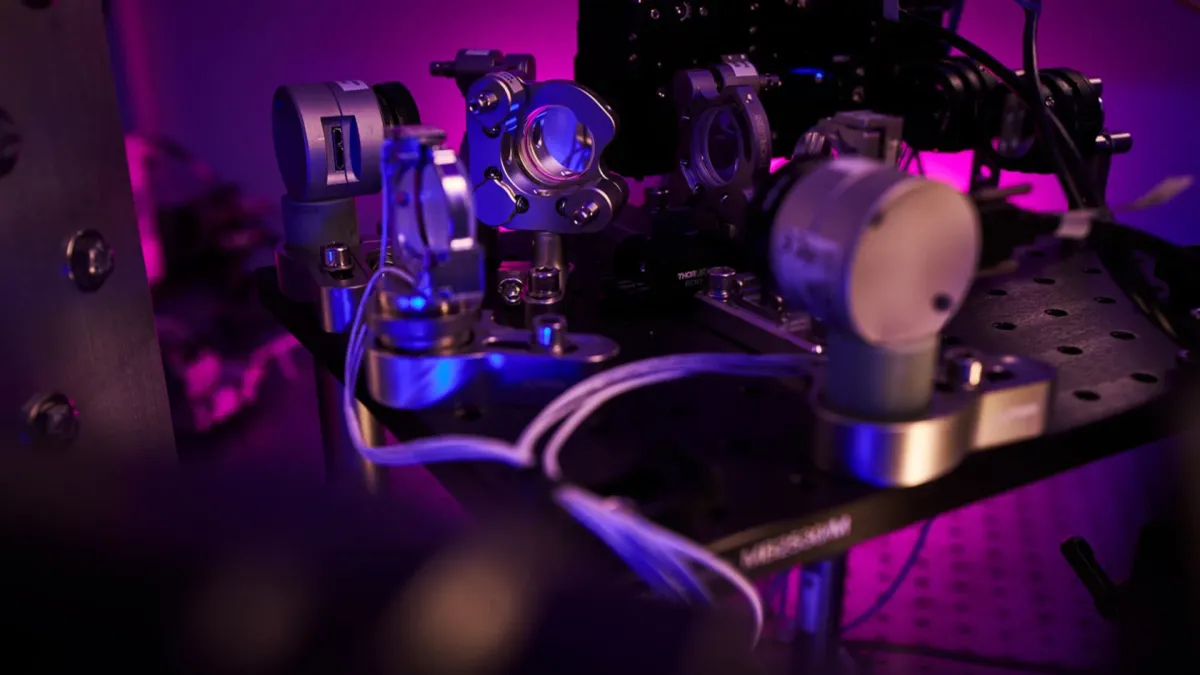
This isn't just a charming bedtime story for aspiring astrobiologists. The hypothesis is testable. Scientists can blast early-Earth gas mixtures with precise levels of electrons and ions, then compare the results to UV-driven reactions. Models can simulate ancient magnetic fields and solar winds to pinpoint exactly where this energy would have been deposited. Geologists can even go hunting for chemical signatures in ancient high-latitude rocks.
If the tests show no specific localization or particle-driven chemical effects, well, back to the drawing board. But if they do, it suggests that the beautiful lights in our sky weren't just a spectacle; they were a fundamental part of Earth's origin story. And maybe, just maybe, a blueprint for creating artificial life right here in the lab. Because sometimes, organization and focused energy are just as vital as the ingredients themselves.