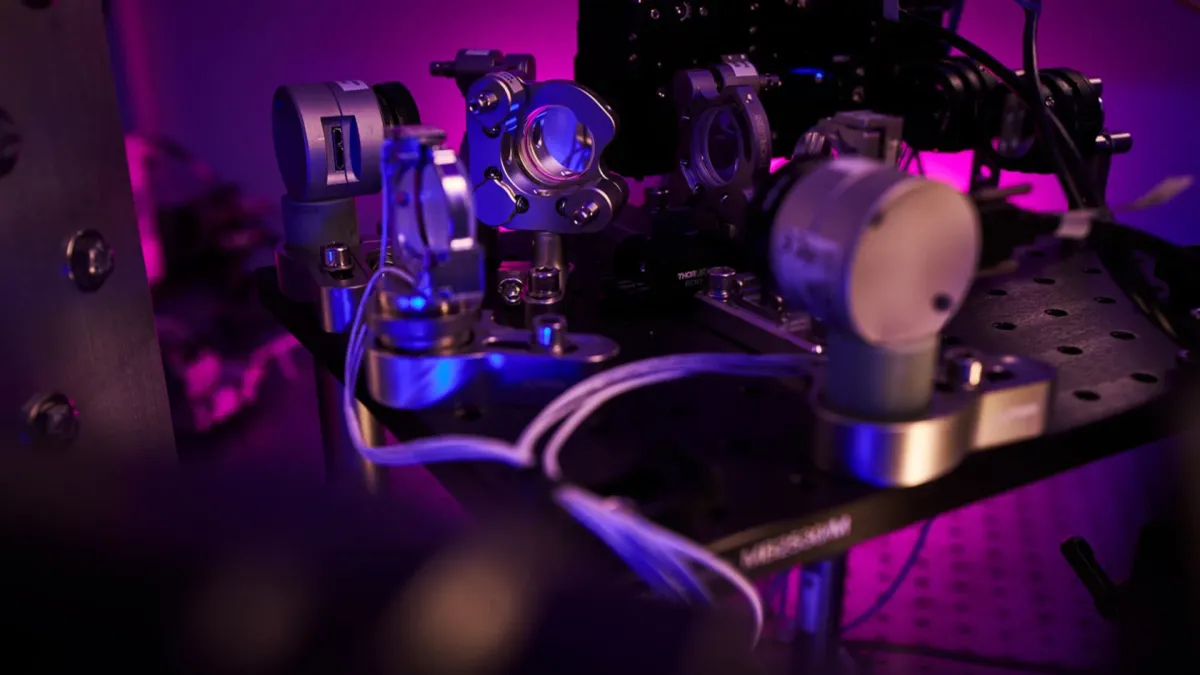
A German startup just unveiled JION, a new quantum computer that sounds like it should be blasting techno music but is actually doing something far cooler: solving some of the world's biggest problems without needing to be frozen solid.
This isn't just another super-smart calculator. JION is a trapped-ion quantum computer, which means it uses individual atoms as its information bits (qubits, if you're nasty). And unlike some of its cryogenically-inclined cousins, it runs at room temperature. Let that sink in: a quantum computer that doesn't need to be kept colder than deep space. Which, if you think about it, is both impressive and slightly terrifying.
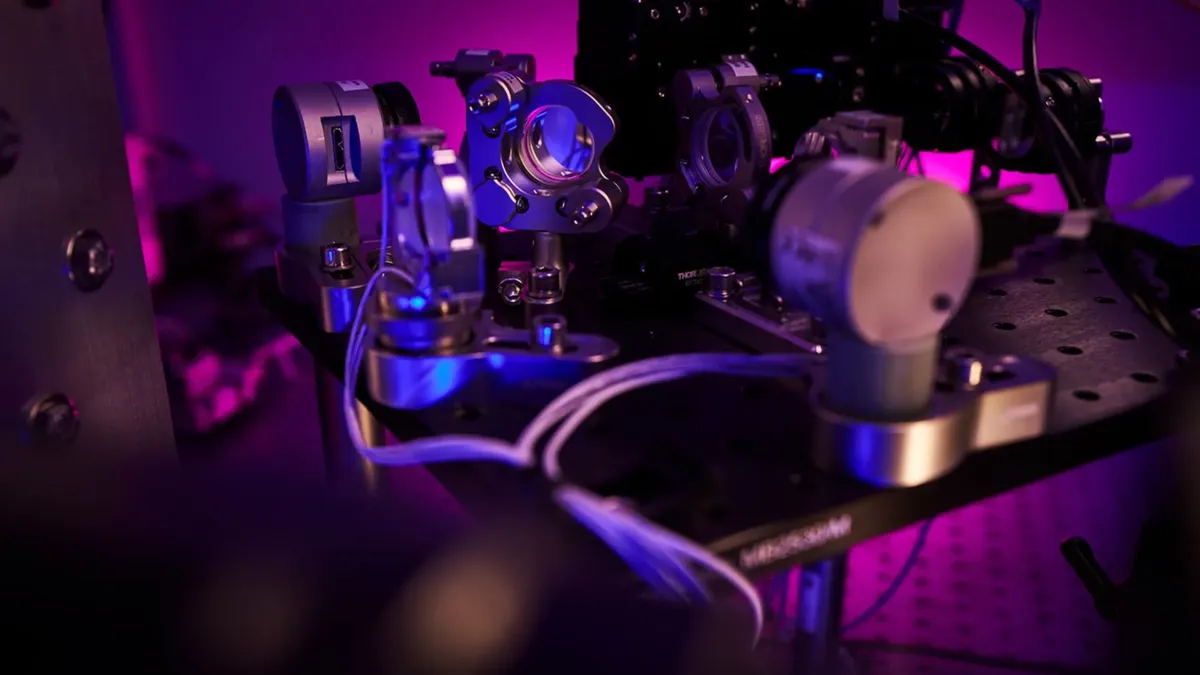
Developed by eleQtron and funded by the North Rhine-Westphalia government, JION is set to plug directly into the Jülich Supercomputing Center (JSC). Because apparently, that's where we are now: connecting quantum computers to supercomputers, just to see what kind of mind-bending problems they can tackle together. Climate change? New medicines? Probably figuring out why your Wi-Fi is so slow.
We're a new kind of news feed.
Regular news is designed to drain you. We're a non-profit built to restore you. Every story we publish is scored for impact, progress, and hope.
Start Your News DetoxAtoms, Microwaves, and Pure Magic
JION — which stands for Jülich trapped-ion quantum computer, because Germans are nothing if not direct — uses ionized ytterbium atoms. These tiny powerhouses are held in a vacuum by electromagnetic fields and controlled by a proprietary tech called magnetic gradient-induced coupling (MAGIC). Essentially, it's a clever dance of microwaves and magnetic fields that lets them control individual qubits directly. No sub-zero shenanigans required.
This room-temperature operation is a pretty big deal. It makes JION easier to expand and operate, which is crucial if quantum computing is ever going to scale beyond lab curiosities. Think less of a delicate science experiment and more of a robust, problem-solving machine.
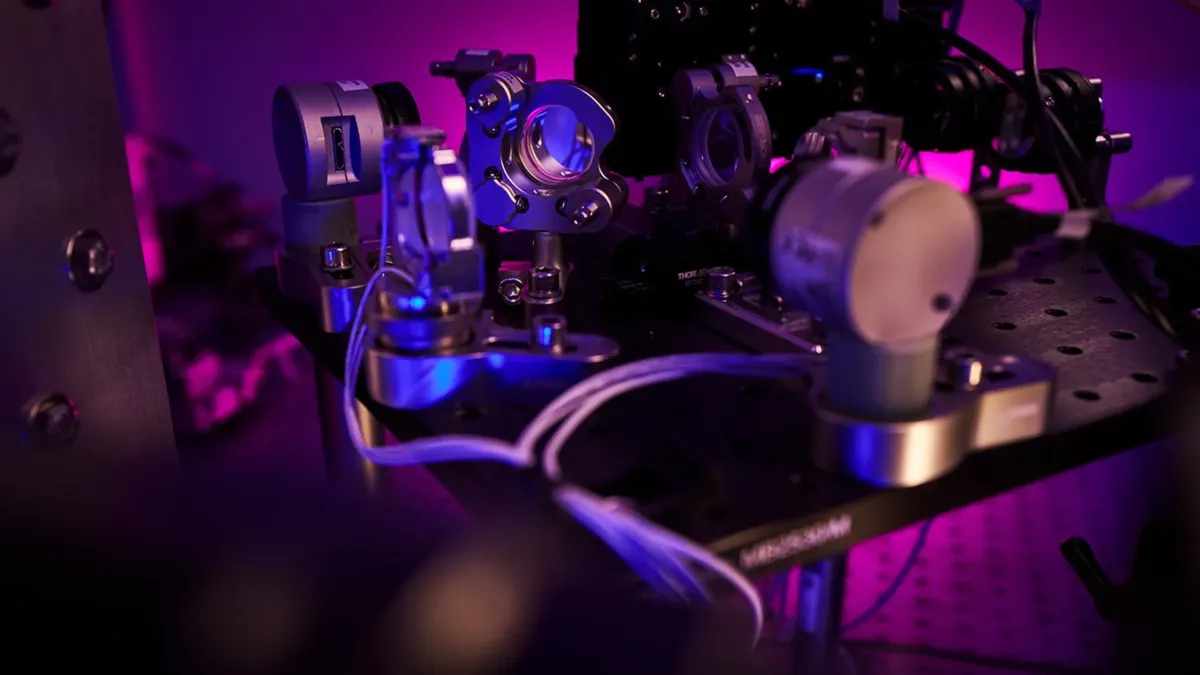
The €21 million (about $24.39 million) project is a partnership between JSC and eleQtron, with the goal of integrating quantum computing with high-performance computing (HPC). Imagine a supercomputer offloading its trickiest puzzles to a quantum machine. That's the hybrid future JUNIQ, JSC's modular system, is building. It's like having a super-brain and then giving it a quantum sidekick for the really tough stuff.
And because one quantum computer is never enough, North Rhine-Westphalia also announced another €25 million (about $29 million) for SQALING, which will further develop eleQtron's MAGIC tech for a chip-based quantum platform. Another €25 million is earmarked for Q-STAR, focusing on integrating scalable semiconductor-based quantum computing. It seems Germany is all-in on making sure their quantum future is not only bright but also refreshingly temperate.