Practice helps the brain learn new movements. But what happens right after practice might decide if that skill sticks around. Scientists have known that just repeating something isn't enough for learning. A new movement needs to be locked in through memory consolidation, a process that keeps going even after you stop practicing.
New research in mice suggests that signals from the body can help create the right conditions for this to happen. Researchers at Tohoku University found that stimulating the vagus nerve after training led to stronger motor learning over the next few days. This shows that communication between our internal organs and the brain might be very important for long-term learning.
The findings were published in iScience.
The Vagus Nerve: A Body-Brain Link
The vagus nerve is a key pathway for communication in the body. It sends sensory information from organs to the brain. It also carries commands from the brain to control things like heart rate and digestion.
We're a new kind of news feed.
Regular news is designed to drain you. We're a non-profit built to restore you. Every story we publish is scored for impact, progress, and hope.
Start Your News DetoxVagus nerve stimulation (VNS) is already used to treat some health problems. Scientists usually study it for how it affects brain chemicals and nerve activity. But this new research points to another possible way it works: by changing the tiny blood vessels that bring oxygen and nutrients to active brain tissue.
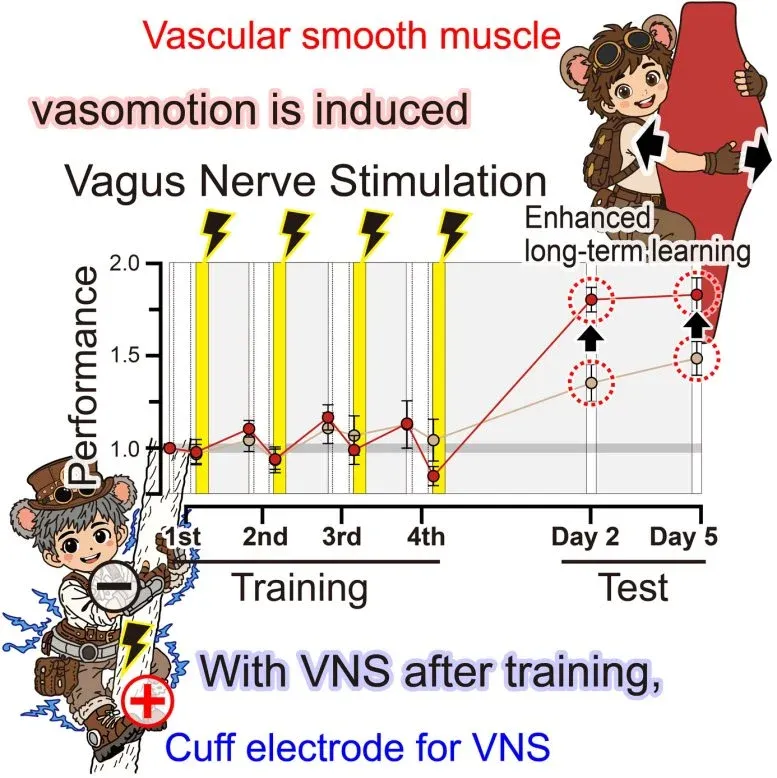
To study this, the team used a small electrode placed around the left vagus nerve of a mouse. They then tested stimulation during a task called horizontal optokinetic response (HOKR) learning. This task relies on the cerebellum, a brain area important for movement timing, precision, and adaptation.
Learning Continues After Practice
During the task, mice learned to follow moving visual stripes better with their eyes. This is similar to how a person's eyes move automatically when watching a passing train from a platform.
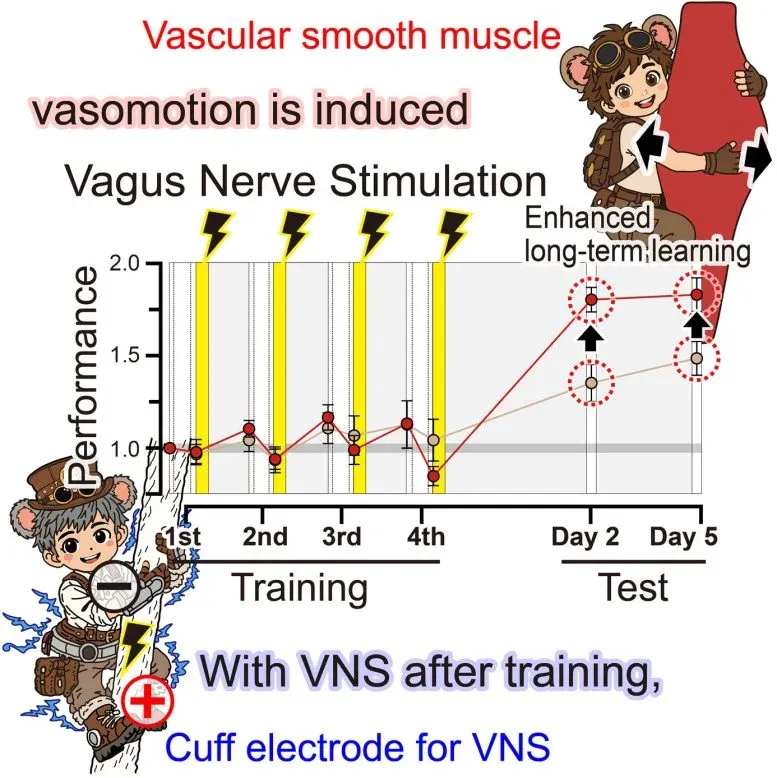
The important part was that the researchers only stimulated the vagus nerve after each training session. It didn't help the mice perform better right away during practice. Instead, the improvement showed up on later days. The stimulated mice remembered what they learned much better. This delayed benefit means VNS helped the processes that save a motor memory after practice, rather than helping them do the task at that moment.
Professor Ko Matsui explained that VNS was only given after training. He noted that the findings suggest VNS might open a "hidden window of opportunity" for better learning by making the brain more ready for lasting changes.
Blood Flow Rhythms and Memory
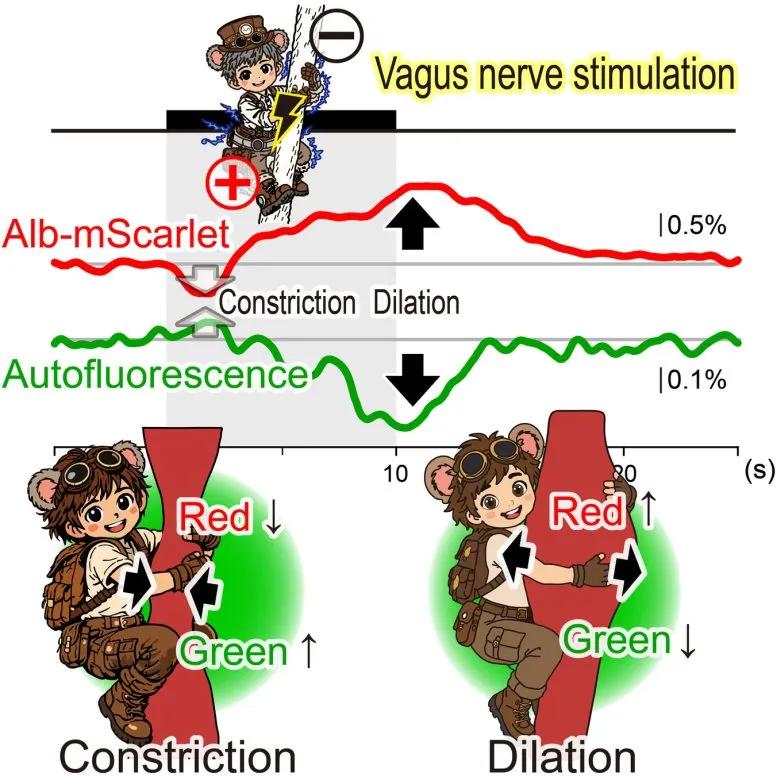
The team looked for physical changes that could explain this effect. They measured blood volume near the cerebellar flocculus, an area involved in HOKR learning. Using a technique called fiber photometry, they found that one burst of VNS caused a two-stage response in blood vessels. Blood volume briefly went down, then increased after a short delay.
Repeated stimulation created rhythmic ups and downs in local blood volume. The size of these changes seemed important. Mice with bigger changes tended to learn better on day five. This link suggests that VNS might help memory consolidation partly by changing the environment around the brain circuits used during training.
Lead author Junyu Chen said that our brains might be more influenced by the body than we think. He believes that by adjusting the brain's metabolic environment, including rhythmic blood vessel movements, we might unlock hidden learning abilities.
A New Way to Boost Motor Learning
This research was done in mice, so it doesn't yet prove that stimulation after practice would improve human learning. However, it highlights a period that is often overlooked. A training session might end when practice stops, but the brain continues to work on saving that experience.
Future studies will look at the best timing and pattern for stimulation. They will also examine how blood vessel rhythms help with long-term brain changes. Understanding this two-way communication between the brain and body could eventually show why some experiences become lasting skills while others fade. It might also reveal if the brain's post-training window can be used to make learning more effective.
Deep Dive & References
Vagal nerve stimulation induces vascular oscillations and enhances long-term learning - iScience, 2026