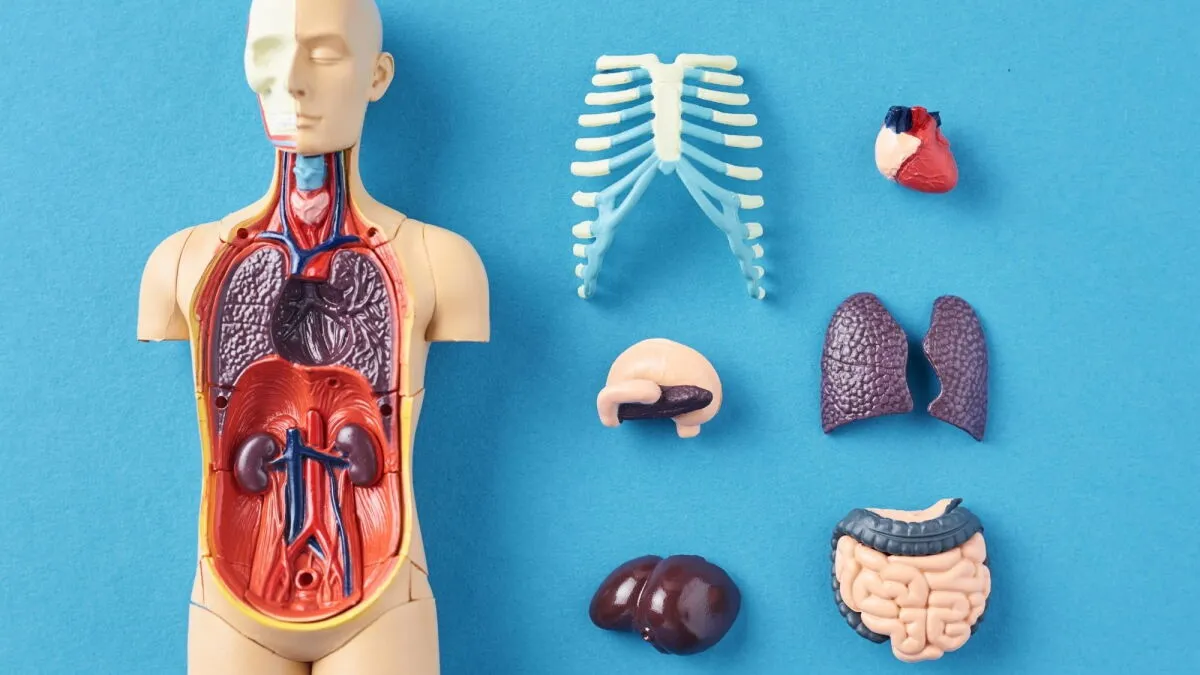
Ever feel like your knees are 80, but your brain is still firmly in its twenties? Turns out, that's not just a feeling. Your organs aren't exactly on the same biological clock. While some parts of your body are racing towards retirement, others are taking their sweet time.
Researchers at the Sanford Burnham Prebys Medical Discovery Institute cooked up a new way to measure this cellular slow dance. Instead of just counting birthdays or checking DNA changes (the usual suspects), they looked at the actual physical structure of cells. Because, apparently, even cells have bad hair days.
The Body's Architectural Review
Think of it like this: your body's cells are constantly changing, and these changes are basically tiny billboards screaming, "I'm getting older!" The team meticulously studied stained tissue samples from a sprawling range of ages. What they found were clear correlations between these structural shifts and classic aging signs – things like more inflammation, less energy, and a general dip in quality control. Your cells, it seems, start letting standards slip.
We're a new kind of news feed.
Regular news is designed to drain you. We're a non-profit built to restore you. Every story we publish is scored for impact, progress, and hope.
Start Your News DetoxComputational biologist Sanju Sinha, one of the masterminds behind this, laid out the mission: "Our goal is to understand how aging occurs at a structural level. To do this, we needed thousands of normal organ tissues over a wide range of ages." Because you can't understand the party without seeing all the guests, right?
They applied their new structural-aging method to over 25,000 tissue samples from nearly 1,000 adults. The results? A cellular symphony playing at wildly different tempos. Blood vessels, for example, apparently hit their aging stride early on, while organs like the uterus decide to mature much, much later. Some tissues, like the ovaries, even showed a bizarre aging pattern: a spike in their thirties, a dip in their forties (a second youth, perhaps?), then another rise during menopause. Which, if you think about it, is both impressive and slightly terrifying.
The Surprising Conductor of Aging
Here's where it gets really interesting. While tissues within the same organ mostly aged in sync, the broader picture revealed a coordinated decline across different tissues, all linked by sex hormones. So, if your esophagus was showing its age, your prostate might be echoing a similar sentiment. Because apparently, these two are in cahoots.
The researchers suggest a hormonal signaling system might be the puppet master. When this system starts to falter, it could trigger a synchronized deterioration across various organ systems. Meaning, your sex organs might just be the body's aging pacemaker.
More than half of the tissues they examined showed architectural changes that perfectly matched those in the ovaries. This isn't just a fun fact for your next dinner party; it could actually point to new ways to develop treatments. Imagine easing aging in one part of the body by subtly tweaking another. The future of anti-aging might just involve a chat with your reproductive system.
This rather insightful peek into our cellular timelines was published in Nature Aging. So, next time you feel a creak, remember: it might just be your internal orchestra playing a slightly off-key tune.