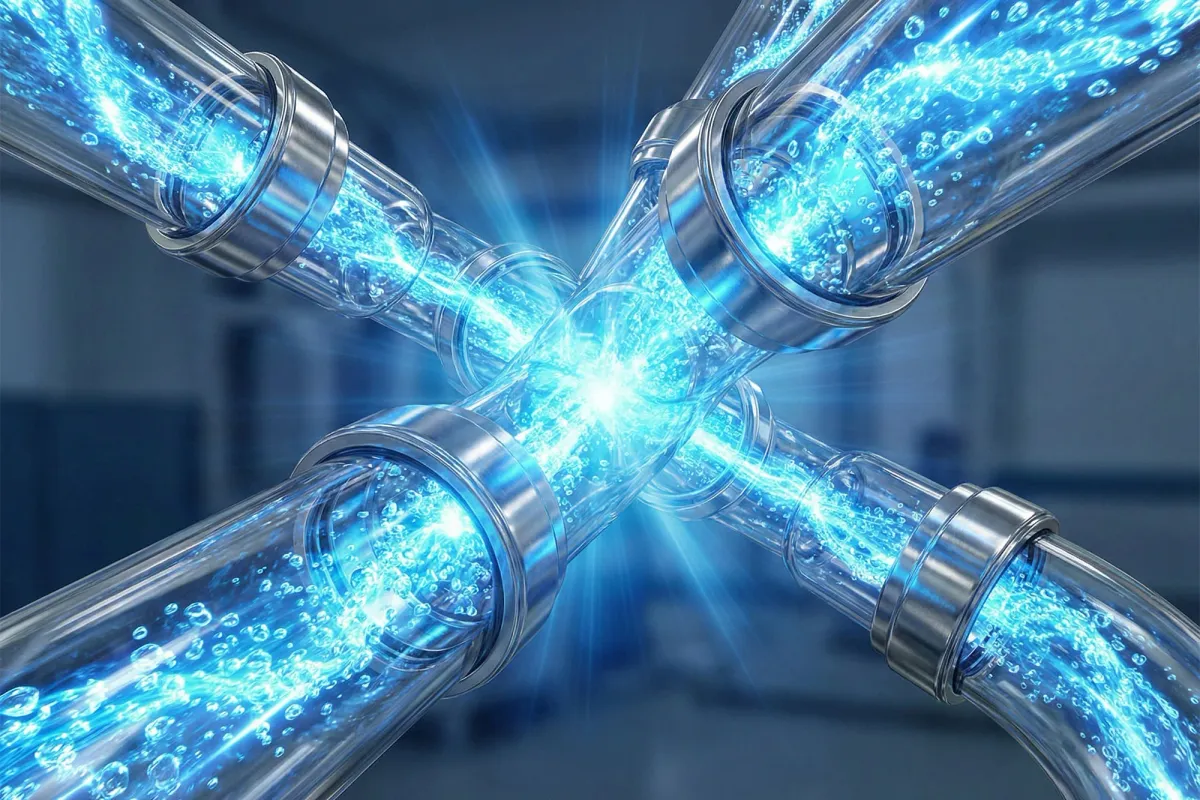
Where rivers spill into the ocean, freshwater and saltwater naturally want to mix. That collision of two different salt concentrations releases energy — enough to power homes if we could capture it efficiently. Researchers at EPFL just showed how.
The challenge has never been getting ions to move. It's been getting them to move fast while keeping the system stable enough to actually work. Most membranes force you to choose: let ions rush through and you lose precision, or keep them selective and they crawl. Real devices also have to survive the pressure and flow of continuous operation without falling apart.
A team led by Aleksandra Radenovic found an elegant solution: coat the ion channels with a lipid layer — the same type of fatty molecules that form cell membranes in nature.
We're a new kind of news feed.
Regular news is designed to drain you. We're a non-profit built to restore you. Every story we publish is scored for impact, progress, and hope.
Start Your News DetoxHow a slippery surface changes everything
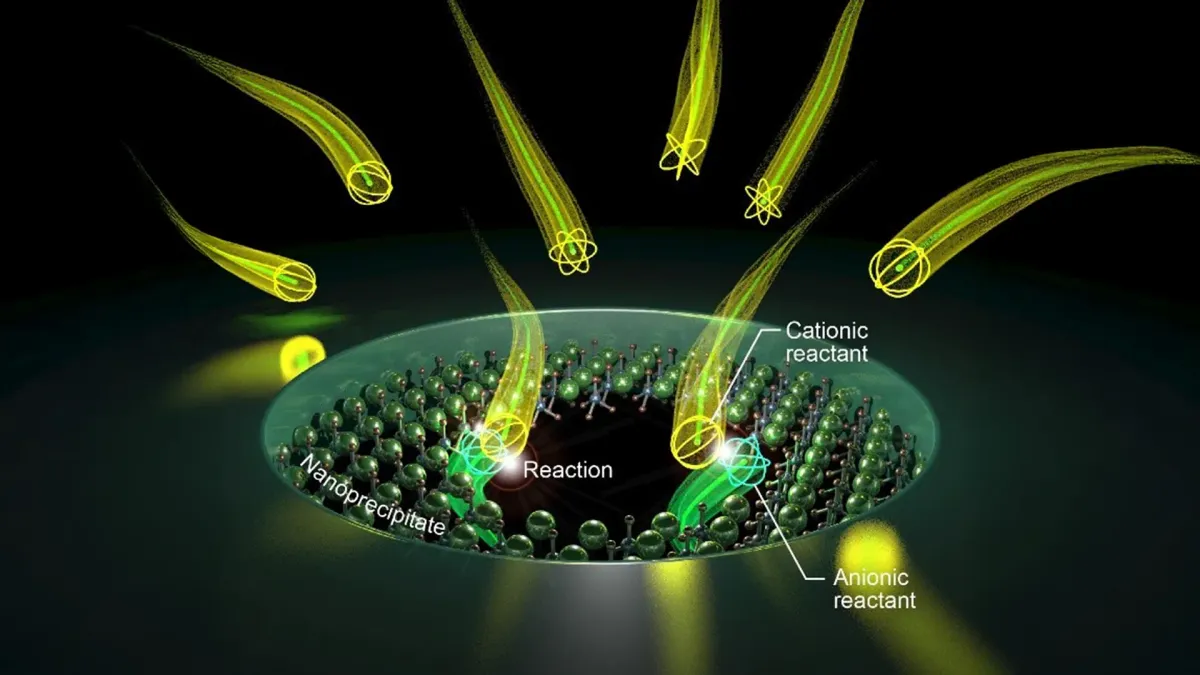
The researchers embedded 1,000 nanopores (channels smaller than a virus) into a silicon membrane and coated them with lipid bilayers. These molecules arrange themselves naturally, with their water-loving heads facing outward. That outward-facing layer pulls in a paper-thin film of water — just a few molecules thick — that clings to the pore surface.
The result: ions moving through encounter almost no friction. They're essentially sliding on a frictionless water layer instead of rubbing against the pore walls.
When the team tested this setup under conditions that mimic where seawater meets river water, the power output reached about 15 watts per square meter. That's 2–3 times higher than current polymer membrane technology. For context, that's the kind of improvement that could make the difference between a lab prototype and something a utility company would actually build.
"By showing how precise control over nanopore geometry and surface properties can fundamentally reshape ion transport, our study moves blue-energy research beyond performance testing and into a true design era," says LBEN researcher Tzu-Heng Chen.
What makes this work particularly significant is that it opens a design space. Earlier approaches were mostly about testing different materials and hoping for better results. This one reveals why the system works and how to tune it — the kind of understanding that usually precedes real scaling.
The researchers also note the principle extends beyond blue energy. The same hydration lubrication effect could improve other ion-transport applications, from water desalination to medical diagnostics.
The next phase isn't about proving the concept works in a lab anymore. It's about whether this approach can be manufactured at scale and whether the lipid coating stays stable over months of continuous operation. Those are engineering questions, not physics questions — and that's usually when something moves from interesting to practical.