The International Space Station orbits 250 miles above Earth with nearly 17,000 cubic feet of living and working space — bigger than a six-bedroom house, but arranged like a studio apartment where every surface serves multiple purposes. Now you can walk through it without leaving the ground.
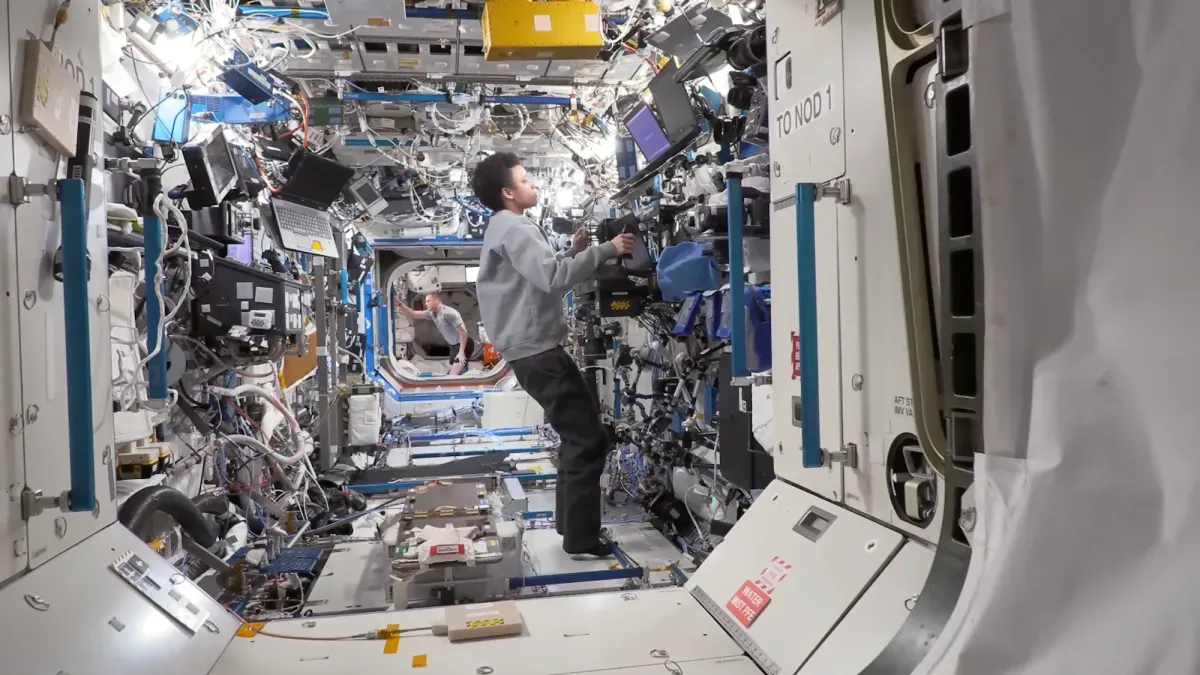
NASA just released a high-definition video tour guided by Commander Nicole Mann, and it's the closest most of us will get to seeing how humans actually live in orbit. The walkthrough starts in the Columbus Laboratory Module, Europe's contribution to the station, where researchers study how fluids behave without gravity pulling on them. Mann then moves into Kibo, Japan's experiment module, where the work ranges from deploying satellites to managing an external robotic arm that does repairs outside the station's walls.
Life in the margins
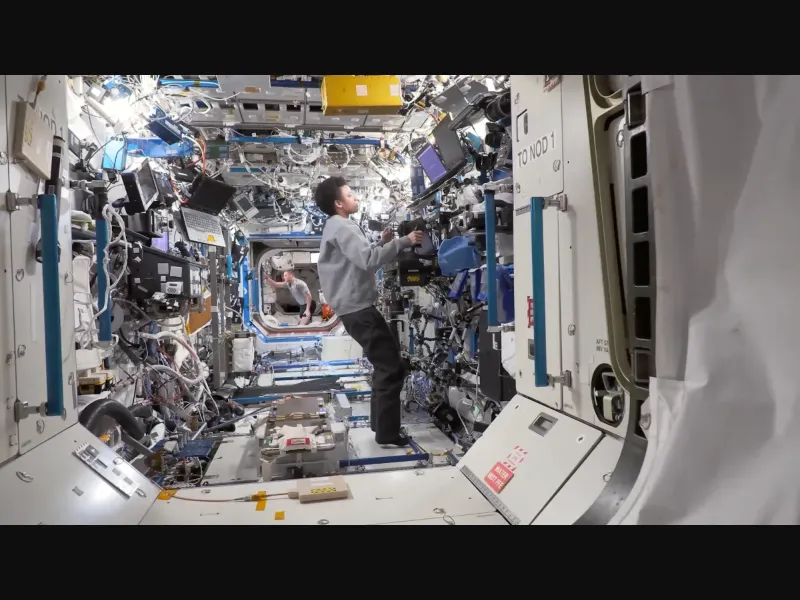
What strikes you watching this isn't the science — it's the intimacy. You see how astronauts eat (carefully, with magnetic trays to keep food from floating away), how they navigate through tunnels barely wider than a person, how they sleep in sleeping bags velcroed to the wall. Every cubic inch serves a purpose. Cables run along surfaces. Storage compartments are labeled in multiple languages. The station is a working laboratory first, a home second, and it shows.
We're a new kind of news feed.
Regular news is designed to drain you. We're a non-profit built to restore you. Every story we publish is scored for impact, progress, and hope.
Start Your News DetoxHumans have lived continuously aboard the ISS for over 25 years — a streak that's become so routine we barely notice it anymore. But this era has an expiration date. NASA has scheduled deorbital procedures to begin in 2031, which means the station will eventually fall back to Earth and burn up during re-entry. The video tour, in a way, is documentation of something ending. Not with fanfare, but with a quiet record of what humans built together in the black.
Watching Commander Mann move through the station's modules, you're seeing both an achievement and a chapter closing. The next phase of space work will look different — smaller, more commercial, more distributed. But for now, there's still a place 250 miles up where people from dozens of countries work side by side, and NASA is letting you peek inside.