Remember when you just hoped your organic kale was, you know, actually organic? Well, buckle up, because the food world is getting a transparency upgrade, and it's not just about what's on your plate. It's about saving the planet, too. Because apparently, that's where we are now.
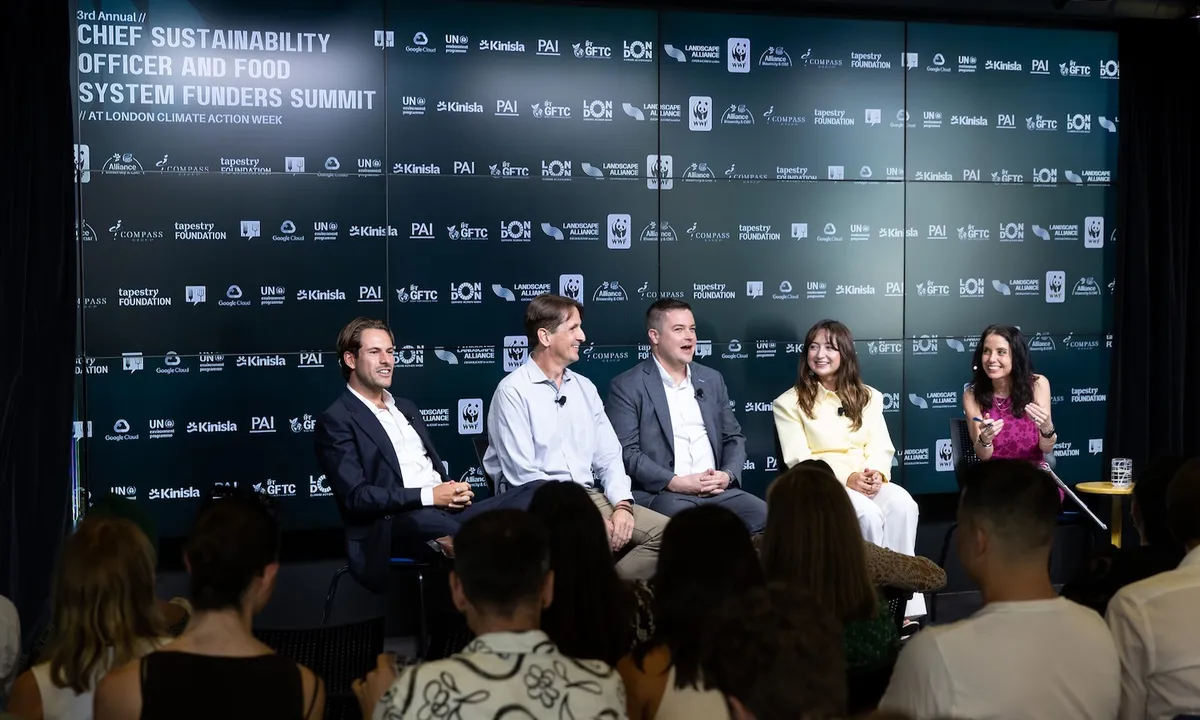
Experts recently gathered during London Climate Action Week, hosted by Food Tank, Google Cloud, and the U.N. Environment Programme, to discuss how tech is pulling back the curtain on everything from farm to fork. The goal? To make food systems a core part of fighting climate change. Which, if you think about it, is both impressive and slightly terrifying.
Farmers, Forests, and Your Future Dinner
Take Sophie Bell, an Irish farmer. She's dealing with a problem that sounds like something out of a wool-based crime drama: imported wool being passed off as local, undercutting her prices. If her wool's entire journey was clear, she says, it would set a new standard for Irish agriculture. No more woolly shenanigans.
We're a new kind of news feed.
Regular news is designed to drain you. We're a non-profit built to restore you. Every story we publish is scored for impact, progress, and hope.
Start Your News DetoxIt's not just about fair play for farmers. When buyers can see exactly where and how food is grown, they can actively choose to support producers who are doing right by people, animals, and the planet. Fernando Bellese from WWF points out that this kind of clarity helps everyone — from environmental groups to big brands — back farmers who are adopting more sustainable methods. The ball, he says, is now in the brands' and retailers' court.
Blade Brink from Wholechain, a company using blockchain to track food, notes that while many companies want traceable products, they often hit a wall trying to share that info across the entire industry. It's like everyone has a piece of the puzzle, but no one knows how to connect them.
The Digital Decoder Ring for Dinner
Enter technology, riding in on a white horse made of data. The big challenge isn't just collecting information, it's getting all the different software systems to talk to each other. Because, as Blake Harris from the Institute of Food Technologists (IFT) highlights, a surprising amount of the food supply chain still relies on good old paper documents. Which, in an age of AI, feels a bit like using a quill and ink for your grocery list.
But here's the exciting bit: IFT and others are developing tools that act like digital translators. They allow different systems, even across different companies, to communicate seamlessly. This means you can track a product from its humble origin all the way to your shopping cart. No more guessing games.
And these solutions aren't just for fancy beef or specific seafood. They're built to work for all products in food and agriculture. So, whether it's your coffee, your carrots, or that mysterious ingredient in your favorite snack, soon you might just know its entire life story. Get ready to impress your dinner guests.