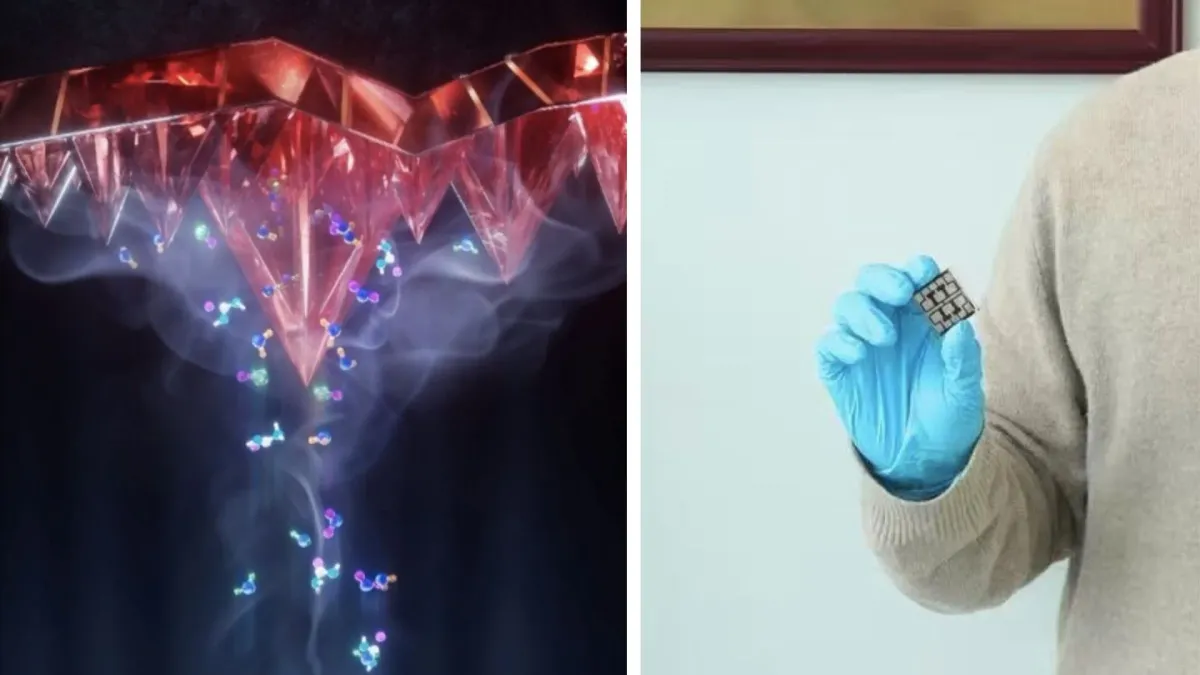
Scientists have found a way to steer electrons using nothing but the natural vibrations of atoms in certain crystals. No magnets. No batteries. No voltage. Just the right material and the right understanding of how it moves.
This matters because computing is hitting a wall. Traditional electronics—the ones powering your phone and laptop—are running up against the limits of how fast and efficient they can get. Researchers have been exploring a different approach called "orbitronics," which manipulates the orbital motion of electrons (the way they circle an atom's nucleus) to encode and process information far more efficiently than conventional methods.
The catch: until now, controlling this orbital motion required magnetic metals like iron. These materials are heavy, expensive, and increasingly hard to source. A team of physicists from North Carolina State University and the University of Utah just published a simpler solution in Nature Physics.
We're a new kind of news feed.
Regular news is designed to drain you. We're a non-profit built to restore you. Every story we publish is scored for impact, progress, and hope.
Start Your News DetoxThe spiral that changes everything
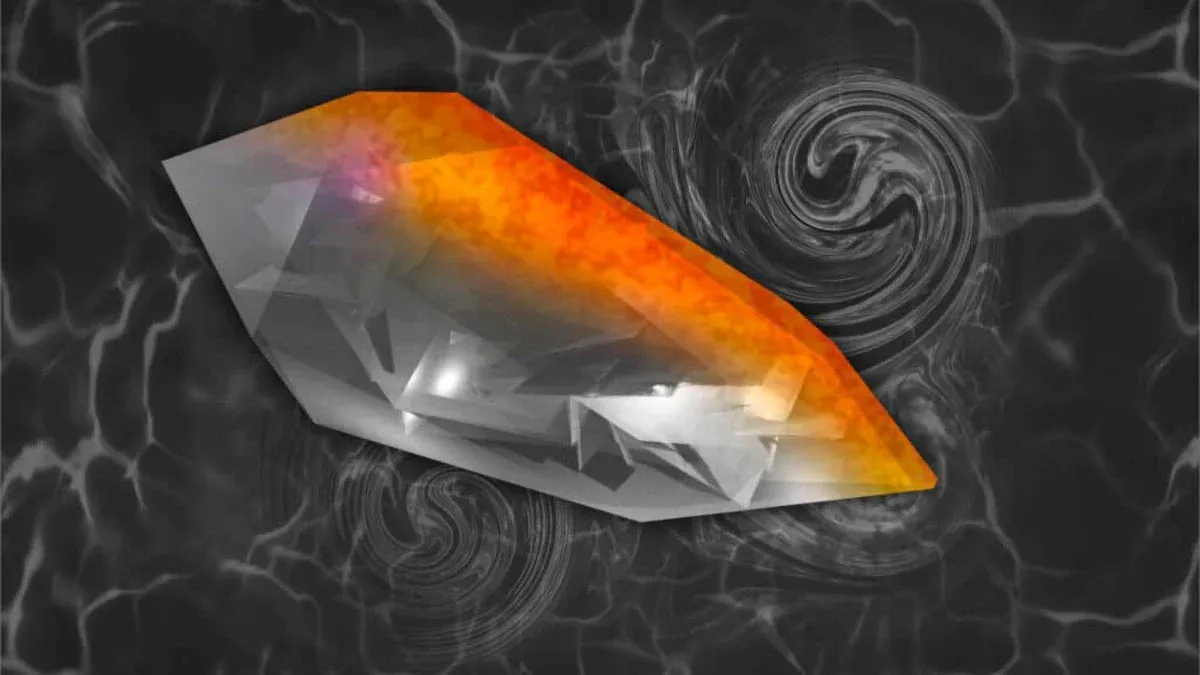
The breakthrough hinges on something called chirality—a property you can feel in your own hands. Your left and right hands are mirror images, but you can't perfectly overlap them. Some crystals, like quartz, have the same property. Their atoms arrange themselves in a spiral pattern, like a screw thread, twisting either left or right.
When atoms vibrate inside these chiral materials, they don't just jiggle back and forth. Because of the spiral structure, they move in circles. These coordinated circular vibrations—called chiral phonons—naturally carry angular momentum, the same rotational force that keeps a spinning top upright.
The researchers discovered that this angular momentum can transfer directly to electrons, controlling their orbital motion. "We don't need a magnet," said Valy Vardeny, a physicist at the University of Utah involved in the work. "We just need a material with chiral phonons. Before, it was unimaginable."
To prove it worked, the team used quartz and measured the effect using lasers at Florida's National High Magnetic Field Lab. They found that even though quartz isn't magnetic in the traditional sense, its chiral phonons create their own internal magnetic fields—invisible levers they could pull on to manipulate electrons.
They called the effect the "orbital Seebeck effect," after a similar phenomenon that influences electron spin. By applying a magnetic field to align the phonons in the quartz, they showed the effect could be triggered without needing a permanent magnet. To measure the result, they placed thin layers of tungsten and titanium on top of the quartz, which converted the orbital flow into an electrical signal they could detect.
Why this opens new doors
The practical implications are significant. Quartz is lightweight, cheap, and abundant. Other chiral materials like tellurium and selenium should work the same way. The method is also more efficient—it holds the orbital angular momentum longer than other systems and uses less material overall.
For computing, this means potentially building faster, more efficient devices without hunting for rare or costly magnetic materials. One of the researchers, Rikard Bodin, offered a perspective worth keeping in mind: "I can't tell you that your TV is going to run on it tomorrow, but it's creating more levers that we can pull on to do new things. That's how technology works—someone discovers something, someone else pushes it forward, and before you know it, it's everywhere."
The path from lab discovery to everyday technology is rarely direct. But this finding removes a major barrier that was holding orbitronics back.