When the sun sets, solar panels go quiet. But researchers at UC Santa Barbara have created a molecule that keeps working after dark—a liquid that captures sunlight, locks the energy into chemical bonds, and releases it later as heat on demand.
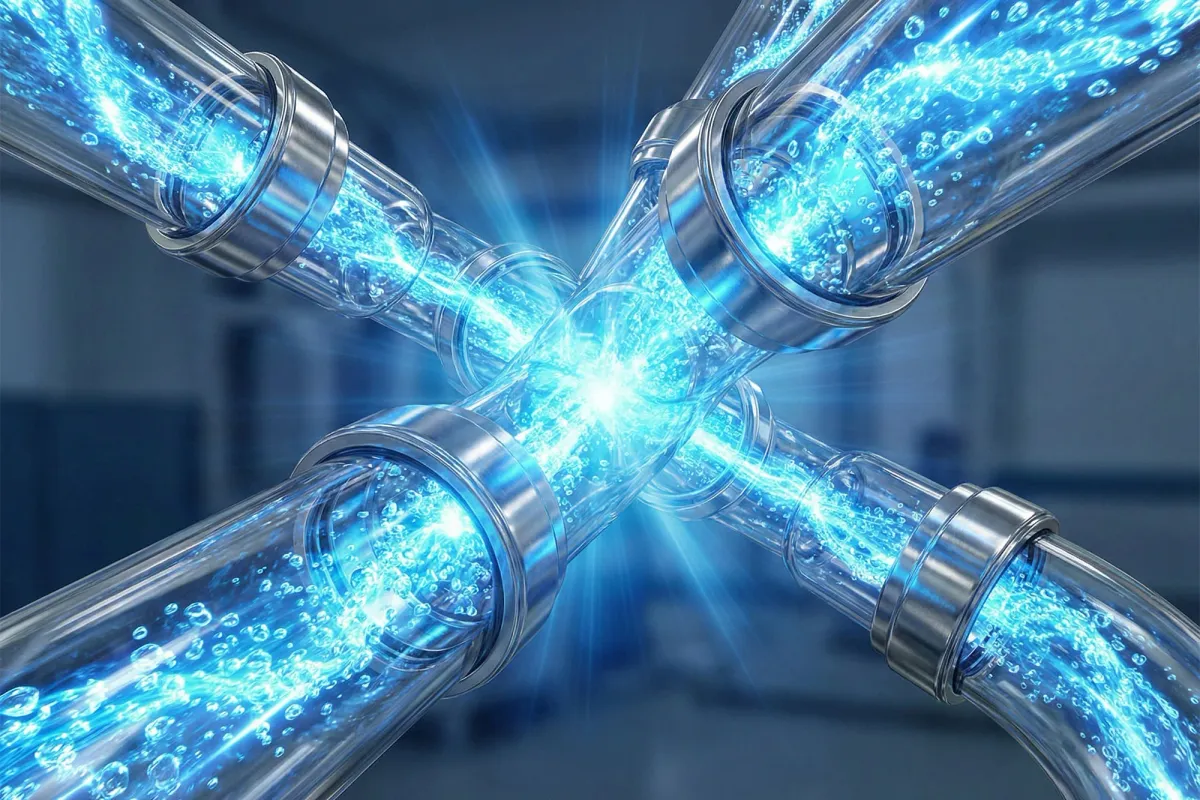
The innovation is called molecular solar thermal (MOST) energy storage, and it works like a tiny mechanical spring. When sunlight hits the molecule, its structure twists into a high-energy state and stays locked there. A small amount of heat or a catalyst triggers it to snap back, releasing the stored energy as warmth.
"We typically describe it as a rechargeable solar battery," said Han Nguyen, the doctoral student who led the study published in Science. "It stores sunlight, and it can be recharged."
We're a new kind of news feed.
Regular news is designed to drain you. We're a non-profit built to restore you. Every story we publish is scored for impact, progress, and hope.
Start Your News DetoxWhat makes this different from existing solar batteries is the energy density. The molecule stores more than 1.6 megajoules per kilogram—nearly double what a standard lithium-ion battery holds per unit of weight. In lab tests, the team demonstrated that the material could release enough energy to boil water at room temperature, a significant milestone for the field.
From the Lab to Your Home
The practical applications are already becoming clear. An off-grid camper could carry a compact system that charges during the day and releases heat at night. A house might have roof-mounted solar collectors that charge the liquid during daylight, then circulate it through water heaters after sunset. The material doesn't degrade after repeated use, so the same batch could work for years.
Associate Professor Grace Han's team, supported by the Moore Inventor Fellowship, has essentially created a way to extend the working day of solar energy. Instead of needing heavy battery infrastructure or grid connections, the energy stays stored in the liquid itself—portable, recyclable, and ready to release whenever needed.
The sun still sets each evening. But with systems like this one, its energy could linger long after the daylight fades.