Researchers at Rice University have found a way to detect defects in ultra-thin electronics before they cause failure—a problem that's been invisible to standard inspection methods until now.
When you stack sheets of two-dimensional materials to build advanced electronics—transistors, photodetectors, quantum devices—you're working at scales where even tiny imperfections matter. Hexagonal boron nitride (hBN) is a popular choice for these layers because it's atomically flat and chemically stable. But here's the catch: the material is never actually perfect. Long, narrow misalignments can form during routine handling, like creases in pages that slip out of alignment in a book. These defects are nearly impossible to spot with conventional microscopes, yet they act like tiny charge traps, causing electricity to leak at much lower voltages along the fault lines.
The result is unpredictable. Two devices built identically can perform completely differently if one contains these hidden fault lines. For manufacturers trying to scale up production of reliable ultra-thin electronics, this is a serious problem.
We're a new kind of news feed.
Regular news is designed to drain you. We're a non-profit built to restore you. Every story we publish is scored for impact, progress, and hope.
Start Your News DetoxFinding What's Invisible
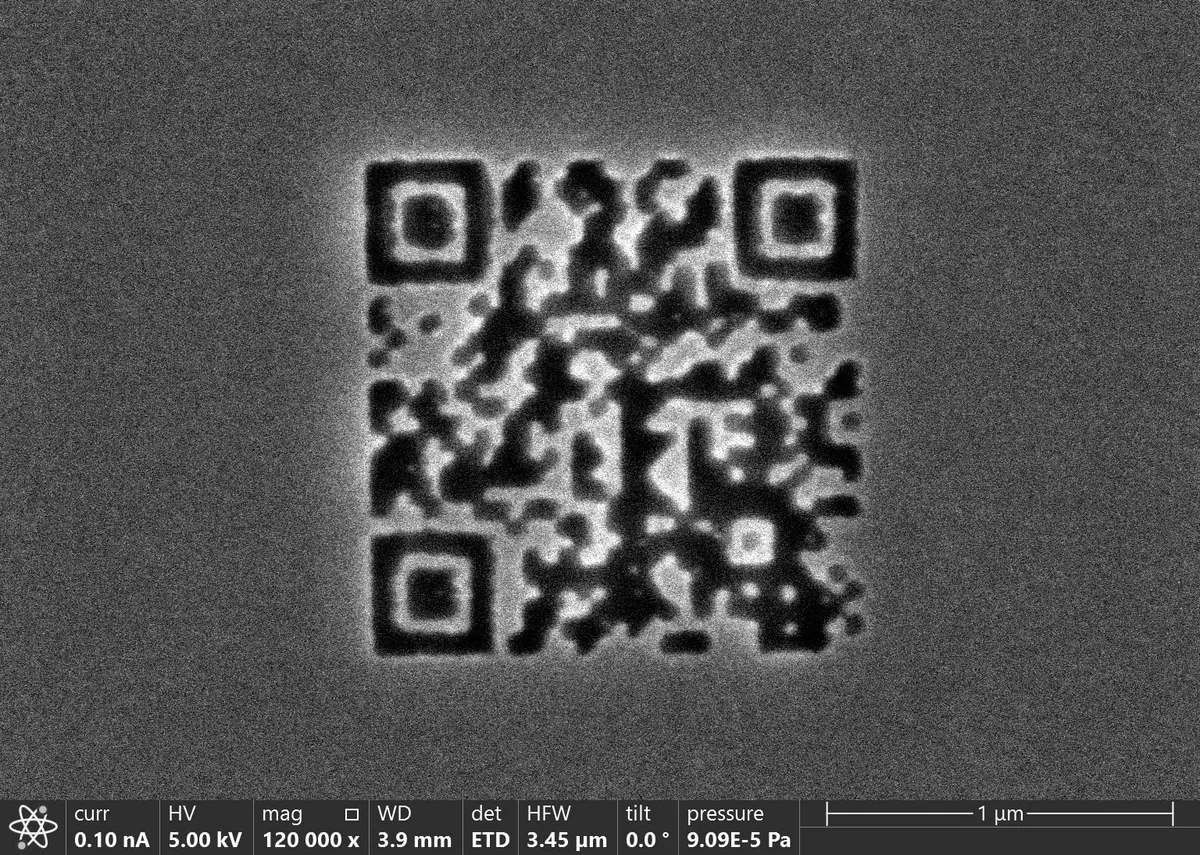
The Rice team's breakthrough came from cathodoluminescence spectroscopy, a technique that scans material with an electron beam and records the light it emits. Since hBN emits deep ultraviolet light that most labs can't easily produce, this emission mapping revealed bright, narrow stacking faults that other methods miss entirely. The researchers also discovered that defects form more readily in thicker flakes—a finding that could guide material selection.
By combining electron microscopy, cathodoluminescence mapping, and force-based measurements, the team developed a practical way to identify these defects before they undermine device performance. "By showing practical ways to detect when and where these defects form, we help make future devices more reliable and repeatable," said Hae Yeon Lee, an assistant professor of materials science and nanoengineering at Rice.
The approach works for other layered materials too, which means the same detection strategy could improve reliability across the entire field of ultra-thin electronics—from flexible displays to quantum computing components. What started as a problem with one material has opened a door to making a whole category of emerging technology more dependable.