Every Southern Hemisphere summer, the waters around Antarctica erupt with life. Vast blooms of phytoplankton — single-celled organisms so numerous they're visible from space — spread across the Southern Ocean, pulling carbon dioxide from the atmosphere and feeding everything from krill to whales. Scientists have long known these blooms happen. What they didn't know was why some years they swell to the size of California, and other years they shrink to the size of Delaware.
New research published in Nature Geoscience has uncovered a surprising culprit: earthquakes on the seafloor.
When researchers combined satellite observations of phytoplankton with seismic records spanning multiple years, a pattern emerged. In the months leading up to summer, whenever magnitude 5 or greater earthquakes struck beneath the Southern Ocean, the resulting phytoplankton blooms became significantly denser and more productive. The connection was direct enough that seismic activity in the preceding few months emerged as the main factor controlling bloom size.
We're a new kind of news feed.
Regular news is designed to drain you. We're a non-profit built to restore you. Every story we publish is scored for impact, progress, and hope.
Start Your News Detox"When looking back over satellite observations of this bloom, we've seen it swell to the size of the state of California or down to the size of Delaware," said Casey Schine, lead author of the study. "Our study ultimately showed that the main factor controlling the size of this annual phytoplankton bloom was the amount of seismic activity in the preceding few months."
How Earthquakes Feed the Ocean
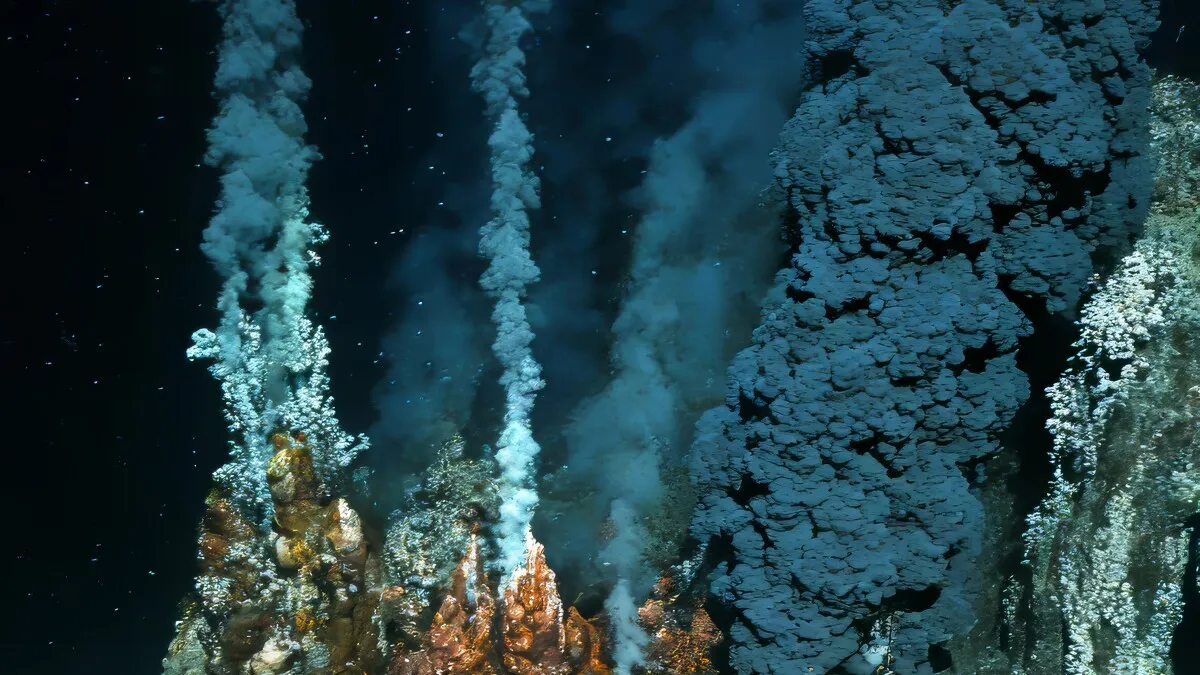
The mechanism is elegant. Deep beneath the seafloor, hydrothermal vents — essentially the ocean's natural plumbing system — continuously release mineral-rich fluids into the surrounding water. When an earthquake ruptures the crust, these vents intensify temporarily, sending pulses of iron upward through the water column. For phytoplankton, iron is like fertilizer. It's often the limiting nutrient in polar waters, and when it becomes available, the organisms respond with explosive growth.
As these microscopic plants multiply, they absorb carbon dioxide through photosynthesis, incorporating that carbon into their cells. When they die and sink, that carbon gets transported into deeper ocean layers — a process scientists call the biological carbon pump. It's one of the planet's most important mechanisms for removing atmospheric carbon and storing it where it can't warm the climate.
This earthquake-driven nutrient boost could play a meaningful role in global carbon cycling, though researchers emphasize the work is still early. "There are many other places across the world where hydrothermal vents spew trace metals into the ocean and that could support enhanced phytoplankton growth and carbon uptake," said Kevin Arrigo, senior study author. "However, these regions remain difficult to sample, making it hard to gauge how much these systems really matter at the planetary scale."
What makes this finding striking isn't just the mechanism itself — it's that it's the first documented direct link between seafloor earthquakes and surface ecosystem productivity. The Southern Ocean's phytoplankton blooms were already known to be among Earth's most important biological engines. Now we know they're being partially powered by forces deep beneath the waves.