Scientists at Idaho National Laboratory have built something that sounds like science fiction but works like good engineering: a nuclear reactor made entirely of light.
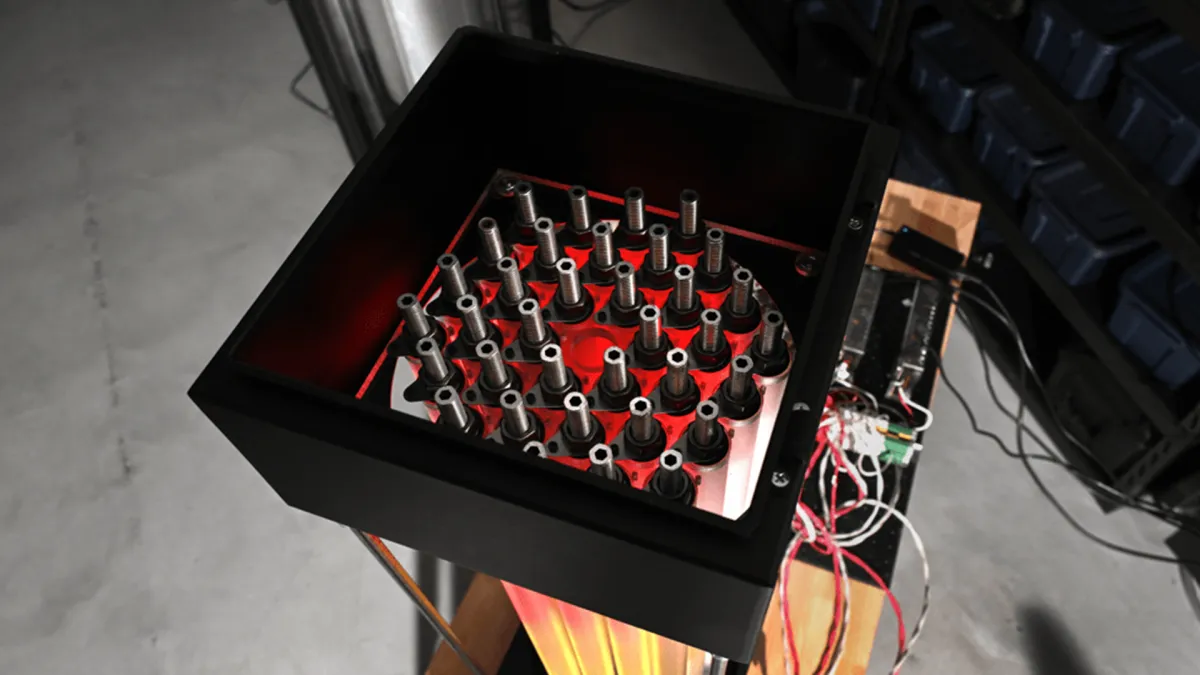
It's called ViBRANT—Visual Benign Reactor as Analog for Nuclear Testing—and it replaces the dangerous radioactive core of a real reactor with thousands of LEDs that pulse and shift color to mimic what happens inside an actual nuclear furnace. No radiation. No hazardous materials. Just photons doing the work that neutrons would do in the real thing.
"The fuel, the hazardous reflector and absorber materials driving reactor physics are actually replaced by benign materials amenable to light physics," explains Tony Crawford, the INL researcher who designed the system. "It reduces all the hazards from a real reactor to safe and accessible levels with the promise of accelerating development."
We're a new kind of news feed.
Regular news is designed to drain you. We're a non-profit built to restore you. Every story we publish is scored for impact, progress, and hope.
Start Your News DetoxThe breakthrough matters because next-generation nuclear reactors—small, modular systems designed to power data centers and desalination plants—need rigorous testing before they're deployed. Normally, that testing happens on paper or in expensive, heavily regulated facilities. ViBRANT compresses a full day of reactor operations into 10 minutes of LED simulation, letting engineers spot problems and iterate designs in real time.
The system pairs with MACS (Microreactor Automated Control System), which uses the exact same mechanical components that will actually control the MARVEL microreactor—an 85-kilowatt sodium-potassium cooled system in development. This means researchers can test and refine the real control hardware in a completely safe sandbox before it goes into the prototype.
The practical payoff came quickly. During ViBRANT testing, the team discovered a flaw in an actuator design that would have made it into the MARVEL prototype. They caught it, redesigned the part, and moved forward—all without touching a single radioactive material.
What Crawford emphasizes is the accessibility. "By being as intuitive as watching a TV screen, nearly everyone in the reactor development process from the modeler to the control system developer to the assembler can get involved and learn," he says. It's not just safer—it democratizes the knowledge. Engineers, technicians, and designers who'd normally be locked out of hands-on reactor work can now see exactly what's happening, ask questions, and contribute ideas.
ViBRANT also feeds into digital simulation work, linking real-time LED behavior to advanced nuclear modeling software so algorithms can be refined and validated against actual physics. It's the bridge between theory and the thing that actually has to work.
The next step is scaling this approach to other reactor designs and expanding how much of the development cycle can happen in this safe, fast-iteration environment.