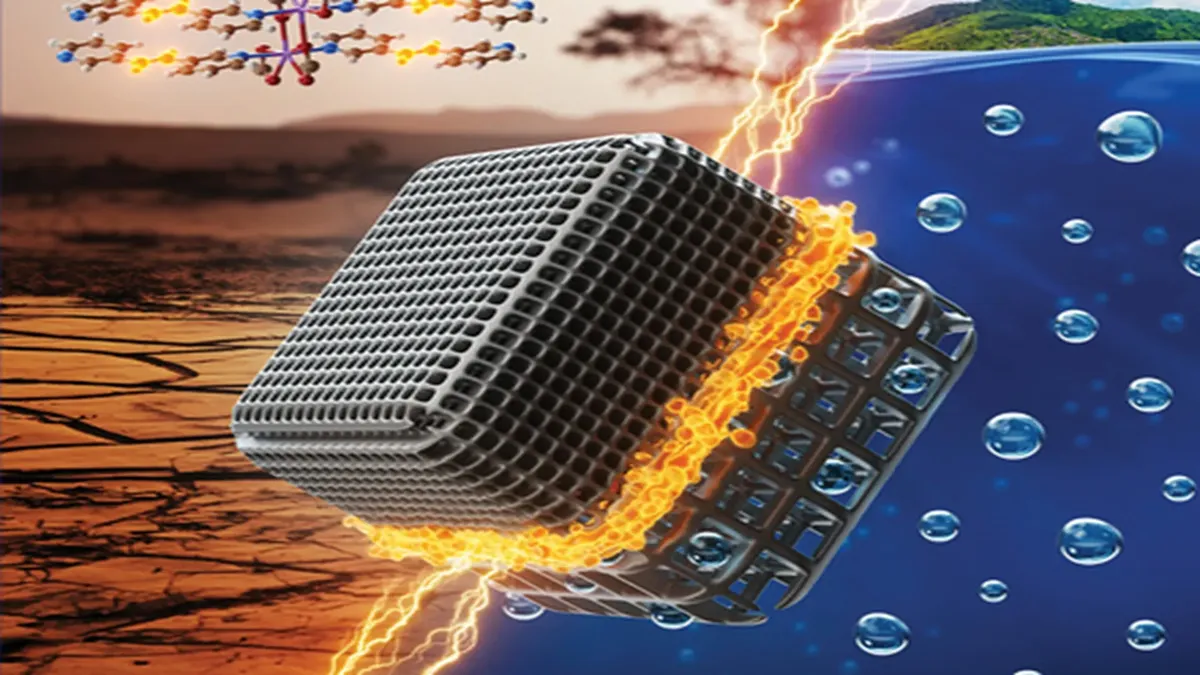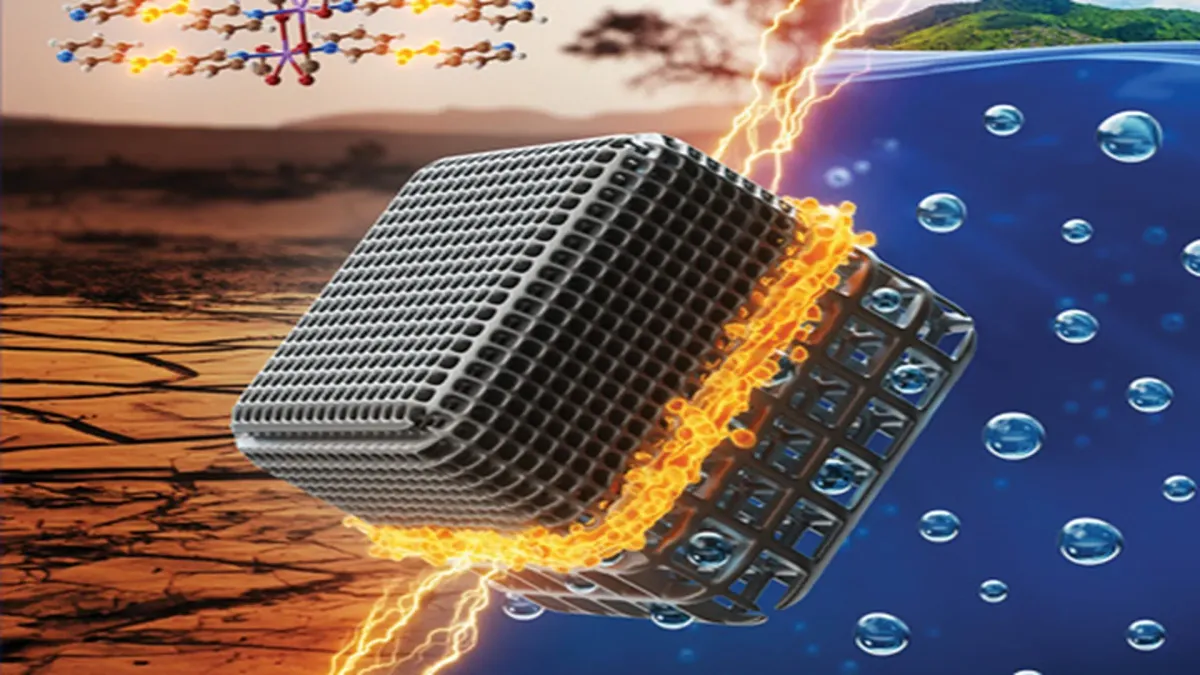
Chemists at the University of Iowa have essentially taught a crystal to perform a magic trick: pull water straight out of thin air. And the best part? It only needs a little UV light to get the job done. No complex machinery, no power plugs, just good old sunshine.
This isn't some fancy filter or a giant dehumidifier. We're talking about Metal-Organic Frameworks (MOFs), which are basically tiny, porous structures built from metal atoms and organic molecules. The weird bit? They started as a lattice with absolutely no space to store water. Like designing a sponge with no holes.
Let There Be Light, And Water
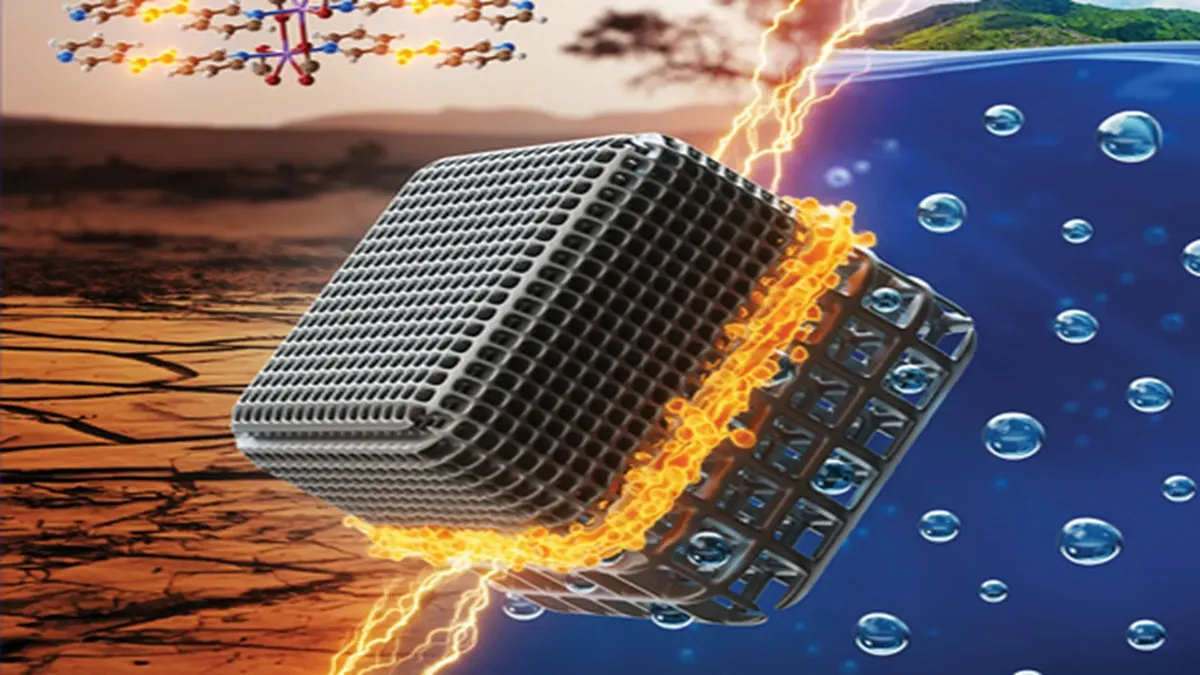
The real breakthrough happened when these seemingly unthirsty crystals were hit with ultraviolet (UV) light. Poof. The light triggered a chemical change, reshaping the internal structure and creating microscopic cavities. Suddenly, those dry, unassuming crystals became tiny water traps.
We're a new kind of news feed.
Regular news is designed to drain you. We're a non-profit built to restore you. Every story we publish is scored for impact, progress, and hope.
Start Your News DetoxLeonard MacGillivray, an adjunct professor in chemistry, put it rather simply: they found a way to capture and store water using only sunlight. You could theoretically transport these water-logged crystals wherever they're needed, then release the H2O on demand. Because apparently that's where we are now: crystals that can be mailed with a side of hydration.
Under lab conditions, each crystal can store about five percent of its weight in water. Which, granted, isn't going to solve a global drought with a single specimen. But the researchers are eyeing the bigger picture: scaling this up could dramatically increase its water-capture potential. Think of it less as a single cup, and more as a blueprint for a self-filling reservoir.
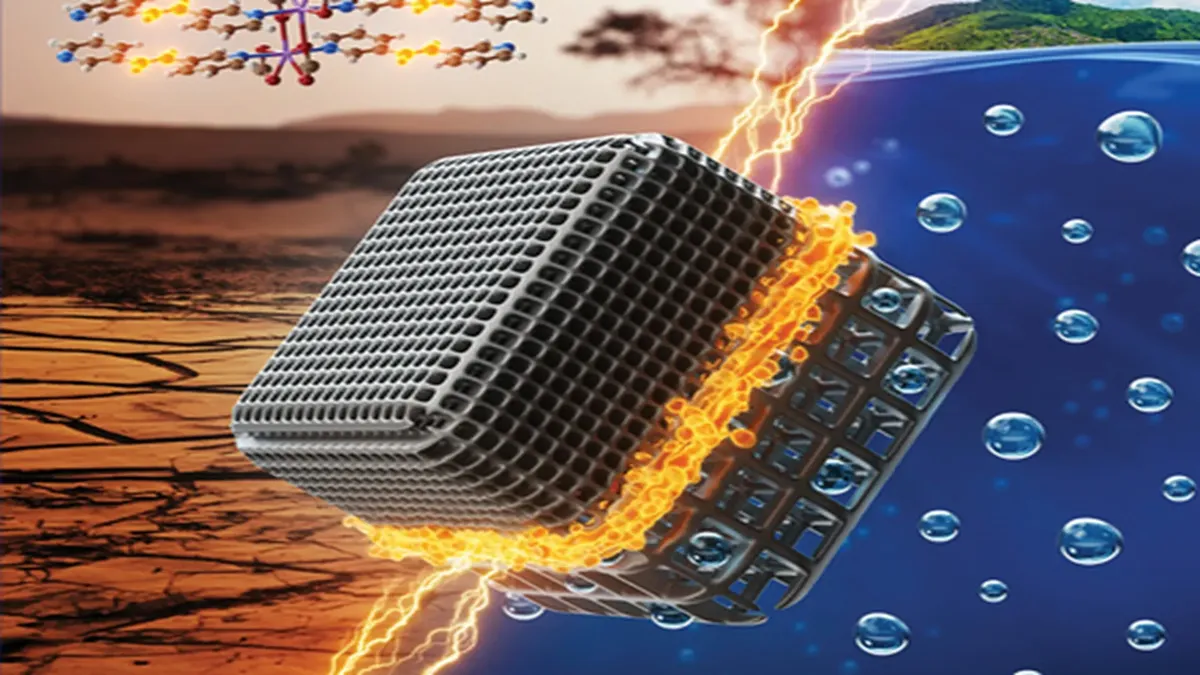
Graduate researcher Nevindee Samararathne Muhandiramge even called the material "intelligent" because UV light intentionally triggers the water capture. Since the sun provides a rather generous, free supply of UV, the next step is to push these crystals to their absolute water-holding limits.
Oh, and did we mention the crystals assemble themselves? Which, if you're thinking about future large-scale production, is both impressive and slightly terrifying. Self-building, water-drinking crystals. Welcome to the future.
Of course, it's still a proof of concept. The current version uses cadmium, which isn't exactly picnic-friendly and will need swapping out for safer alternatives. But the core idea — a material that just needs sunlight to pull water from the atmosphere — is one worth raising a glass to. Preferably filled with sun-harvested water.