Turns out, those magnetic patches on the sun that stick around for a month or more? They're way more likely to shoot off huge solar flares. Seriously, three to six times more likely to cause the most powerful ones.
This isn't just some random space fact. It's a pretty big deal for predicting space weather — the kind of stuff that can mess with our satellites and power grids here on Earth.
How We Found This Out
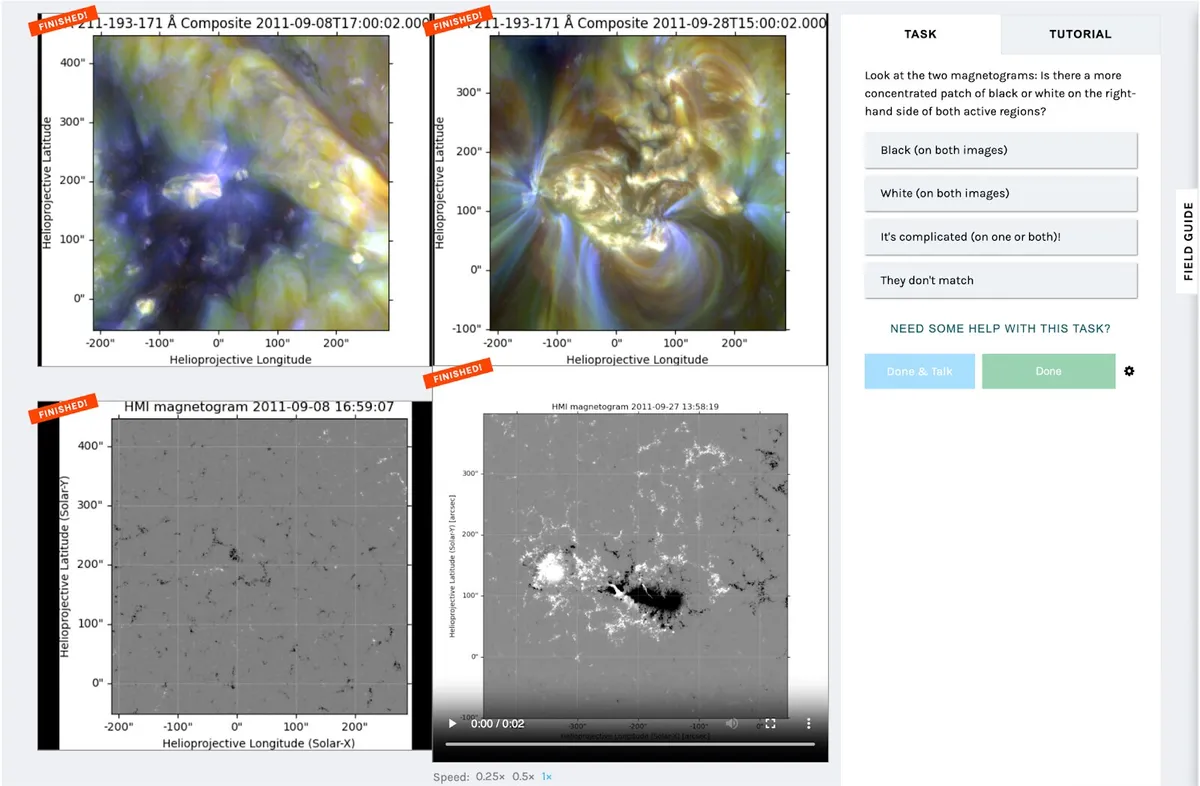
This cool discovery came from a NASA project called Solar Active Region Spotter. Thousands of regular people, not just scientists, volunteered to look at images from NASA's Solar Dynamics Observatory. They helped spot and track these magnetic patches, called "active regions," on the sun's surface.
We're a new kind of news feed.
Regular news is designed to drain you. We're a non-profit built to restore you. Every story we publish is scored for impact, progress, and hope.
Start Your News DetoxThink of it like this: the sun's surface is always bubbling, with magnetic areas popping up and fading away. Most disappear quickly. But some linger for weeks or even months. Those long-lasting ones are the troublemakers.
Project leaders Emily Mason and Kara Kniezewski dug into all that volunteer data. They found a clear pattern: the longer an active region stuck around, the more flares it spat out. And not just any flares, but the really strong ones.
This tells us that these stubborn magnetic zones are crucial. They might even give us clues about the magnetic fields way down deep inside the sun, which is pretty nuts to think about. The Solar Active Region Spotter project is wrapped up now, but its findings are just getting started.