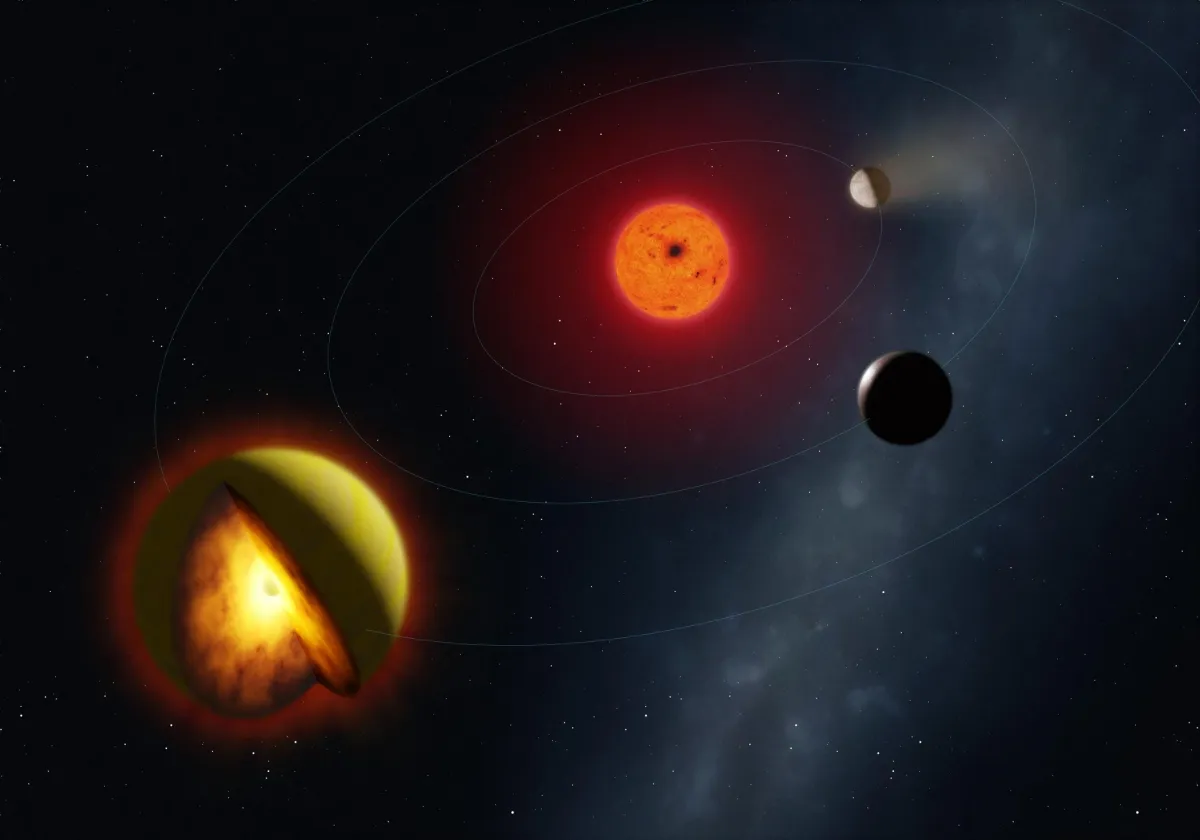
Get this: astronomers just found an alien planet with a global ocean of molten rock thousands of miles deep. Seriously. This wild world, called L 98-59 d, is only 35 light-years away and it's unlike anything we've seen before.
Scientists used the James Webb Space Telescope to peek at this planet. It's about 1.6 times bigger than Earth, but it's super light for its size. And its air? Full of hydrogen sulfide – think rotten eggs, but on a planetary scale.
Normally, when astronomers find a planet like this, it's either a gassy rock with a hydrogen atmosphere or a water world. But L 98-59 d doesn't fit either box. It's a whole new class of planet, packed with heavy sulfur compounds. That's pretty nuts.
We're a new kind of news feed.
Regular news is designed to drain you. We're a non-profit built to restore you. Every story we publish is scored for impact, progress, and hope.
Start Your News DetoxTo figure out what's going on, researchers ran simulations, tracing the planet's journey over nearly five billion years. They combined telescope data with models of what planets are made of, and it all pointed to one thing: a massive ocean of magma under the surface, much like Earth's lava, but planet-sized.
This molten ocean isn't just sitting there; it's a giant storage locker for sulfur. It holds onto these chemicals for billions of years, and it also helps keep that thick, smelly atmosphere from floating away into space. The planet's star would normally just blast those gases into oblivion.
Over eons, the molten inside and the atmosphere have been swapping chemicals. That's why its air is so weird today. This planet could be the first of many such "pungent planets," showing just how diverse worlds in our galaxy really are. Oxford's Dr. Harrison Nicholls says it means our usual ways of sorting planets are way too simple.
Think about it: even though we can't actually visit L 98-59 d, computer models are letting us uncover its hidden depths and ancient past. It's like having a time machine for alien worlds, revealing types of planets we don't even have in our own solar system.
And here's the kicker: studying these distant magma oceans could even give us clues about how Earth and Mars first started out. Every rocky planet is thought to begin with a molten core. So, while L 98-59 d is probably not hosting any life, it's definitely giving us a peek into the wildest corners of the universe, and maybe even our own origins.