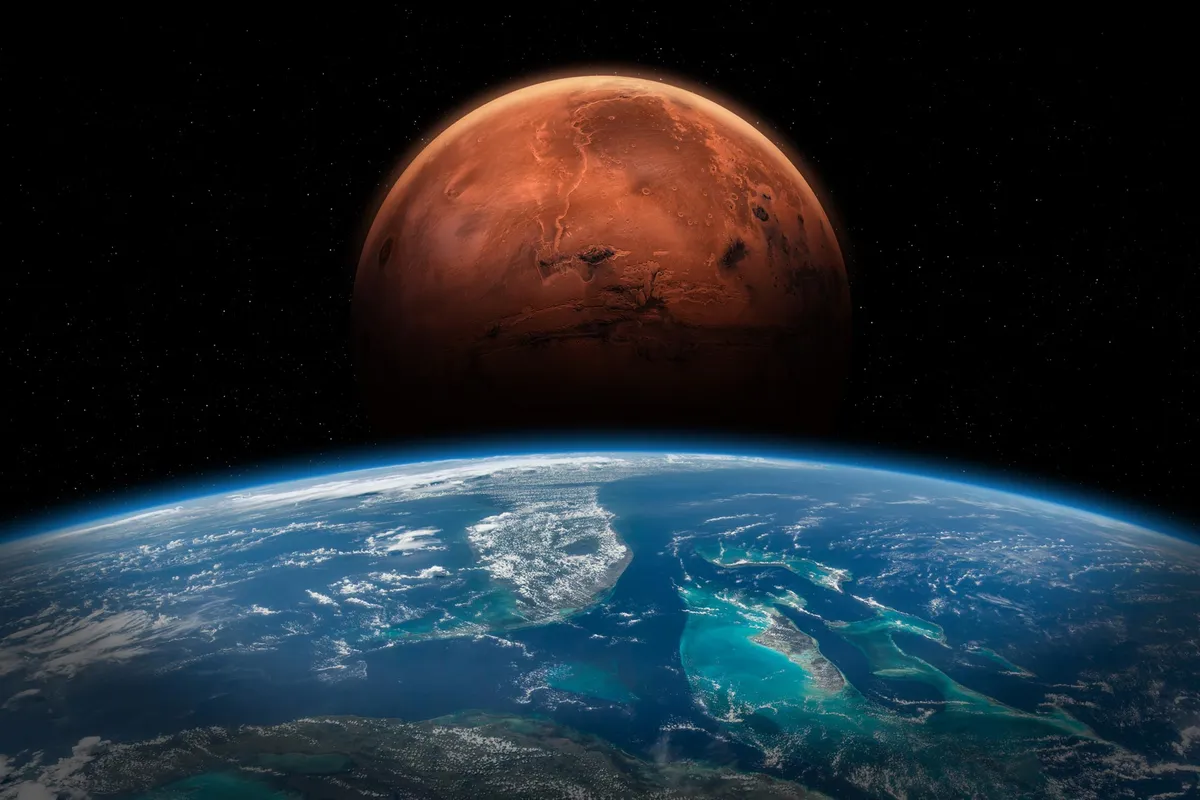
Get this: our tiny planetary neighbor, Mars, might actually be a secret climate influencer for Earth. New research suggests it's been subtly nudging our planet's orbit, helping to kick off and end ice ages for millions of years.
Even scientists were surprised. Stephen Kane, an astrophysics professor at UC Riverside, thought Mars was too small and too far away to have such a big effect. Previous studies hinted at it, but Kane wanted to prove them wrong. Instead, his own research showed just how much Mars matters.
The Solar System's Hidden Rhythms
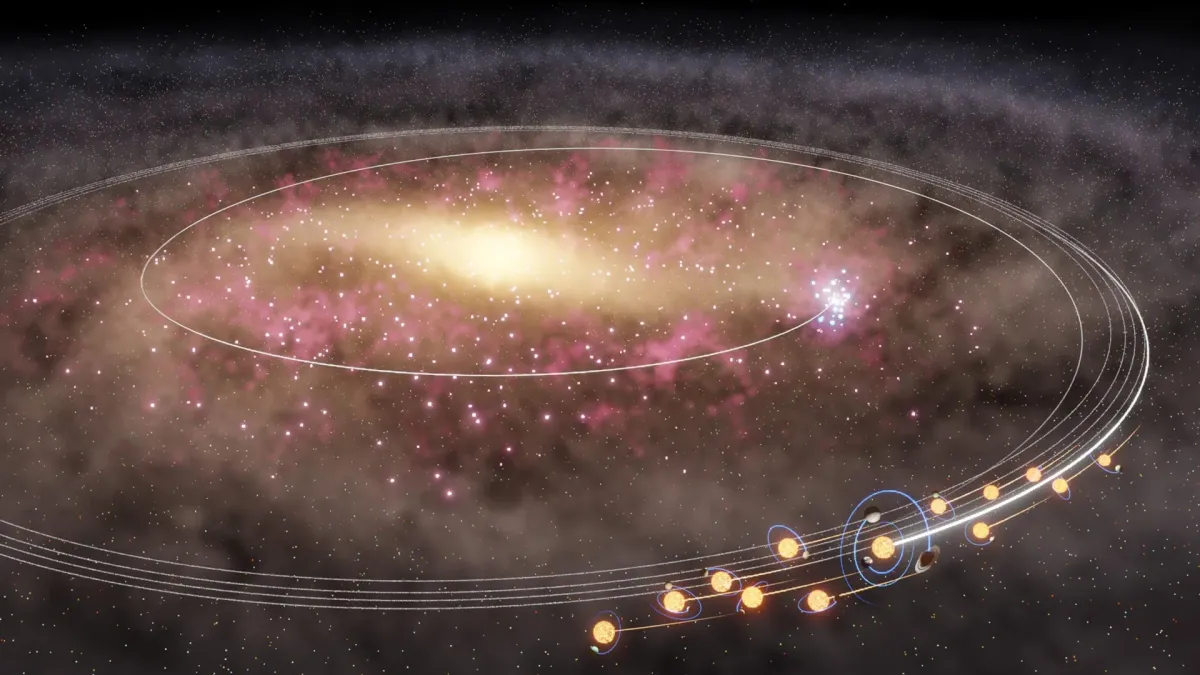
Kane ran computer simulations of our solar system, tracking how Earth's orbit and its tilt change over vast stretches of time. These shifts are huge because they control how much sunlight hits different parts of Earth.
We're a new kind of news feed.
Regular news is designed to drain you. We're a non-profit built to restore you. Every story we publish is scored for impact, progress, and hope.
Start Your News DetoxThese patterns are known as Milankovitch cycles. They're basically the master clock for Earth's long-term climate, including when massive ice sheets grow and shrink. We've had at least five major ice ages, and we're still technically in one that started 2.6 million years ago.
One of these cycles, which plays out over 430,000 years, is mostly driven by Venus and Jupiter. It makes Earth's orbit stretch out and then become more circular again. This changes how much solar energy we get, affecting how much ice builds up.
But here's the wild part: when Kane removed Mars from his simulations, two other major climate cycles completely vanished. One is a 100,000-year cycle, and the other is a massive 2.3-million-year cycle.
"When you remove Mars, those cycles vanish," Kane explained. "And if you increase the mass of Mars, they get shorter and shorter because Mars is having a bigger effect."
These cycles mess with how circular Earth's path around the sun is, when we're closest to the sun, and the slight wobble of our planet's tilt. All these things change where and when sunlight hits Earth, directly influencing ice ages. Mars, it turns out, plays a measurable role in both.
Mars is farther from the sun than Earth, which actually gives it more gravitational leverage. "It punches above its weight," Kane said.
A Stabilizing Force
Another seriously cool discovery was how Mars affects Earth's tilt. Our planet is currently tilted at about 23.5 degrees, and that angle slowly changes over time. But if Mars were more massive, that tilt would change less.
"Increasing the mass of Mars has a kind of stabilizing effect on our tilt," Kane noted. So Mars isn't just a climate influencer; it's a stabilizer too.
This research, published in Publications of the Astronomical Society of the Pacific, isn't just about our backyard. It hints that even small outer planets in other solar systems could be quietly shaping the stability of worlds that might support life. Imagine that: a distant, seemingly insignificant planet could be the reason life thrives elsewhere.
It also makes you wonder: without Mars, what would Earth's climate have been like? Would humans and other animals even look the same? Those climate shifts, like forests shrinking and grasslands expanding, drove key evolutionary changes, like walking upright and using tools. It's pretty nuts to think about.