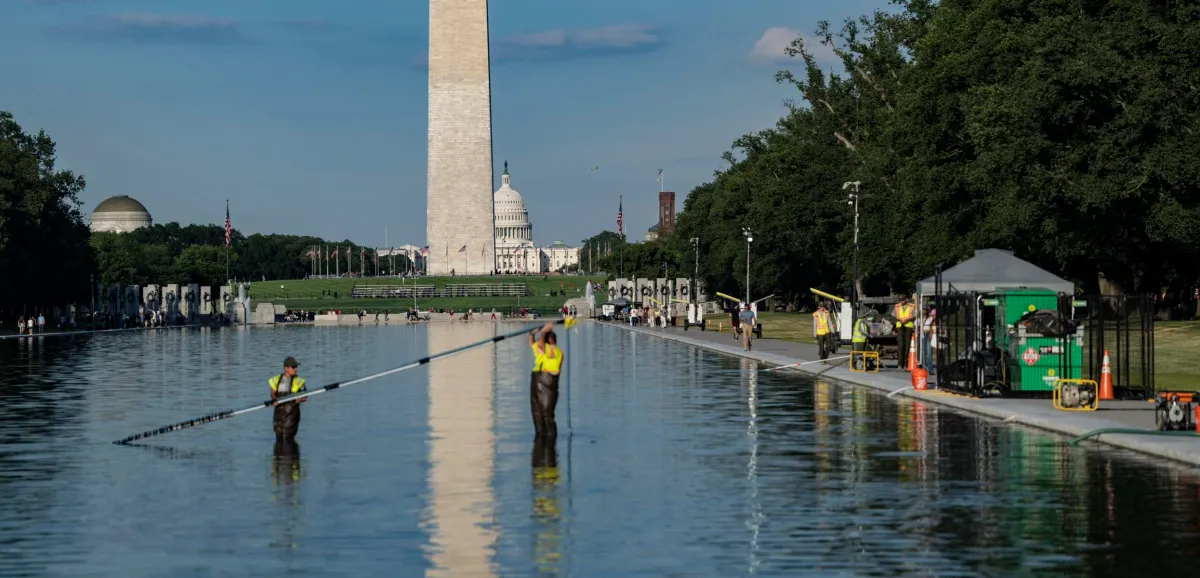
The Lincoln Memorial Reflecting Pool, that iconic stretch of water reflecting history and hopeful tourists, has a bit of an algae problem. A green, slimy, very un-monumental problem. The U.S. National Park Service's current plan is to drain the whole thing after July 4th and start repairs. Because, apparently, that's where we are now.
But what if there was a… squishier solution? According to The Conversation, there's a natural, slightly absurd alternative: tiny zooplankton called Daphnia, otherwise known as "water fleas." These microscopic munchers apparently love algae, which could make them the unsung heroes of monumental pond maintenance. Scientist Eric Palkovacs wisely pointed out that relying solely on engineering to fix environmental woes has its limits. Maybe the answer isn't a bigger pump, but a smaller, hungrier bug.
The Scottish Method: Treating Violence Like a Virus
Speaking of unexpected solutions, let's cast our minds back a couple of decades to Scotland. Not exactly a bastion of tranquility then, with the UN labeling it the most violent developed country in 2005. Yikes. Fast forward to 2015, and Glasgow's homicide rate plummeted by 56%, with a 38% drop nationwide. How'd they pull off that impressive turnaround?
We're a new kind of news feed.
Regular news is designed to drain you. We're a non-profit built to restore you. Every story we publish is scored for impact, progress, and hope.
Start Your News DetoxThey started treating violence like a public health crisis — less about punishment, more about prevention and early intervention. Think of it like vaccinating against measles, but for societal aggression. This approach, partly inspired by programs in Cincinnati and Chicago, is a pretty compelling case for thinking outside the traditional law enforcement box. It turns out, sometimes the best way to fight a problem isn't with more force, but with more… well, forethought.
And Now, for More Unexpected Wins
Because apparently, the world isn't all bad news, here are a few more bright spots: London has seen a 40% reduction in air pollution-related deaths. Paris is cleverly using the Seine River to help cool its buildings, which sounds both ingenious and slightly romantic. And the U.S. murder rate is actually inching towards a record low. Let that satisfying number sink in.
Plus, our very own Contributing Editor Michaela Haas recently snagged second place at the L.A. Press Club Awards for her health and science solutions journalism. Her winning piece? A story about former Navy SEALs and other veterans who've traded their combat gear for wetsuits, now working in ocean conservation. Because sometimes, the best way to save the world is to let a tiny water flea do its job, or to send in the ex-SEALs to protect the reefs. Which, if you think about it, is both impressive and slightly terrifying for any invasive species.