In 2020, as cities emptied and factories went quiet, scientists watched the atmosphere for good news. Carbon dioxide dipped. Smog cleared. But methane—the second-largest driver of climate change—climbed to its highest level since measurements began in the 1980s. The puzzle took six years and more than 40 researchers to solve.
The answer reveals something unsettling: sometimes doing one thing right makes another thing worse. And sometimes nature's own processes dwarf what we can control.
Why Less Pollution Made the Problem Worse
Methane doesn't just sit in the air forever. It gets destroyed by a molecule called the hydroxyl radical, which converts it into less harmful gases. These radicals are constantly being created through reactions between sunlight and various gases—including nitrogen oxides and other pollutants we emit from cars, factories, and power plants.
We're a new kind of news feed.
Regular news is designed to drain you. We're a non-profit built to restore you. Every story we publish is scored for impact, progress, and hope.
Start Your News DetoxWhen lockdowns cut those emissions, something unexpected happened: fewer pollutants meant fewer hydroxyl radicals were being made. With fewer cleanup crews in the atmosphere, methane stuck around longer and accumulated. It's an irony researchers are calling the "air pollution paradox." Reducing one pollutant inadvertently allowed another to linger.
This accounted for roughly 80% of the methane surge.
When Nature Adds Fuel to the Fire
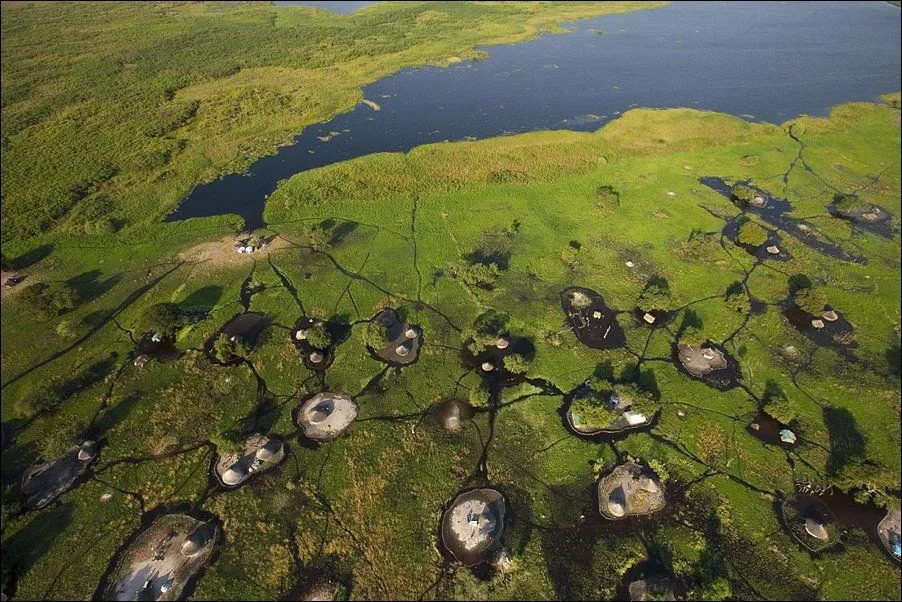
The remaining 20% came from nature itself. Early 2020 coincided with La Niña, a periodic climate pattern that brings heavy rainfall to tropical regions. As Africa and Southeast Asia got wetter, their wetlands became ideal breeding grounds for methane-producing microbes. Paddy rice fields and inland waters also ramped up emissions.
Hanqin Tian, an environmental scientist at Boston College and one of the study's authors, notes the larger implication: "As the planet becomes warmer and wetter, methane emissions from wetlands, inland waters and paddy rice systems will increasingly shape near-term climate change."
Both factors—reduced atmospheric cleanup and increased natural emissions—sit mostly outside human control. Yet the researchers emphasize what we can still influence: human-caused methane emissions. Around 160 countries have joined the Global Methane Pledge, committing to cut methane emissions by 30% by 2030. It's a necessary counterweight, since methane's warming effect is far more potent than carbon dioxide's, even if it doesn't linger as long.
To piece together this global methane budget, researchers combined satellite data from GOSAT, observations from the National Oceanic and Atmospheric Administration, and computer models—a multi-layered approach that shows how far atmospheric science has come in tracking these invisible but consequential shifts.
What this moment reveals is that climate systems are more interconnected than we often assume. Fixing one problem can expose another. The next challenge is holding both truths at once: keep cutting human emissions while preparing for the natural processes that will intensify as the planet warms.