Spend enough time with someone and you start sounding like them. You pick up their phrases, their cadence, the way they stretch certain vowels. It happens so gradually you barely notice—until someone points it out and suddenly you hear it everywhere.
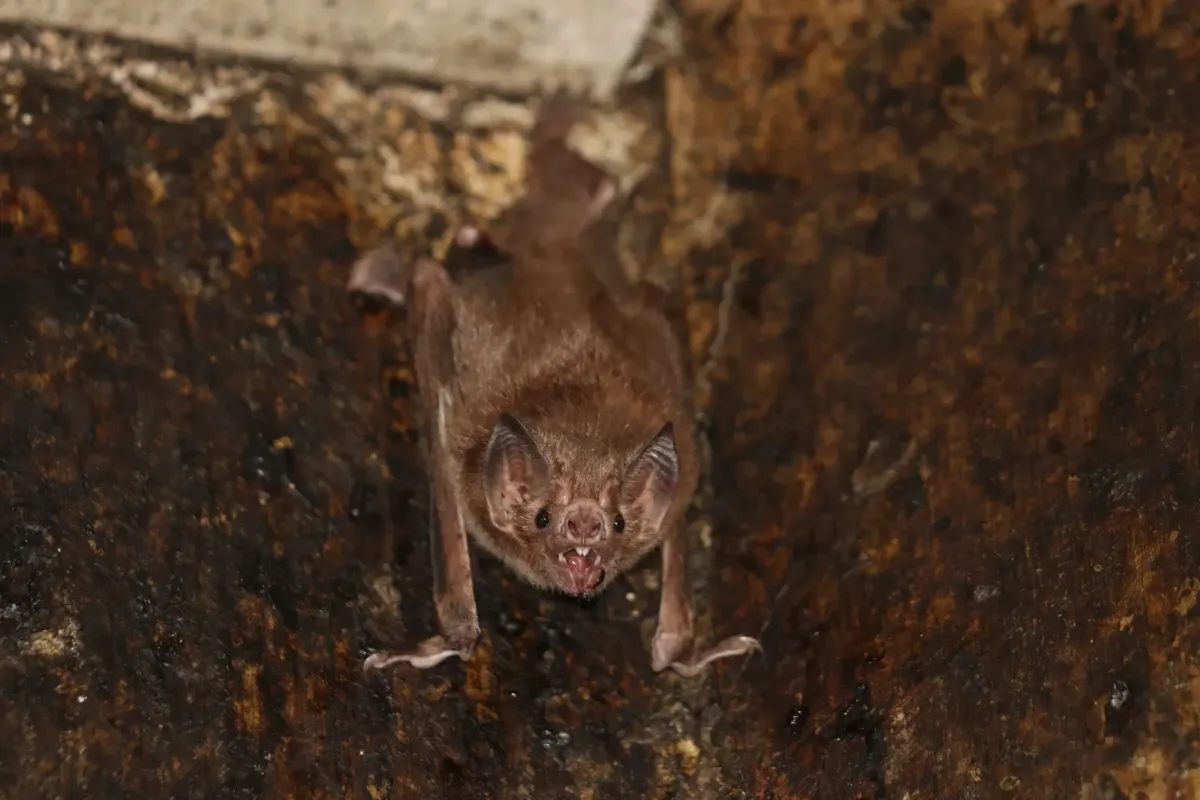
Vampire bats do the same thing.
A new study published in Proceedings of the Royal Society B tracked nearly 700,000 vocalizations from 95 vampire bats over eight years and found that unrelated bats living together gradually synchronized their calls. The closer the friendship—measured by whether they groomed each other or shared food—the more similar their voices became. Bats that had never met before, captured from different regions in Mexico and Central America, sounded distinctly different when first brought together. Within time, their chirps and trills converged into something resembling a shared dialect.
"We're just seeing the tip of the iceberg," says Gerald Carter, the behavioral ecologist at Princeton who led the research. "Bats have amazing vocal complexity."
We're a new kind of news feed.
Regular news is designed to drain you. We're a non-profit built to restore you. Every story we publish is scored for impact, progress, and hope.
Start Your News DetoxThis phenomenon, called vocal convergence, isn't unique to humans or bats. Bottlenose dolphins synchronize their calls with their calves. Elephants in the same social groups make similar sounds. But vampire bats are particularly interesting subjects because their social lives are so transparent—and so surprisingly sophisticated.
Vampire bats live in colonies of mostly unrelated strangers. They start by huddling together for warmth. Some pairs progress to grooming each other, a kind of social testing ground. And a select few form the tightest bonds: they share food. When one bat's hunt fails and it's starving, a close friend will regurgitate blood to keep it alive. This happens regardless of whether they're related.
The friendship signal
Carter's team isolated individual bats in soundproof booths to record their calls, then compared the recordings against measures of social closeness. They controlled for genetics—related bats naturally sound similar—and found that time spent together was the real driver. Unrelated bats that lived in the same enclosure for years sounded more alike than related bats that barely interacted.
The strongest vocal convergence appeared in pairs that shared food. Grooming pairs showed less synchronization, suggesting that the deepest bonds produce the most dramatic acoustic shifts.
What's still unclear is why this happens. Do the similar sounds help friendships form, or do friendships create the sounds? And what do the sounds actually mean? Carter suspects they might function like accents or dialects—a way for bats to recognize who's from their group and who's an outsider. He's also investigating whether vampire bats use sounds as names, the way dolphins do, calling out to specific friends.
"Even when these bats are all stuck in a cage together, they're not all equally friendly with each other," Carter notes. "Each bat has its own network of relationships."
It's a reminder that social complexity doesn't require language as we know it. It doesn't require words. It requires time, proximity, and the willingness to share what little you have. The rest—the accents, the dialects, the small acoustic signatures of belonging—emerges naturally from the bonds themselves.
Carter's team is now collecting more recordings to test whether bats direct their calls toward specific individuals, and whether those calls might function as names. The questions keep multiplying, each answer opening onto another mystery in the social lives of creatures we've barely begun to understand.