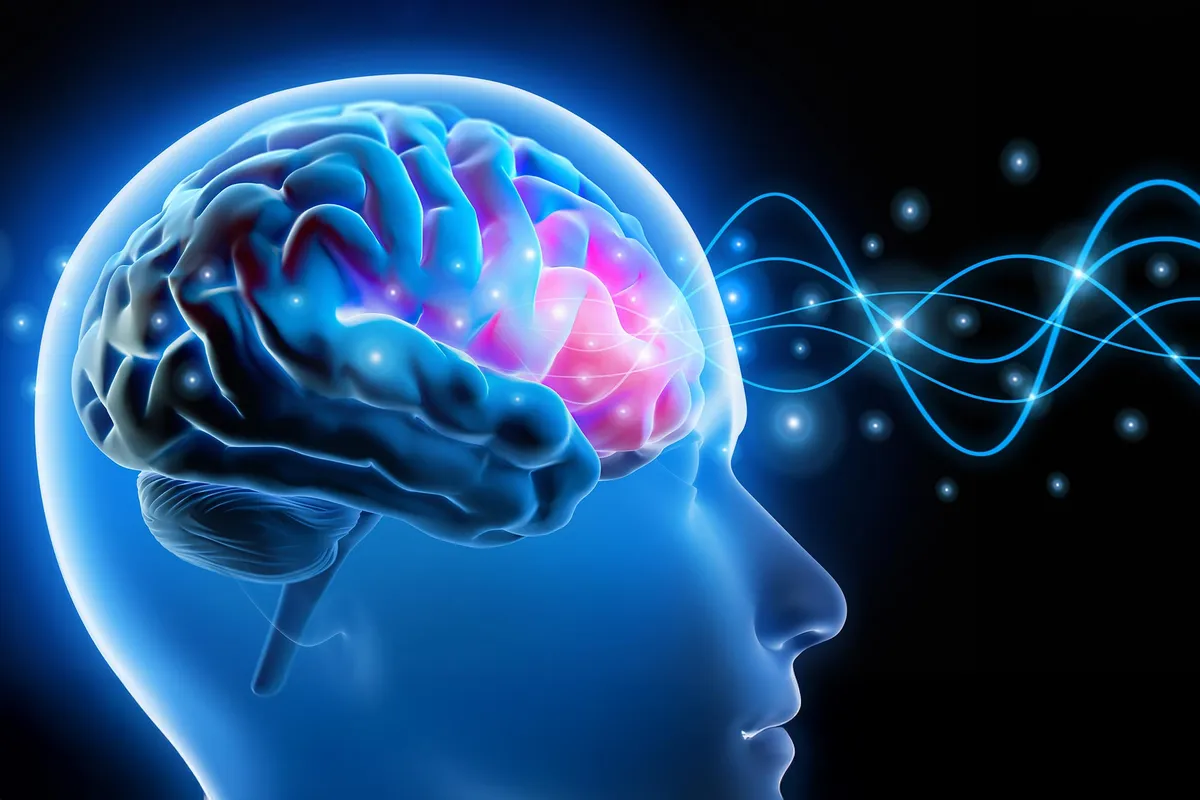
Your sense of owning your own body isn't fixed. It shifts with the rhythm of your brain waves—specifically, a pattern called alpha oscillations that pulses through your parietal cortex. Researchers at Karolinska Institutet have just mapped how this rhythm decides what feels like you and what doesn't.
The discovery matters because it reveals something fundamental: the brain doesn't passively receive sensory information. It actively decides how to stitch together what you see, feel, and touch into a coherent sense of self. And that decision happens at the speed of your alpha waves.
The Rubber Hand Experiment
The team started with a classic neuroscience setup: the rubber hand illusion. You sit at a table with your real hand hidden under a screen. A rubber hand sits in plain view. When both hands are touched simultaneously—your hidden hand and the fake one—something strange happens. Your brain starts to believe the rubber hand is yours.
We're a new kind of news feed.
Regular news is designed to drain you. We're a non-profit built to restore you. Every story we publish is scored for impact, progress, and hope.
Start Your News DetoxBut timing matters. If the touches fall out of sync by even a fraction of a second, the illusion collapses. Your brain recognizes the mismatch and rejects the rubber hand as foreign.
What the researchers discovered was that this timing precision depends entirely on how fast your alpha waves are oscillating. People with faster alpha rhythms caught even tiny timing mismatches. Their brains were essentially saying: "No, that touch and that sight didn't happen together." They maintained a sharp boundary between self and not-self.
People with slower alpha waves were more forgiving. Their brains bundled together sensory signals that arrived slightly out of sync, treating them as simultaneous. This wider "temporal binding window" meant the boundary between their body and the outside world became fuzzier. The rubber hand felt more plausibly theirs.
Testing Causation, Not Just Correlation
This is where the research gets precise. The team didn't just observe that alpha wave speed correlated with body ownership—they actually changed it. Using non-invasive electrical stimulation, they sped up some participants' alpha rhythms and slowed down others. When they did, the sense of body ownership shifted accordingly. Faster waves sharpened the self-world boundary. Slower waves blurred it.
Computational models confirmed the mechanism: alpha oscillations regulate how tightly the brain's timing window is drawn around incoming sensory signals. They're not just background noise in the brain. They're a control dial for the fundamental question: "What's me?"
Mariano D'Angelo, the lead researcher, sees implications beyond neuroscience curiosity. "The findings may provide new insights into psychiatric conditions such as schizophrenia, where the sense of self is disturbed." If alpha rhythm dysfunction contributes to a fragmented sense of self, that opens new directions for understanding and treating these conditions.
For more immediate applications, Henrik Ehrsson, the senior author, points to prosthetics and virtual reality. Better prosthetic limbs might work by matching the timing of sensory feedback to how fast a user's alpha waves naturally oscillate. Virtual reality could become more immersive by tuning the synchronization of sight and touch to individual brain rhythms rather than assuming everyone's timing window is the same.
The brain's sense of embodiment isn't a fixed feature. It's a dynamic process, calibrated moment by moment by the rhythm of your own neural activity.