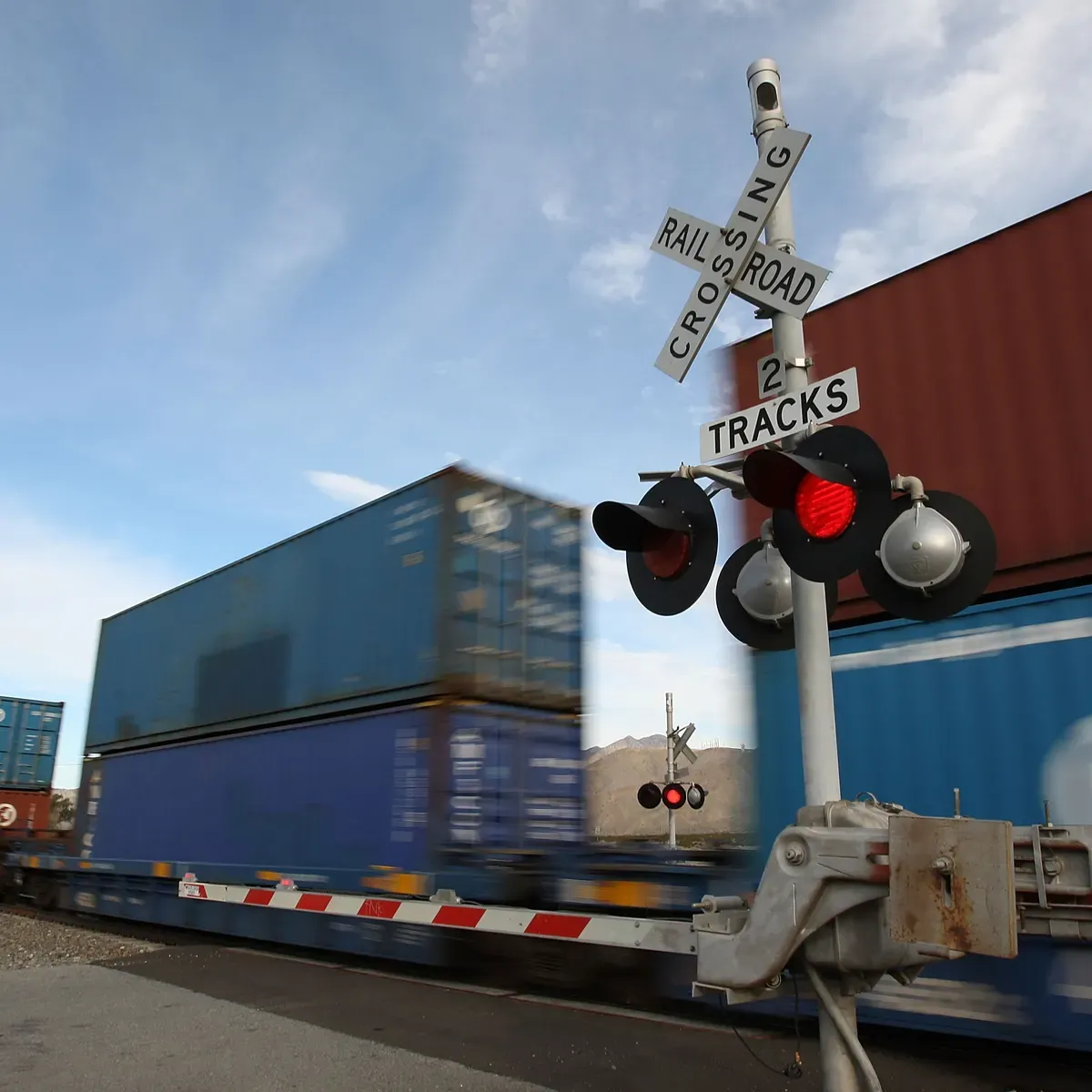
Good news for anyone who's ever grumbled while waiting for a mile-long freight train to pass: the U.S. Department of Transportation just unlocked a cool $1.1 billion. The mission? To make railroad crossings significantly safer, and hopefully, less of a traffic nightmare.
This isn't just about avoiding a few minutes of delay. We're talking about a serious safety issue. Since 2021, the country has seen over 2,000 collisions and nearly 300 deaths each year at these crossings. Apparently, not everyone got the memo that trains are, in fact, larger than cars. Or pedestrians, for that matter.
A Billion Reasons to Look Both Ways
The funding, a hefty chunk from the 2021 Infrastructure Investment and Jobs Act, is earmarked for everything from snazzy new signs and signals to full-blown infrastructure overhauls. Think: moving tracks, building tunnels, or even creating bridges and embankments to completely separate roads from railways. Because sometimes, the best way to avoid a problem is to literally build a wall between it and you.
We're a new kind of news feed.
Regular news is designed to drain you. We're a non-profit built to restore you. Every story we publish is scored for impact, progress, and hope.
Start Your News DetoxWhile accidents at crossings have actually plummeted by 81% since 1972 (let that satisfying number sink in), we're still stuck at around 2,000 incidents annually since 2009. And here's a grim detail: a 2025 report revealed that pedestrians are increasingly in the crosshairs, accounting for 108 of the 287 deaths last year. So, maybe put down the phone when you're near the tracks.
FRA Administrator David Fink (who, we assume, spends a lot of time thinking about trains) emphasized that protecting Americans is the top goal. He's committed to a safer system, whether that means fancy automated equipment or simply getting rid of dangerous crossings altogether. Which, if you think about it, is both impressive and slightly terrifying that we still have dangerous crossings altogether.
States, counties, and even local groups can apply for these funds. The Federal Railroad Administration (FRA) is ready to cover up to 80% of project costs. They're particularly keen on projects that eliminate those perpetually blocked crossings, a common urban headache as freight trains get longer and more people move closer to rail lines. Because nothing says 'modern infrastructure' like a train blocking rush hour for 20 minutes.
Applications are due by June 8, 2026. Plenty of time to come up with a truly innovative way to stop people from playing chicken with a locomotive.