Get this: scientists just found tiny shrimp-like fossils in northern Japan that are about three million years old. And these little guys are spilling some serious secrets about how our oceans used to move.
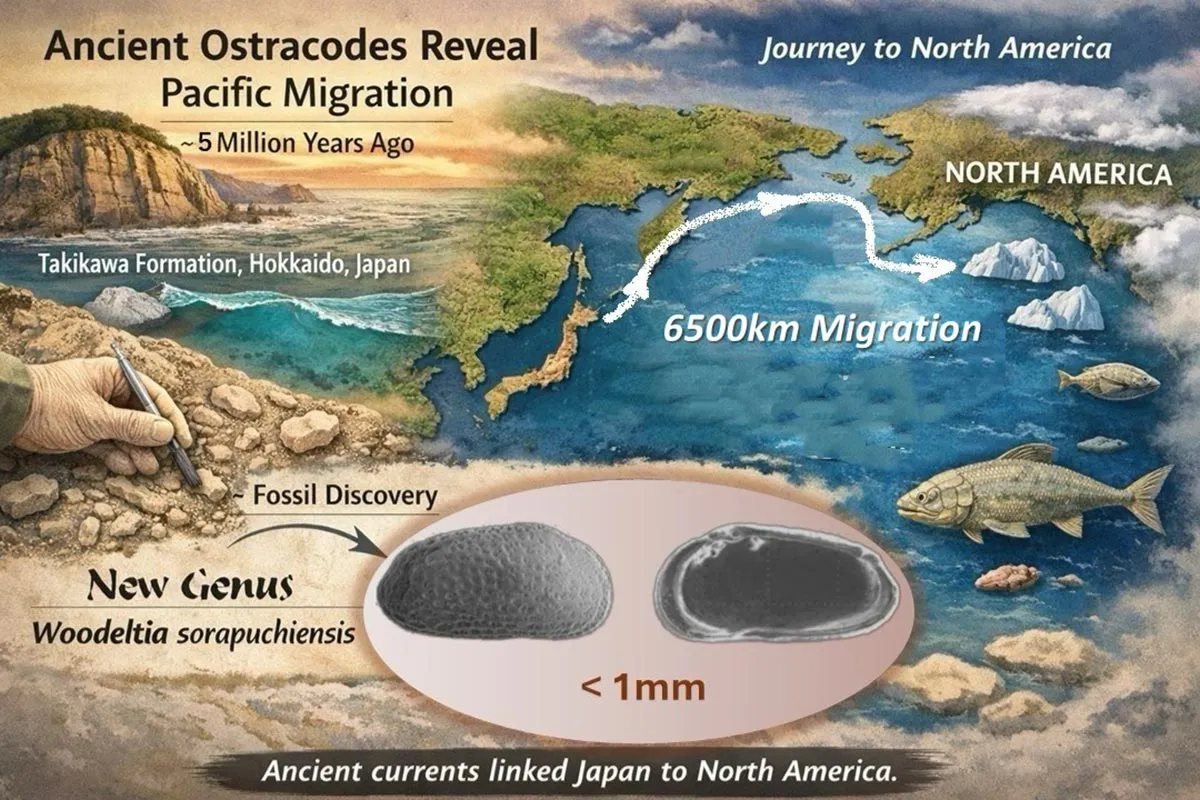
Researchers at Kumamoto University in Japan discovered a brand-new type of microscopic creature, and they named it Woodeltia. It's a type of ostracode, which are basically tiny critters with hard shells, only a few millimeters long.
What's wild is that Woodeltia is closely related to species found only in super distant parts of the North Pacific. This means these tiny sea creatures were zipping across vast ocean distances millions of years ago.
We're a new kind of news feed.
Regular news is designed to drain you. We're a non-profit built to restore you. Every story we publish is scored for impact, progress, and hope.
Start Your News DetoxAncient Ocean Highways
This discovery is a big deal because it happened during a time called the Early Pliocene. Back then, global temperatures were warmer than today, and carbon dioxide levels in the air were pretty similar to what we're heading for in the next few decades.
Associate Professor Gengo Tanaka from Kumamoto University says these fossils prove that ocean currents in the North Pacific were way more active than anyone thought. It's like finding direct evidence of ancient marine highways that connected far-off regions.
Think about it: tiny fossils, barely visible, are giving us a peek into a past where oceans were constantly on the move, connecting marine life across huge distances. This helps us understand how today's ocean life might react as our climate changes.
Japan's rock formations are packed with fossils, and the Takikawa Formation in Hokkaido just keeps giving up new species. Each little discovery helps us piece together Earth's environmental past and get a better handle on what our oceans might look like in the future.