Cancer cells are master survivors. Like Darwin's finches adapting to their environment, tumor cells constantly shift their genetics, their structure, even their vulnerability to drugs. A patient might respond well to treatment at first, then the cancer adapts—and the same drug stops working.
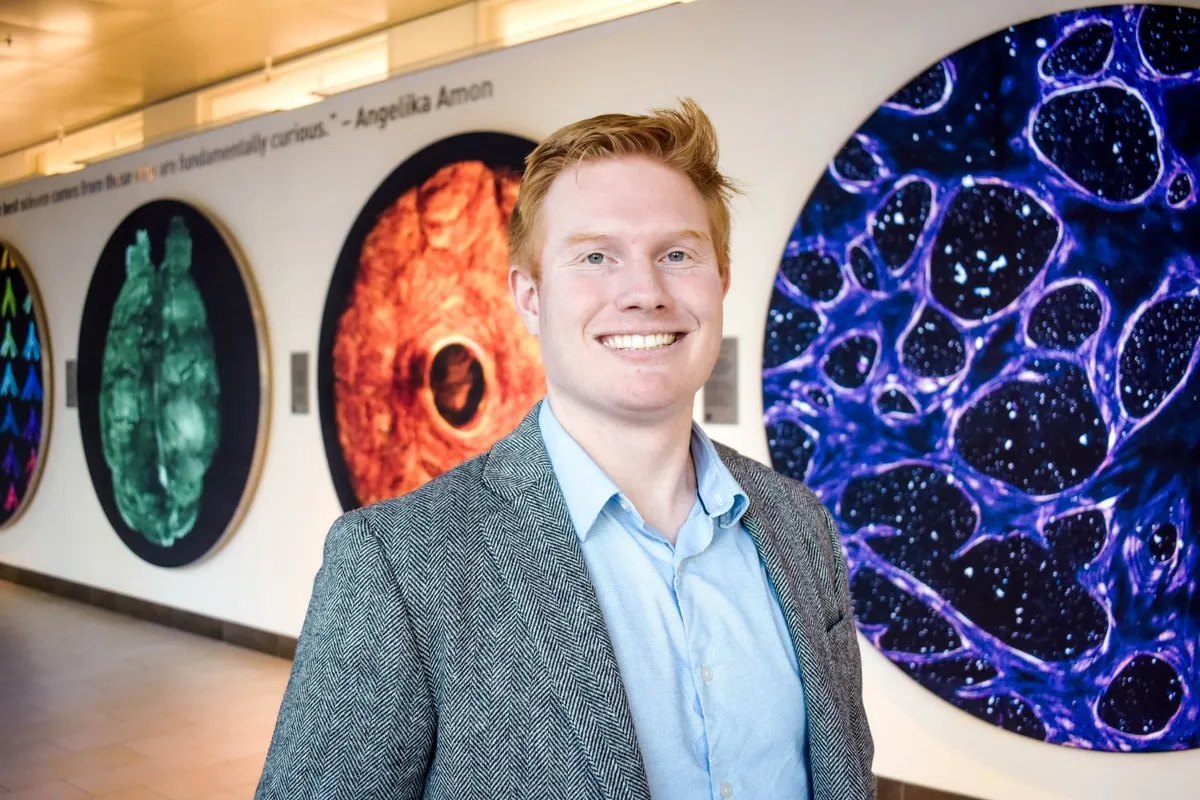
MIT biologist Matthew G. Jones thinks he can change that. His lab is building machine learning models to decode the hidden patterns in how tumors evolve, essentially playing chess against cancer by predicting its next moves before it makes them.
The DNA Trick Tumors Use to Adapt Faster
Jones's team is focused on a particular survival strategy that's been hiding in plain sight. It's called extrachromosomal DNA—pieces of genetic code that break free from the main chromosome and float around the cell nucleus like separate DNA particles. Scientists discovered ecDNA in the 1960s but thought it was rare. Then, in the 2010s, when researchers started sequencing DNA from large groups of cancer patients, they realized how common it actually was.
We're a new kind of news feed.
Regular news is designed to drain you. We're a non-profit built to restore you. Every story we publish is scored for impact, progress, and hope.
Start Your News DetoxToday, about 25 percent of cancers use this trick, especially the aggressive ones: brain, lung, and ovarian cancers. Here's what makes ecDNA so dangerous: it lets tumors adapt to stress and drugs much faster than normal evolution would allow. The cancer essentially rewrites its own rulebook.
"Tumors have this incredible, very challenging ability to evolve," Jones explains. "They change their genetic makeup, their protein signals, their cellular dynamics." Some patients lose the battle because the tumor evolves beyond what medicine can control. Others face unpredictable changes that no one saw coming.
Teaching Computers to See the Pattern
Jones uses single-cell lineage tracing—a technology that tracks the evolutionary history of individual cancer cells. Imagine being able to look at one cell and know exactly when aggressive mutations appeared in the tumor's past. That historical record lets researchers study tumor evolution in ways they couldn't observe in real time.
With machine learning layered on top, the lab can spot patterns across many patients. The goal is practical: better predict which patients will respond to which drugs, anticipate drug resistance before it happens, and identify new targets for treatment.
Jones came to MIT specifically for this kind of work. The Koch Institute structures its labs to put engineers and biologists side by side—his computational "dry lab" sits directly next to his experimental "wet lab." It's the kind of forced collaboration that produces breakthroughs. He's looking to recruit researchers who thrive in that intersection, people comfortable moving between code and cells.
The hope is that understanding how tumors evolve will eventually shift the conversation from "Will this treatment work?" to "We know how your tumor will adapt—here's what we do about it."