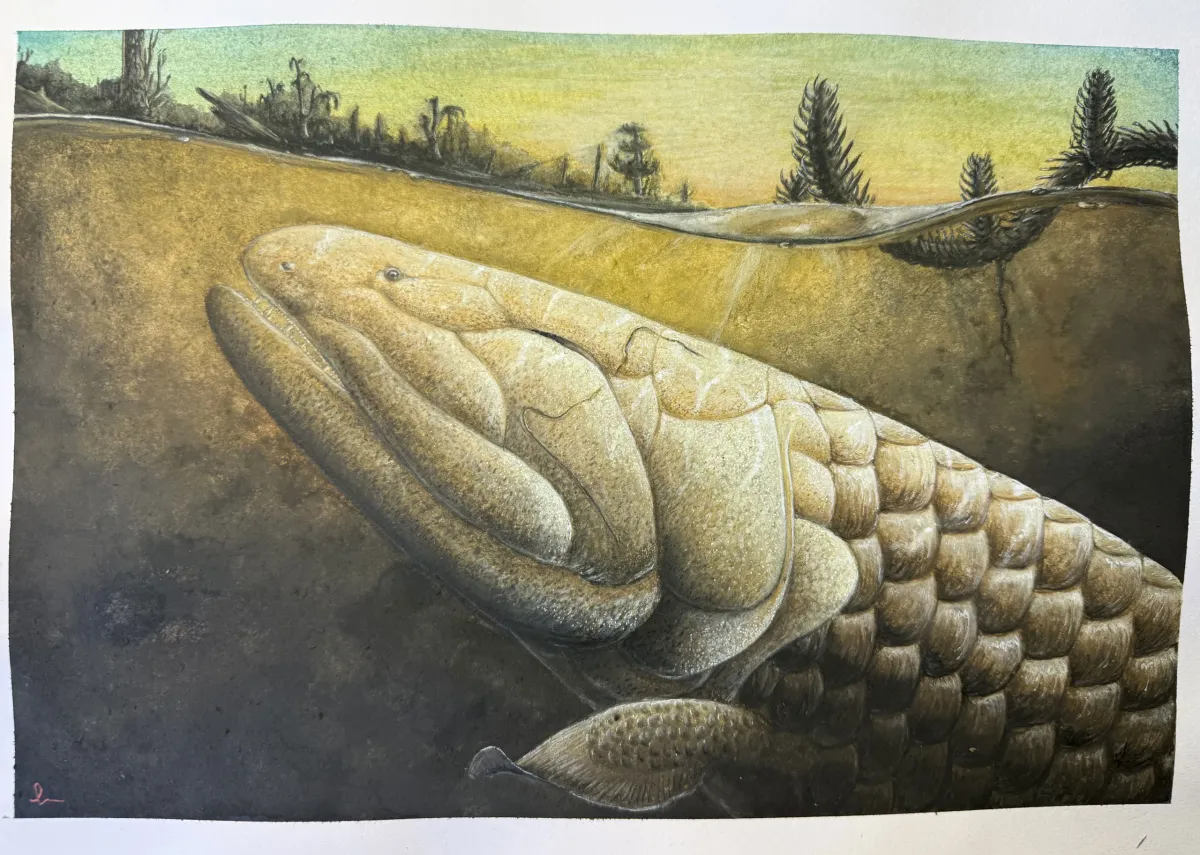
A rare fossil fish has revealed new details about how life moved from water to land. Researchers at Flinders University used advanced imaging to study the skull of Koharalepis jarviki. This fish lived over 380 million years ago.
The only known fossil of Koharalepis jarviki was found in Antarctica. It lived during the Devonian Period, also known as the "Age of Fishes."
Ancient Connections and Early Land Animals
Dr. Alice Clement, a Flinders University Research Fellow, explained that this fossil belongs to a group called the Canowindridae. This group shows ancient links between Australia and Antarctica. Studying these Devonian fish helps us understand the ancestors of land animals.
We're a new kind of news feed.
Regular news is designed to drain you. We're a non-profit built to restore you. Every story we publish is scored for impact, progress, and hope.
Start Your News DetoxKoharalepis is part of the Canowindrid family. These fish lived across East Gondwana, with fossils found in both Australia and Antarctica. They are early relatives of tetrapods, the first four-limbed vertebrates to live on land.
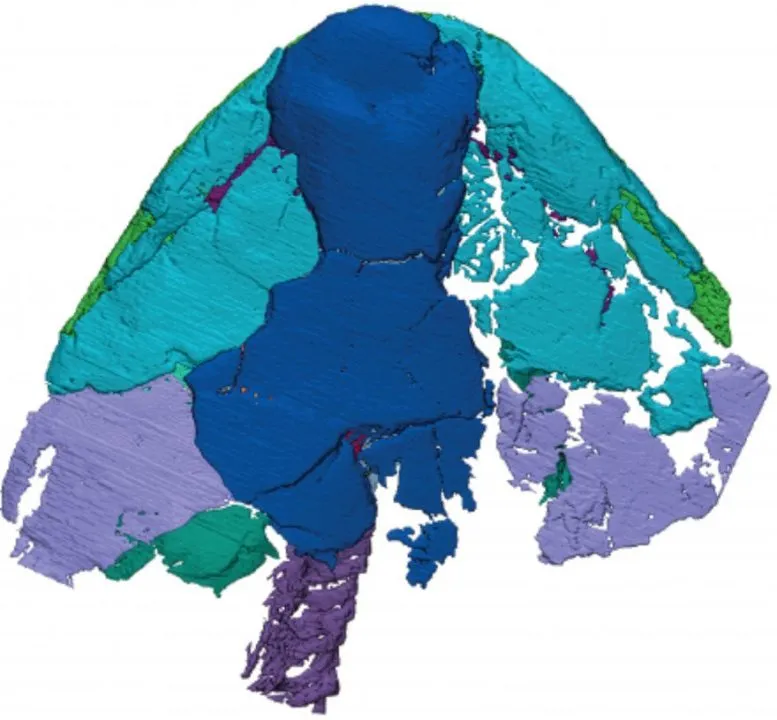
Brain and Behavior Insights
Corinne Mensforth, a PhD candidate, led the study. She focused on Koharalepis because it's the only fossil in its family with preserved internal skull bones. This allowed researchers to study its braincase and neuroanatomy.
The team found that Koharalepis's brain was similar to fish that made the water-to-land transition. They also discovered features for living near the water's surface. These included skull openings for air intake and a brain organ that detects light and circadian rhythms.
Koharalepis was about one meter long and hunted other smaller animals. With its small eyes, it likely used other senses to find prey.
Revealing Evolutionary Steps
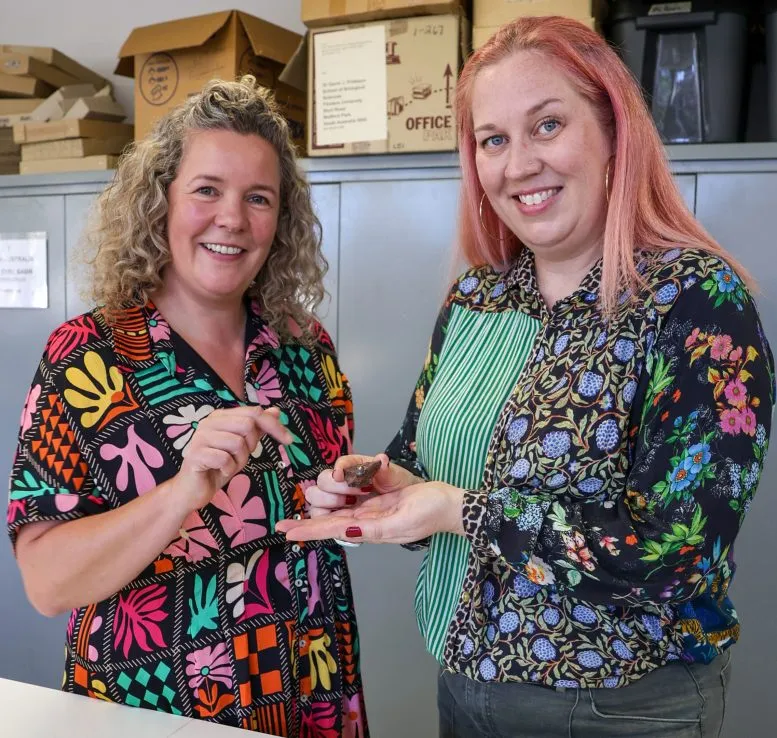
Emeritus Professor John Long, who helped describe Koharalepis in 1992, noted the importance of modern imaging. These methods revealed details of the internal skeleton, including parts of the skull, shoulder, and backbone.
This new information helps scientists understand Koharalepis's behavior and how fish first moved onto land about 385 million years ago.
Deep Dive & References
New data on the sarcopterygian Koharalepis jarviki (Tetrapodomorpha; Canowindridae) from the Late Devonian of Antarctica, revealed via synchrotron and neutron tomography - Frontiers in Ecology and Evolution, 2026