Scientists cannot be everywhere at once. Citizen science projects help by expanding the reach of research and getting more people involved. This allows for wider data collection and faster responses to problems.
Here are five examples of citizen science projects that have made a real difference.
Atlas of Living Australia’s Biosecurity Alerts Service
Australia has rich biodiversity but faces constant threats from new invasive species. Even with border controls, some pests, weeds, and diseases get through.
We're a new kind of news feed.
Regular news is designed to drain you. We're a non-profit built to restore you. Every story we publish is scored for impact, progress, and hope.
Start Your News DetoxThe Atlas of Living Australia (ALA) is the country's largest open-source biodiversity data hub. They partnered with the Department of Agriculture, Fisheries and Forestry to create a Biosecurity Alerts Service. This service connects citizen science data with biosecurity managers.
The service sends weekly email alerts to managers about new reports of invasive species in their areas. For example, in 2020, it led to the first report of the Asian shore crab (Hemigrapsus sanguineus). In 2024, an iNaturalist user reported the first invasive freshwater gold clam (Corbicula fluminea). Early detection helped managers monitor and stop these species from spreading.
In 2025, an iNaturalist citizen scientist found Siam weed over 1,000 km from its nearest known location. This alert allowed Biosecurity Queensland to remove the new infestation. Reports of other species like tree cholla cactus and red imported fire ants have also led to local actions.
This work protects Australia's environment and farms from invasive species. The Biosecurity Alerts Service is ongoing. If you use ALA-linked apps like iNaturalist or eBird and share your data publicly, it will be checked by the service. You might even be contacted by a biosecurity officer for more information. To get involved, explore outdoors with a biodiversity app and record anything unusual.
Climate History Australia
Millions of valuable weather observations exist only on paper. Scientists alone would need thousands of lifetimes to transcribe them.
Citizen scientists have helped rescue these records. The data they provide improves global climate models, helping us understand climate change.
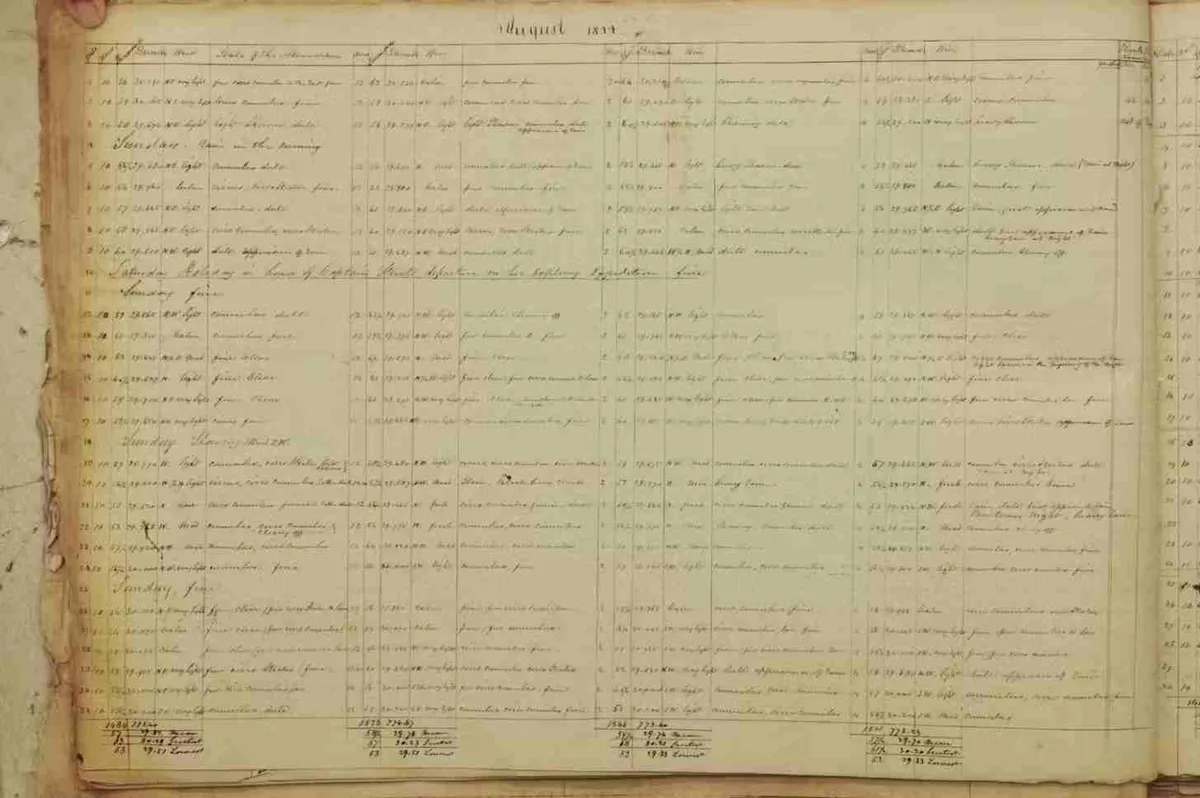
Climate History Australia, inspired by similar projects in the UK and New Zealand, uses scanned historical weather data from the National Archives. These images are broken into small parts, allowing people to transcribe them from home.
In 2020 and 2021, over 1,700 citizen scientists transcribed at least 67,400 weather observations from the 19th century. These journals contained detailed weather data, including cloud descriptions and rainfall types. Volunteers included students, historians, and people interested in climate science.
This recovered data has filled gaps in weather observations for Adelaide and Perth. We now have nearly continuous weather records for these cities going back to 1830 and 1843.
We also know more about Australia's extreme weather events. This is important because changes in extreme weather will affect us most as the world warms. The rescued data has also improved global weather and climate datasets, enhancing our understanding of the Southern Hemisphere's climate. While Climate History Australia has no active data rescue projects, similar efforts are happening in Ireland, Africa, and Italy.
Kilonova Seekers
Since 2023, the Kilonova Seekers project has involved citizen scientists in discovering exciting cosmic events. This project focuses on transient astronomy, which studies objects that change over time.
While many stars vary in brightness, astronomers are especially interested in short, explosive events. These include supernova explosions of massive stars or rare collisions between neutron stars, which produce gamma-ray bursts.
Kilonova Seekers shares observations from the Gravitational-wave Optical Transient Observer (GOTO) telescope network with the public. Volunteers compare new images to old ones, looking for changes. This helps astronomers find new objects in the sky and filter out false signals.
The project has attracted thousands of volunteers and led to over 200 discoveries. Last year, a major discovery was published: an extremely bright star explosion, GOTO0650, captured as it happened. Once flagged, astronomers studied it with Earth-based and space observatories. It was so bright that amateur astronomers could also capture high-quality images.
Kilonova Seekers relaunched in February after a hardware and software upgrade. You can now participate in discovering new objects in space.
Mozzie Monitors
Mosquitoes are the world's deadliest animal. Health departments and local governments need to monitor mosquitoes to protect public health. However, this requires many resources, leading to gaps in surveillance.
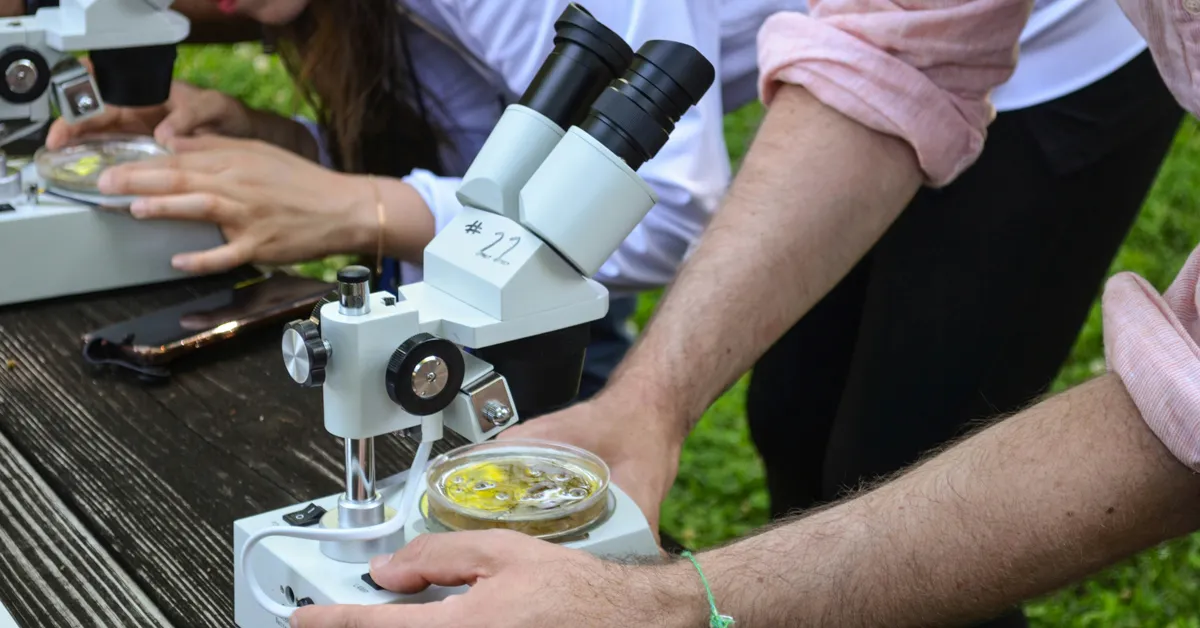
The Mozzie Monitors program, launched by the University of South Australia in 2018, allows citizen scientists to help. Participants can set up simple mosquito traps at home and send photos for expert identification. They can also submit mosquito images to the project page on iNaturalist.
This nationwide effort has resulted in thousands of submitted records. The program initially aimed to expand mosquito surveillance, detect exotic mosquitoes, and educate the public about mosquitoes and the diseases they carry.
It has since grown to help remote communities with exotic mosquito surveillance, track mosquito-borne viruses, and run educational programs in schools. Hundreds of students have participated, even trapping mosquitoes.
The project has led to new mosquito trapping methods for citizen scientists. It has also taught participants about mosquitoes, helped create a mosquito database with new species records, and even led to the discovery of mosquitoes not previously known in Australia. The project continues to grow.
Currently, residents in the Northern Territory, between Katherine and Alice Springs, can join Mozzie Monitors Tennant Creek. While Tennant Creek is the main focus, participants from across the region are welcome.
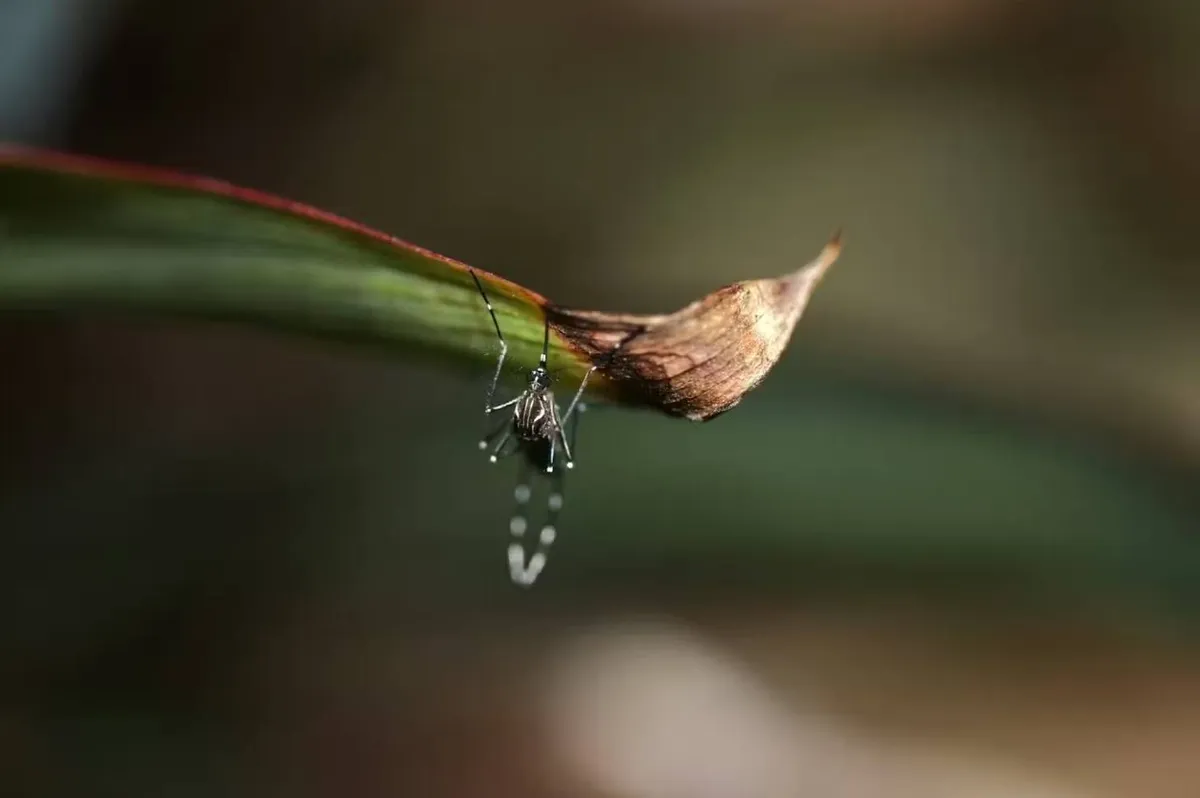 Caption: Citizen scientists on iNaturalist can report observations of exotic mosquitoes, such as Aedes aegypti which carries dengue. grace-murray/iNaturalist, CC BY-NC
WomSAT: Wombat Survey and Analysis Tool
Wombats are important for ecosystems. They dig burrows for shelter, which also protect other animals. Their digging also helps plants grow by moving nutrients and water in the soil.
Because of their ecological role, understanding where wombats live is crucial for managing threats and aiding their conservation. Wombats face dangers like vehicle collisions, sarcoptic mange disease, and habitat loss.
WomSAT, started in 2015, is a citizen science program. It allows the public, researchers, and wildlife carers to record wombat sightings across Australia. It collects real-time data on live or dead wombats, burrow locations, and signs of mange. Wildlife carers also use WomSAT to track mange treatments.
WomSAT has significantly helped identify roadkill hotspots and track sarcoptic mange. It has also helped understand factors affecting mange occurrence. In partnership with the Wombat Protection Society of Australia, the project created online training courses. These courses are for the public interested in wombats and for wildlife carers on how to safely treat sarcoptic mange in the field.
WomSAT is an ongoing project. Anyone can become a "wombat warrior" by logging wombat sightings on WomSAT. This helps identify roadkill hotspots and track sarcoptic mange. You can also follow #WombatWednesday on social media.
Deep Dive & References
- What is iNaturalist? The citizen science app playing an unlikely role in Erin Patterson’s mushroom murder trial - The Conversation
- Australia is at risk from introduced and invasive species - Biosecurity.gov.au
- Biosecurity Alerts Service - Atlas of Living Australia
- ALA-linked apps - Atlas of Living Australia
- Climate History Australia
- Wrap-up of Climate History Australia’s citizen science projects on Zooniverse - Climate History Australia
- Near-continuous records of the weather of Adelaide and Perth - Climate Dynamics, 2022
- Similar activities are happening in Ireland, Africa, and Italy - Zooniverse
- Kilonova Seekers - Zooniverse
- Engaging citizen scientists - Monthly Notices of the Royal Astronomical Society, 2024
- Gravitational-wave Optical Transient Observer (GOTO)
- A major discovery was published last year - Astronomy & Astrophysics, 2024
- Relaunched in February this year - Zooniverse
- Mosquitoes are the world’s deadliest animal - The Conversation
- Mozzie Monitors program launched in 2018 - Healthy Environments & Healthy People
- Mozzie Monitors program - Facebook
- Submitting mosquito images to the project page - iNaturalist
- Thousands of records submitted - The Conversation
- Taught the participants - Journal of Medical Entomology, 2024
- Discovery of mosquitoes - Journal of the American Mosquito Control Association, 2024
- Mozzie Monitors Tennant Creek - NT Health
- Wombat burrows also provide shelter - Australian Zoologist, 2018
- Sarcoptic mange - The Conversation
- WomSAT
- Citizen science program - Australian Mammalogy, 2018
- Determining roadkill hotspots - Australian Mammalogy, 2022
- Tracking sarcoptic mange - Veterinary Record, 2023
- Factors that affect mange occurrence - The Scientific World Journal, 2023
- Wombat Protection Society of Australia
- Safely treat sarcoptic mange - WomSAT