Oregon State University (OSU) received $750,000 from Quaise Energy. This funding supports research into superhot rock (SHR) geothermal energy. This energy source could provide 63 terawatts of power.
This amount is more than eight times the world's current electricity use. It could be achieved by using just one percent of the world’s SHR resources. These resources are found two to 12 miles below the Earth's surface.
The money will help the Experimental Deep Geothermal Energy (EDGE) lab. They will study water at 374°C (704°F) and pressures 500 times greater than at the Earth's surface. At these levels, water becomes "supercritical." It can carry up to five times more energy than regular hot water.
We're a new kind of news feed.
Regular news is designed to drain you. We're a non-profit built to restore you. Every story we publish is scored for impact, progress, and hope.
Start Your News DetoxReplicating Deep-Earth Conditions
OSU's research aims to solve technical challenges for Quaise Energy. The company plans field tests in 2025 and has goals for 2026. In 2025, Quaise used its special drilling tech to reach 118 meters deep in a Texas granite quarry. Their 2026 goal is to drill eight times deeper, reaching one kilometer.
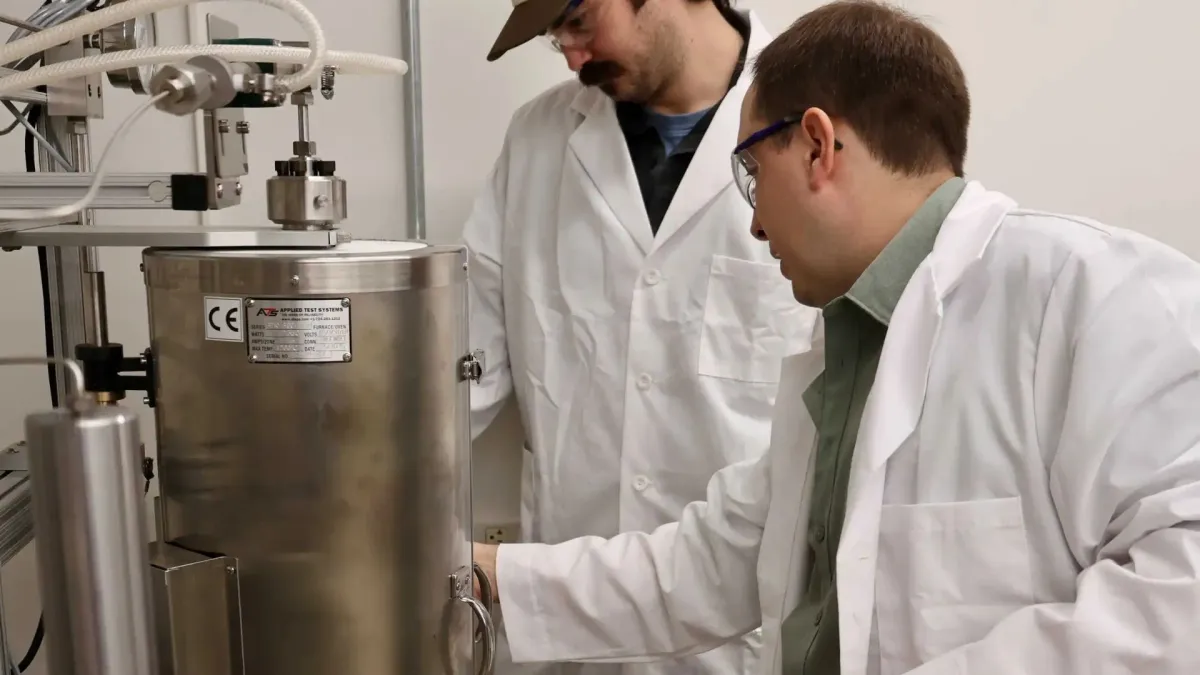
Scientists need lab data to understand how rock and fluids act under extreme conditions. Assistant Professor Brian Tattitch leads the EDGE lab. He uses a custom reactor to mimic deep-earth environments. This allows him to watch chemical changes as they happen.
Current geothermal models often fail to predict what happens in superhot conditions. Controlled experiments are needed to design strong wells and reservoirs. The EDGE lab is looking into different mineral types.
Overcoming Mineral Obstacles
Tattitch explained that different rocks have different minerals. These minerals react differently to fluid. If minerals crystallize in the rock's pores, they can block the system. This stops energy from flowing to the surface.
Tattitch said they can simulate various situations in the lab. This helps them figure out if the system will clog.
Another part of OSU's research focuses on a byproduct of Quaise's drilling. The process creates a glass-like lining on the borehole walls. Scientists are studying how this material behaves over time. They want to see if it can stop deep holes from collapsing under high pressure.
The lab is also testing common materials. For example, sand is often used to keep rock fractures open.
Validating Models for Global Energy
Tattitch noted that some materials used today might not work well at 400°C. The EDGE lab is working to find substances that will stay stable in such hot environments.
The $750,000 gift supports these three research areas. It helps reduce the financial and technical risks of deep geothermal projects. By understanding how rock, fluid, and man-made materials behave five miles underground, the partnership aims to provide reliable data. This data is needed to move from experimental drilling to a working energy source.
Geoffrey Garrison, Vice President of Operations for Quaise, stated that this research is vital. He explained that SHR geothermal operates where existing models don't work. Only controlled experiments can provide reliable data on fluid behavior and rock interactions. This data is essential for designing durable wells and reservoirs.