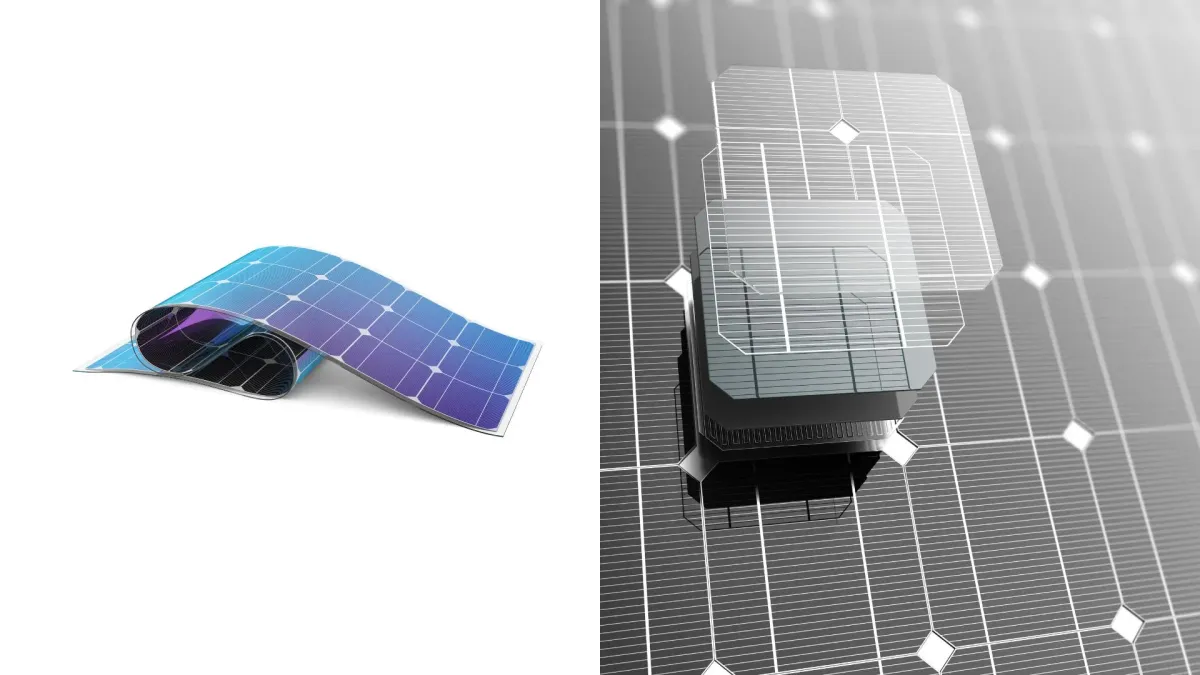
Researchers at Wuhan University of Technology have cracked a problem that's haunted flexible solar technology for years: making it last.
They've developed polymer solar cells that convert sunlight to electricity at 19.1% efficiency—respectable performance on its own—while retaining 97% of that power output after 2,000 hours of continuous operation in open air. Extrapolating the data suggests these cells could keep working for over a decade.
Why does this matter? Polymer solar cells have always been the promising underdog of solar technology. They're lightweight, flexible enough to integrate into clothing or curved surfaces, and they can be manufactured through simple solution processing—think printing rather than the complex silicon wafer fabrication that makes traditional panels expensive. The catch: they kept degrading. Within months or a year, their efficiency would tank as the material itself broke down under sunlight and heat.
We're a new kind of news feed.
Regular news is designed to drain you. We're a non-profit built to restore you. Every story we publish is scored for impact, progress, and hope.
Start Your News DetoxWhat Changed
The Wuhan team identified the culprit: weak chemical bonds in the polymer acceptors (the part of the cell that captures electrons) were snapping when exposed to light and thermal stress. Instead of replacing the material entirely, they embedded small-molecule acceptors into the polymer matrix—essentially reinforcing the structure from within.
This simple-sounding fix had a cascading effect. The reinforced material packed its molecules more tightly and orderly, creating clearer pathways for electrons to move through the cell. Better electron flow means better efficiency. Tighter packing means fewer weak points for degradation to start. Both problems improved at once.
The stability metrics are what make this genuinely significant. A device that retains 97% of its performance after 2,000 hours isn't just laboratory-grade anymore—it's approaching the durability threshold where manufacturers can actually warranty the product and deploy it in real buildings, vehicles, or wearables.
This research, published in Matter, doesn't solve every challenge polymer solar cells face. Cost-competitive manufacturing at scale still needs work. Integration into actual products requires engineering beyond the cell itself. But it removes one of the major blockers that's kept this technology from moving beyond research papers into the world.
Flexible, durable, cheaply produced solar cells would reshape distributed energy. Not as a replacement for traditional panels on rooftops, but as a complement—integrated into surfaces that rigid silicon can't reach.