You know how your eyes have specific spots for light, and your ears for sound? Turns out, your nose has been holding out on us. For decades, scientists have scratched their heads over how smell, that deeply personal and often mysterious sense, actually works. They knew how sight, hearing, and touch organized themselves, but smell? It was a biological black box.
Well, that box just got pried open. Researchers at Harvard Medical School have finally uncovered a hidden "map" in the nose — a highly organized, stripey blueprint for how we detect odors. Which, if you think about it, is both impressive and slightly terrifying that it took this long.
The Nose Knows, Apparently
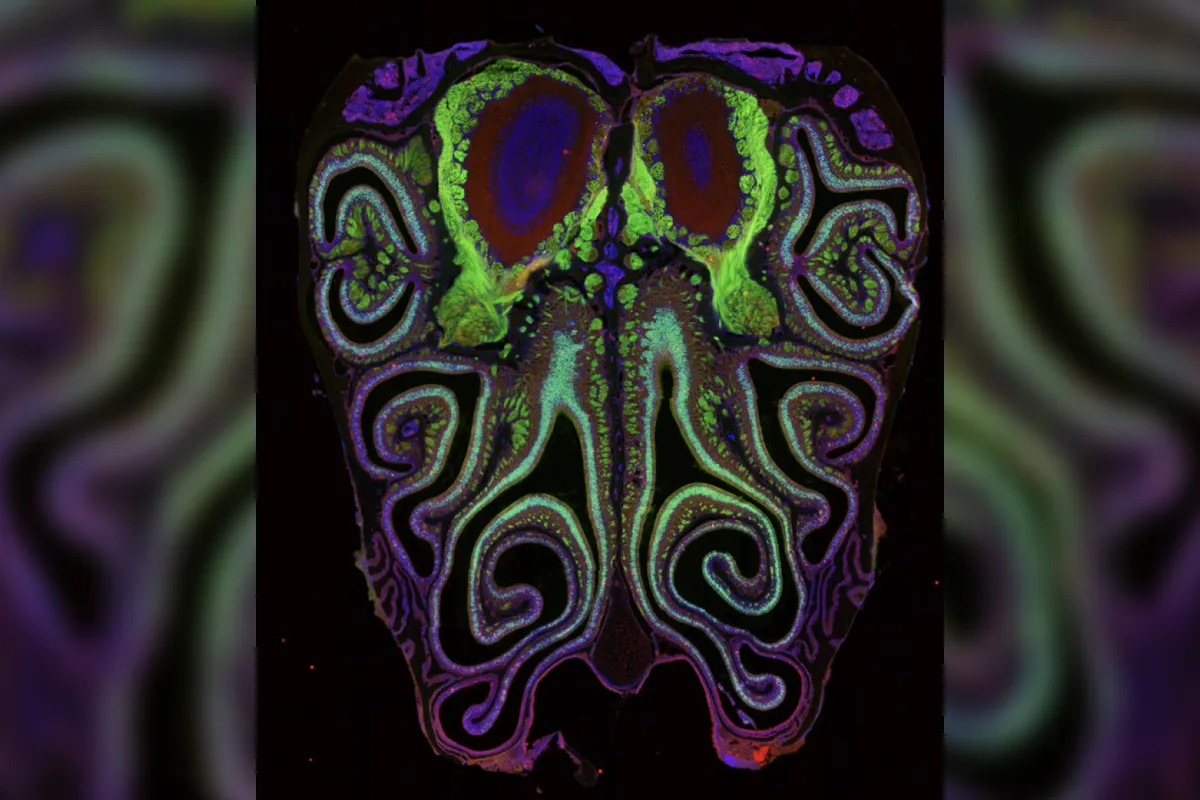
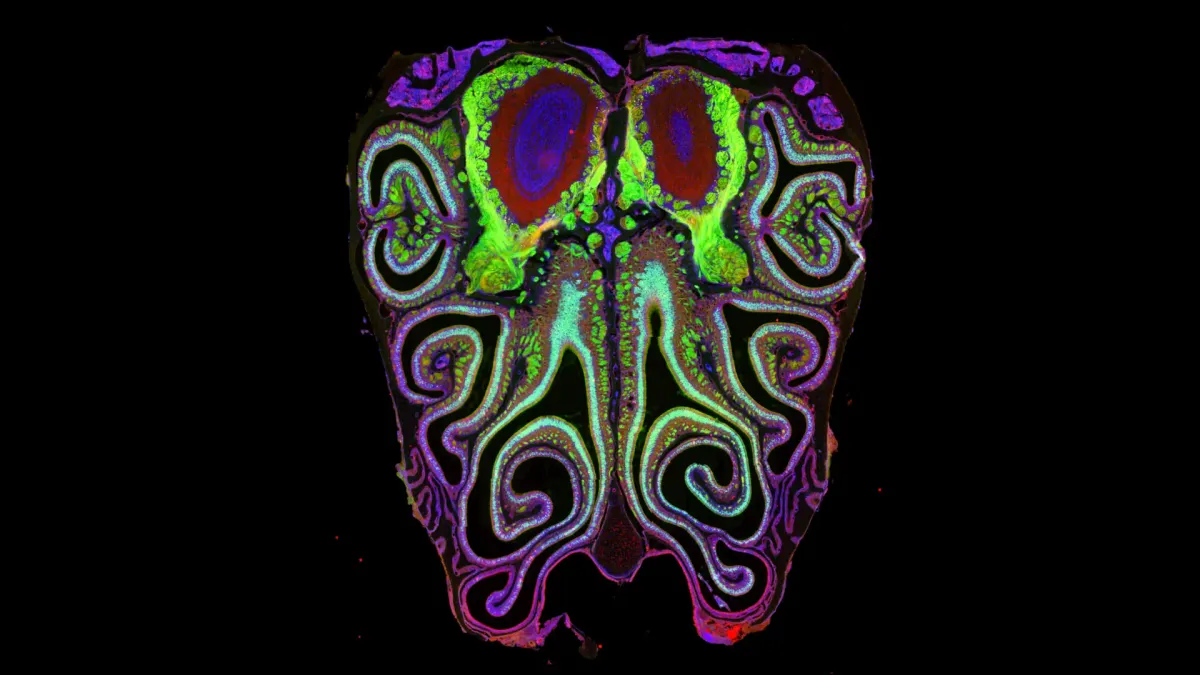
Professor Sandeep (Robert) Datta and his team, using mice (because they have a lot more smell receptors than us, bless their tiny noses), mapped over a thousand types of smell receptors. What they found wasn't the random jumble everyone expected. Instead, these neuron-carrying receptors are arranged in precise, horizontal stripes, grouped by type, running top to bottom inside the nose.
We're a new kind of news feed.
Regular news is designed to drain you. We're a non-profit built to restore you. Every story we publish is scored for impact, progress, and hope.
Start Your News Detox"Our results bring order to a system that was previously thought to lack order," Datta noted, probably with a satisfied sigh. This isn't just a neat party trick; it fundamentally changes how we understand olfaction. Even wilder, this newly discovered nasal map perfectly mirrors the maps found in the brain's olfactory bulb. It’s like finding a secret highway from your nostrils directly to your brain's processing center.
This groundbreaking work, published in Cell, solves a long-standing sensory puzzle. For context, human color vision relies on a measly three receptor types. Mice, meanwhile, boast 20 million olfactory neurons, each with one of over a thousand receptor types. It's an intricate, molecular symphony happening right under our... well, over our upper lip.
Building the Scent Superhighway
How does this incredibly precise system build itself? The team dug into that too. They found a molecule called retinoic acid, which acts like a tiny biological GPS, guiding neurons to activate the correct smell receptor based on their position. Mess with the acid levels, and the whole map shifts. It's development achieving a feat of organization that almost seems impossible.
This isn't just academic curiosity. Loss of smell, often dismissed as a minor inconvenience, profoundly impacts safety (can't smell gas), nutrition (food tastes like cardboard), and mental health. There are currently few effective treatments.
"We cannot fix smell without understanding how it works on a basic level," Datta explained. Now, with this map in hand, scientists can start exploring new frontiers: stem cell therapies, brain-computer interfaces, anything to restore a sense that connects us so deeply to memory and the world around us. Because nobody wants to live in a world where bacon doesn't smell like bacon.