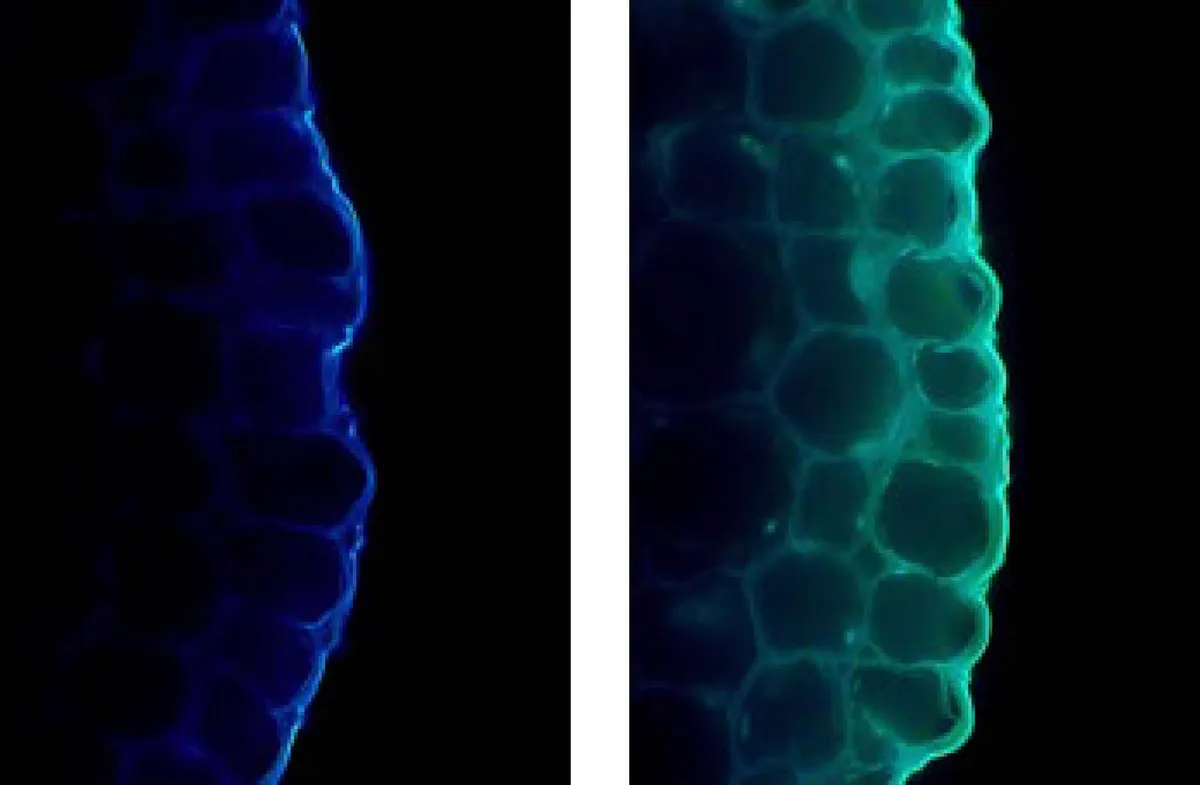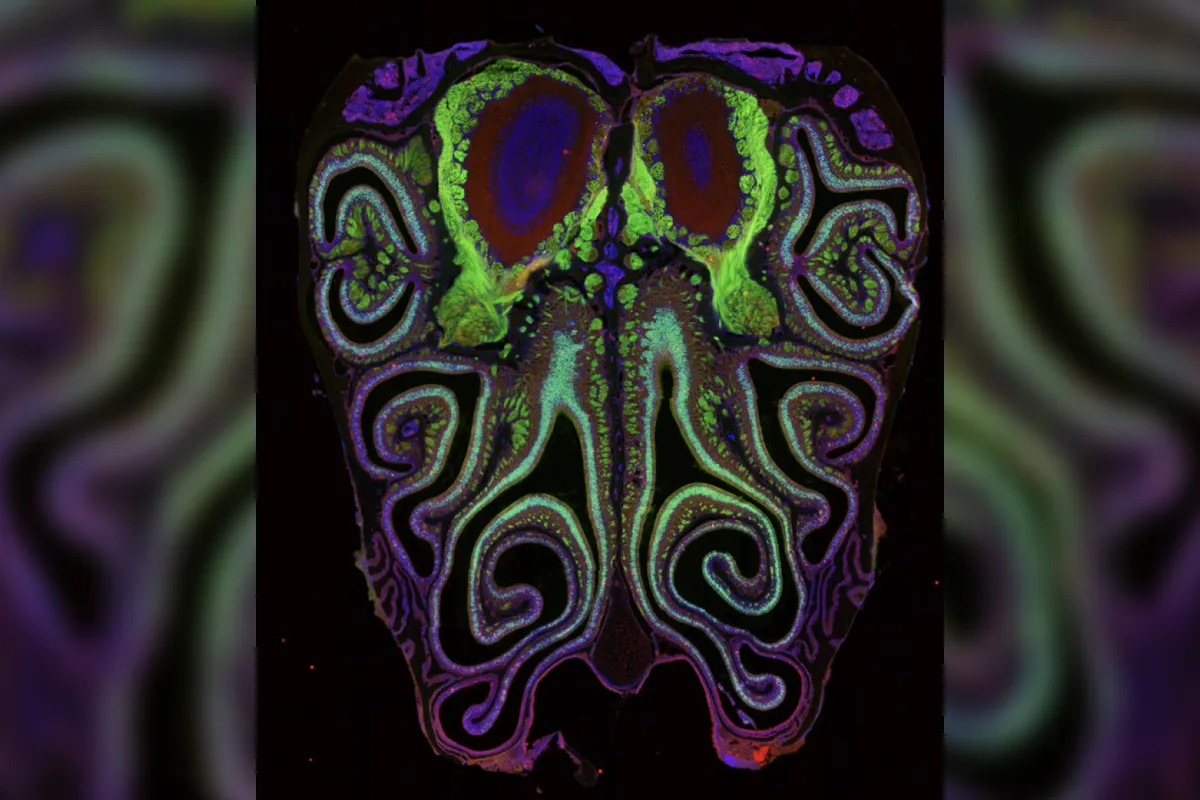
Scientists have created the first detailed "smell map" of odor sensors in the mouse nose. This new research challenges a long-held belief that these sensors were arranged randomly.
Mapping the Mouse Nose
For a long time, how the nose's odor detectors were arranged was a mystery. Other sensory organs, like those for touch, sight, and sound, have specific patterns. For example, hearing a certain sound frequency activates precise cells in the inner ear. Scientists thought the nose was different, believing its sensors were just in broad, unorganized zones.
Sandeep Robert Datta, a neurobiologist at Harvard Medical School, noted that the general idea was that "things are super random, and you can’t make any predictions."
We're a new kind of news feed.
Regular news is designed to drain you. We're a non-profit built to restore you. Every story we publish is scored for impact, progress, and hope.
Start Your News DetoxTwo new studies, published in Cell, now show a highly organized smell system in mice. Datta and his team mapped over 1,100 types of odor receptors in the mouse nose. Another team created a similar map and an atlas of how these receptors connect to the brain.
This work changes previous ideas about smell. It could help researchers create new treatments for people who have lost their sense of smell, a problem that Covid-19 has made more common. Datta explained that restoring smell is important for pleasure, safety, and psychological well-being. He added that without understanding this map, developing new treatments would be difficult.
To map the receptors, Datta's team looked at about five million individual nerve cells from the noses of hundreds of mice. They used advanced genetic techniques to find where different smell receptors were located. Their analysis showed that neurons with similar receptor types are arranged in tight horizontal bands from the top to the bottom of the nose.
The other research team mapped where certain genes created different olfactory receptors in mouse nose tissue and the brain area that receives odor information. Both groups found similar maps that were very consistent across different mice. The brain map also looked like the nose map.
Catherine Dulac, a neuroscientist at Harvard University and co-author of the atlas study, said that this comprehensive understanding is essential to know how we process scent.
Datta’s team also found that a molecule called retinoic acid helps create this stripe pattern. It controls gene activity and was present in a gradient across the nose, guiding which neurons would express which type of smell receptor.
What This Means for Humans
Humans have about 400 different types of odor receptors. This doesn't mean our sense of smell is worse than mice, which have more variety.
Joel Mainland, an olfactory neuroscientist not involved in the studies, said this work "nails it" and changes how people think about the olfactory system. Alyssa Brewer, another neuroscientist, agreed, calling the work a "beautiful resolution" to a long-standing question.
Researchers don't know if human smell receptors are organized the same way as in mice because they haven't been mapped yet. However, Datta believes humans might have a similar system and is now working to find out.
Deep Dive & References
- Two Studies on Olfactory System - Cell, 2026
- Atlas of Olfactory Receptors - Cell, 2026
- Human Olfactory Receptors - PLoS ONE, 2014