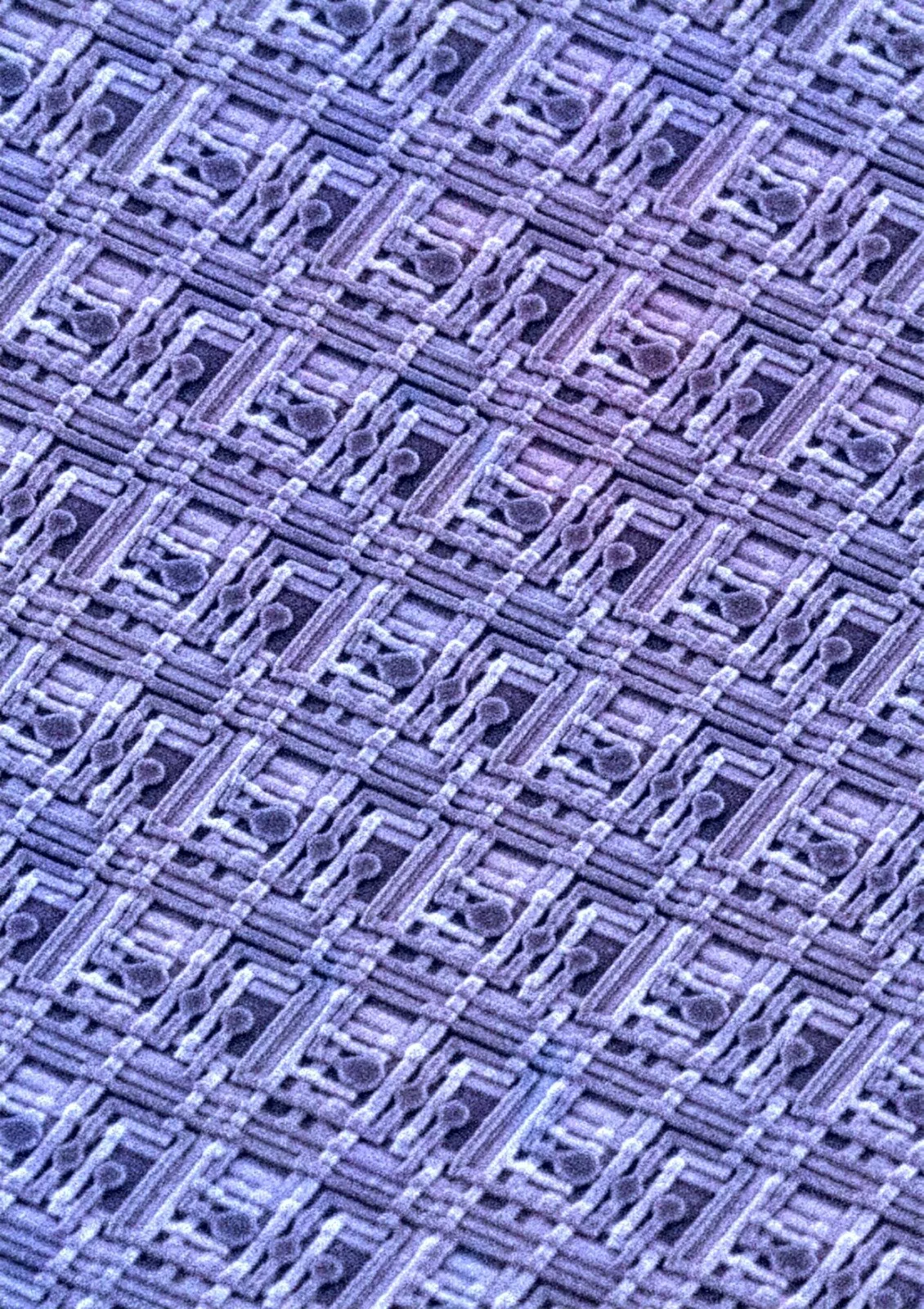
Quantum computers promise to solve problems that would make today's supercomputers choke. But there's a catch: they need to run almost perfectly, with error rates so low that the system doesn't collapse under its own noise. For years, scientists have chased one particular material that could make this possible—a topological superconductor, something that combines two usually incompatible properties in a way that could shield quantum information from interference.
The problem is that making these materials has been brutally difficult. It's required elaborate fabrication tricks and careful coaxing of atoms into just the right arrangement. Now researchers from the University of Chicago and West Virginia University have found something simpler: a small change in chemistry that does most of the work for you.
The Dial That Changes Everything
Haoran Lin and his team at UChicago's Pritzker School of Molecular Engineering discovered that by adjusting the ratio of just two elements—tellurium and selenium—they could push a material through multiple quantum phases, landing precisely on the topological superconducting state that researchers have been hunting for. It's like tuning a dial. Too much correlation between electrons and they freeze in place, useless. Too little and the material loses its special properties. But at exactly the right balance, something remarkable happens.
We're a new kind of news feed.
Regular news is designed to drain you. We're a non-profit built to restore you. Every story we publish is scored for impact, progress, and hope.
Start Your News Detox"We can tune this correlation effect like a dial," Lin explained. "At just the right level, you get a topological superconductor."
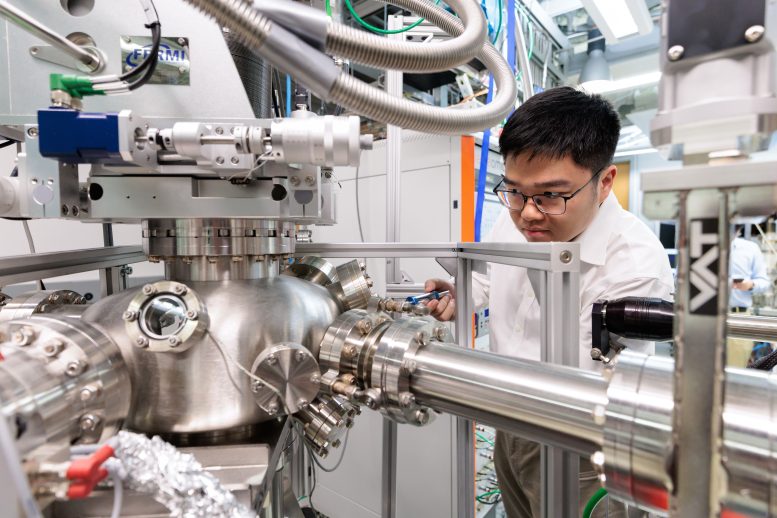
What makes this breakthrough practical is that the team was working with ultrathin films rather than bulk crystals. This matters more than it sounds. Thin films are easier to control, easier to integrate into actual devices, and crucially, they work at higher temperatures than competing approaches—up to 13 Kelvin instead of around 1 Kelvin. That might not sound warm, but it means you can cool them with standard liquid helium rather than exotic equipment that costs a fortune to run.
The discovery opens a new path for designing quantum materials from first principles. Instead of hunting for rare natural materials or inventing complex fabrication processes, researchers can now think about composition as a tunable parameter. Shuolong Yang, the senior researcher on the project, sees this as a tool for the next phase of quantum engineering: "We've developed a powerful tool for designing the kind of materials that next-generation quantum computers will need."
Multiple research groups are already collaborating with Yang's team to take the next step—patterning these films and building actual quantum devices. The work suggests that the path to reliable quantum computers might be less about breakthrough discoveries and more about patient, systematic engineering. Sometimes the holy grail isn't hidden in complexity. Sometimes it's waiting in a simple chemical adjustment.