Black-Footed Cats Use Abandoned Burrows
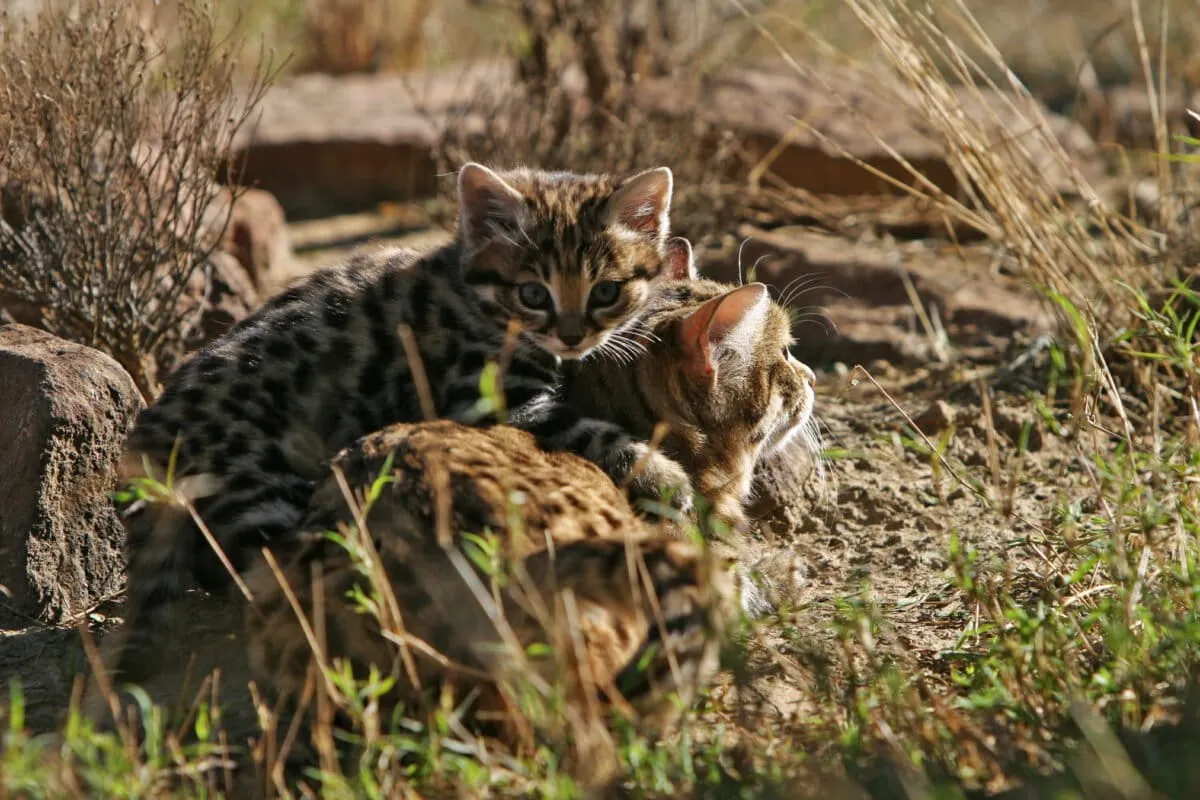
Africa's smallest wildcat, the black-footed cat (Felis nigripes), uses abandoned springhare burrows to raise its young. New research shows these cats rely on these dens for the first six to seven weeks of their kittens' lives. There are fewer than 10,000 black-footed cats left in the wild, and they are nocturnal, making them hard to study.
Researchers tracked five female black-footed cats with radio collars in southern Namibia from 2020-2021. They scanned over 50 burrows. The study found that 98% of the dens used by the cats were originally dug and then abandoned by springhares (Pedetes capensis). Springhares are rodents that look like a mix between a small kangaroo and a rabbit.
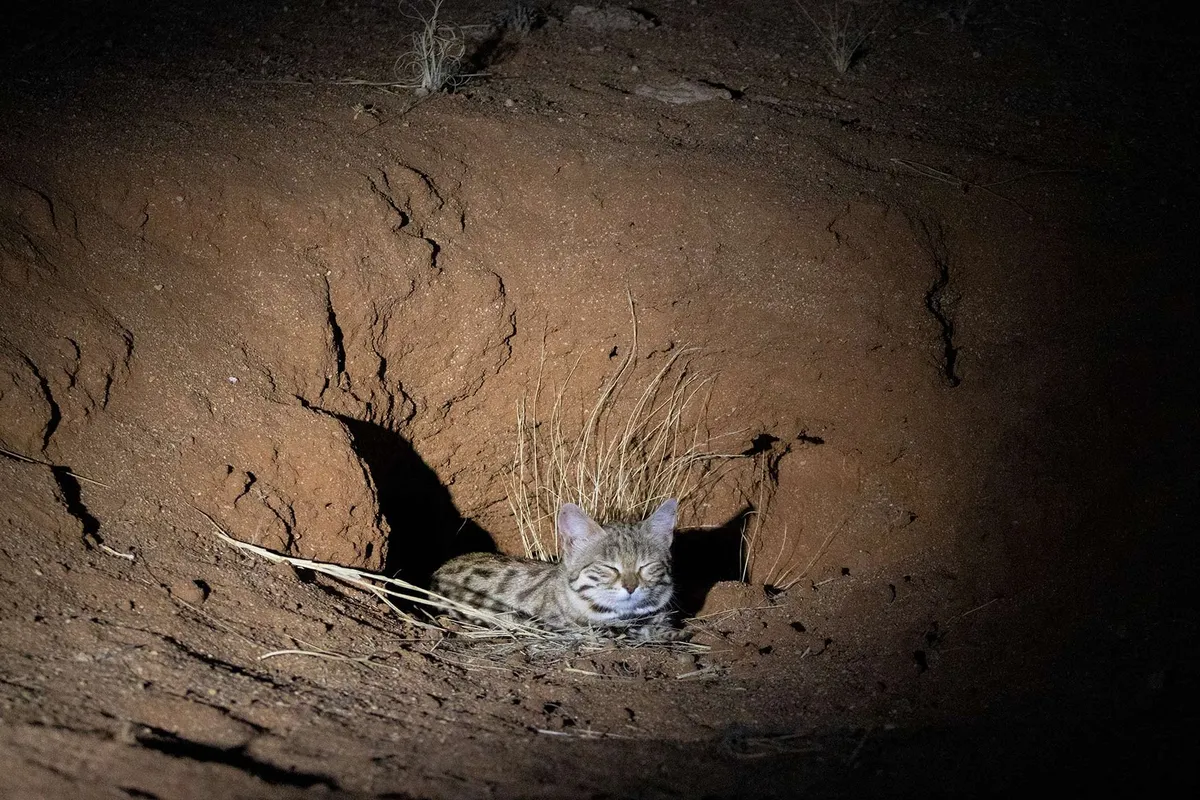
Harold Brindley, the lead author from the University of Cape Town, noted that while he can't prove black-footed cats would vanish without springhares, they would be much more vulnerable.
We're a new kind of news feed.
Regular news is designed to drain you. We're a non-profit built to restore you. Every story we publish is scored for impact, progress, and hope.
Start Your News DetoxHow Cats Choose Their Dens
The research team used laser-based technology to measure the tunnels and figure out which animals made them. Black-footed cats chose burrows with entrances between 10 and 27 centimeters (4 and 11 inches) wide. They avoided smaller rodent holes and larger burrows made by aardvarks or porcupines.
After about seven weeks, mother cats typically move their kittens from one den to another.