For over two centuries, scientists have been trying to make dolomite in a lab. Dolomite, that oddly abundant mineral found in ancient rocks (think Niagara Falls and the Italian Dolomites), just wouldn't grow for them. It was the geological equivalent of trying to bake a cake and having it consistently turn into soup. But now, after a lot of head-scratching and atomic-level simulations, researchers from the University of Michigan and Hokkaido University in Japan have finally cracked the code.
Turns out, nature's secret ingredient is a bit of a reset button. And it's wetter than you might think.
The Problem With Picky Atoms
The "Dolomite Problem" wasn't just some niche rock-hound issue. It was a fundamental puzzle. Dolomite has these very specific alternating layers of calcium and magnesium atoms. Most minerals are happy to just glom onto a crystal surface in an orderly fashion. Not dolomite. Its atoms are a bit… messy.
We're a new kind of news feed.
Regular news is designed to drain you. We're a non-profit built to restore you. Every story we publish is scored for impact, progress, and hope.
Start Your News DetoxAs the crystal tries to grow, calcium and magnesium often attach in the wrong spots, creating tiny, frustrating flaws. These imperfections act like speed bumps, halting further growth. We're talking slow. Like, 10 million years to form a single layer slow. Which, if you're trying to replicate it in a lab, is not ideal for hitting grant deadlines.
But here's the kicker: those out-of-place atoms are less stable. They're more prone to dissolving when exposed to water. So, in nature, things like rainfall or tidal changes come along, wash away the misaligned bits, and essentially clean the slate. It's like a geological do-over button. Over eons, this repeated cleansing allows new, properly arranged layers to form, building up those massive ancient deposits.
The Desktop Supercomputer Experiment
To prove this elegant theory, the team first had to simulate it. And simulating atomic interactions usually requires supercomputers working overtime. We're talking calculations that would make your laptop weep.
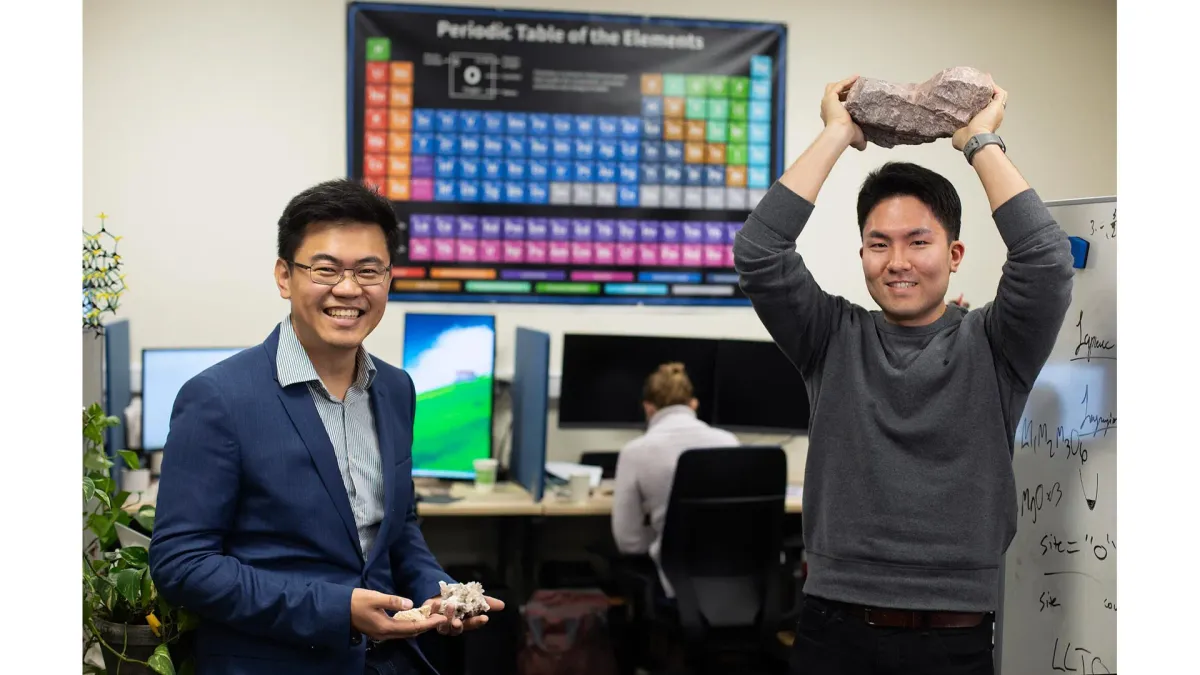
But the U-M team developed software that could predict atomic arrangements based on crystal symmetry, drastically cutting down the computational grunt work. Joonsoo Kim, the study's first author, put it best: a single atomic step that used to take 5,000 CPU hours on a supercomputer can now be done in 2 milliseconds on a desktop. Let that satisfying number sink in.
Then came the real-world (or rather, lab-world) proof. Natural dolomite formation often happens in environments with cycles of flooding and drying. So, the Hokkaido University team, led by Professor Yuki Kimura, decided to mimic this using a transmission electron microscope. Usually, an electron beam just images samples. But it can also split water, creating acid that dissolves crystals. Which, in this case, was exactly what they wanted.
They zapped a tiny dolomite crystal in a solution 4,000 times over two hours, repeatedly dissolving the defects as they formed. The result? The crystal grew to about 100 nanometers (about 300 layers of dolomite). Previous experiments had never managed more than five layers. That's like going from a single bite to a full, satisfying meal.
So, what does solving a 200-year-old rock mystery mean for the rest of us? Well, beyond finally putting the "Dolomite Problem" to bed, it offers a radical new approach to crystal growth. Instead of trying to grow materials agonizingly slowly to avoid defects, we can now grow them quickly and just… wash the mistakes away. This idea could transform how we make everything from semiconductors to solar panels and batteries. Because apparently, sometimes, the fastest way to perfection is a good rinse.