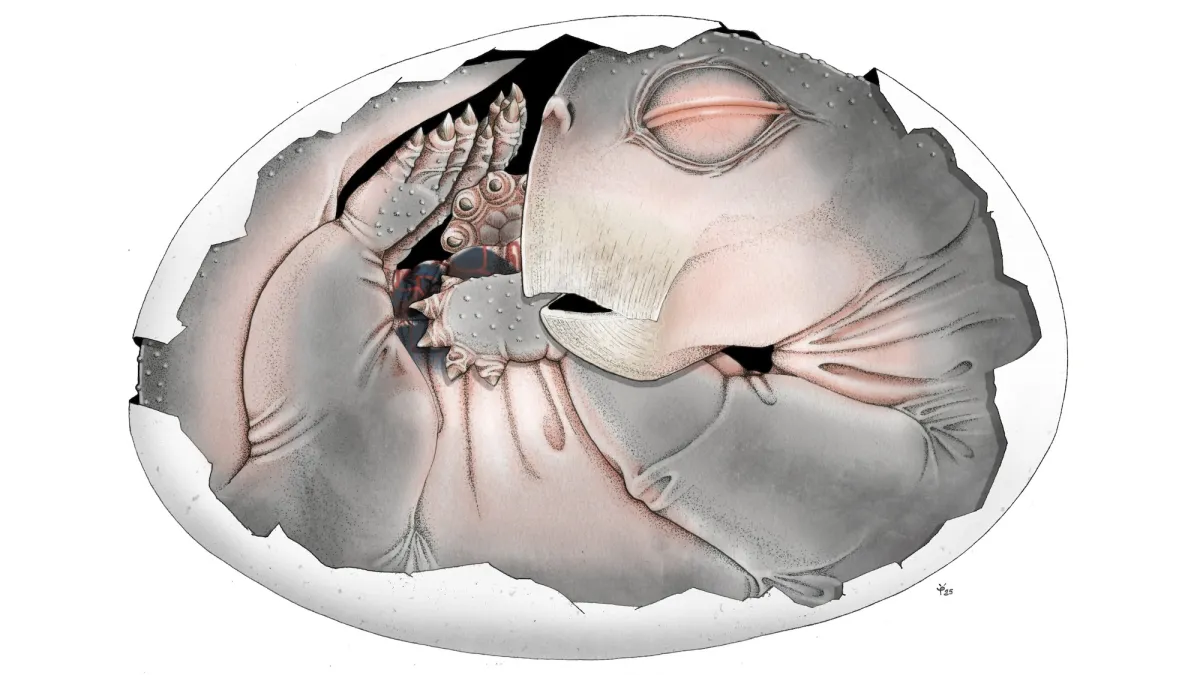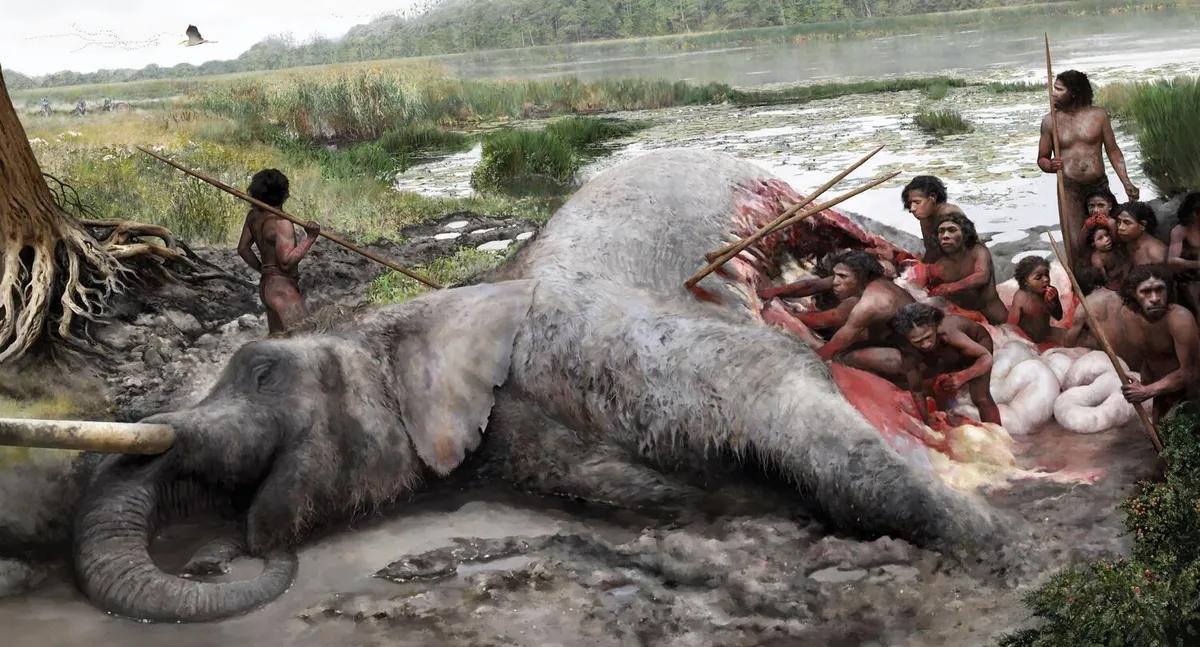
Researchers have finally settled a long-standing debate about Neanderthals hunting large animals in what is now Germany. A new study confirms that Neanderthals hunted and butchered a straight-tusked elephant 125,000 years ago. This finding challenges older ideas that viewed Neanderthals as simple scavengers.
Re-examining an Old Discovery
In 1948, amateur archaeologists found a 125,000-year-old elephant skeleton at a site called Lehringen. A nearly eight-foot-long wooden spear was lodged between its ribs. Since Neanderthals were the only humans in Europe at that time, this discovery suggested they hunted big game.
However, many researchers doubted this idea. The original excavation was poorly documented. The project leader, Alexander Rosenbrock, didn't have a camera and didn't sketch how the spear and skeleton were found. Some bones were even stolen. Rosenbrock also died before sharing his findings officially.
We're a new kind of news feed.
Regular news is designed to drain you. We're a non-profit built to restore you. Every story we publish is scored for impact, progress, and hope.
Start Your News DetoxBecause of these issues, some scientists thought the spear might not have been a hunting tool. They suggested it could have been used for digging or probing snow and just happened to be near the elephant remains.
New Evidence Confirms the Hunt
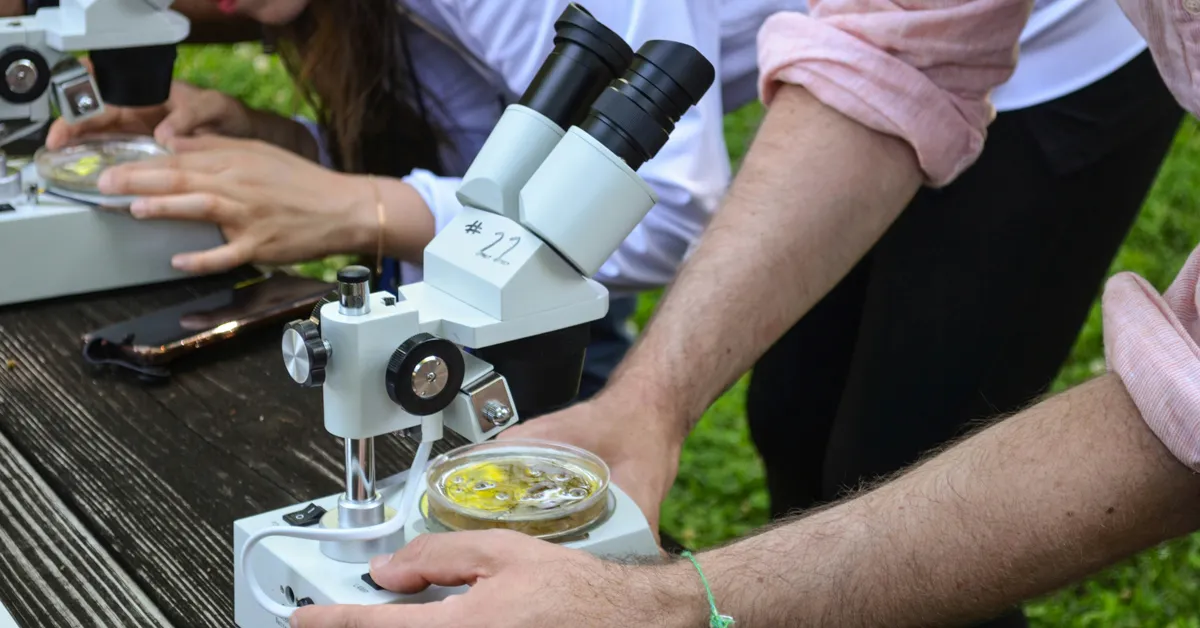
Archaeologist Ivo Verheijen from the University of Tübingen in Germany decided to re-examine the Lehringen finds. In 2025, he investigated the remains stored at the Schöningen Research Museum. He found a "truckload" of boxes containing the bones.
Even though the exact original positions of the spear and elephant remains are unknown, Verheijen's team found clear cut marks on the elephant's ribs and vertebrae. These marks show that Neanderthals butchered the animal. The cuts suggest they opened the chest cavity to reach organs, which were likely a valuable source of protein.

Analysis of the elephant's teeth showed it died around 30 years old, meaning Neanderthals hunted it in its prime. The animal was male and would have provided about 7,700 pounds of meat, organs, and fat. This amount could have fed many people for a long time.

Neanderthals Were Skilled Hunters
This new analysis, combined with the spear, offers the strongest proof yet of a successful Neanderthal elephant hunt. Britt Starkovich, an archaeologist not involved in the study, noted that Neanderthals "knew what they were doing." They understood which animals to hunt, where to find them, and how to carry out the attack. They also knew how to handle the massive butchering effort and the large amount of meat it would provide.
The team also found evidence that Neanderthals processed other animals at Lehringen. Marks on brown bear bones suggest they used the marrow. Marks on beaver remains indicate they collected meat and fur.
Thomas Terberger, a study co-author, stated that these finds provide crucial insight into Neanderthals. They show that Neanderthals hunted strategically with the same skill as modern humans 125,000 years ago.
Deep Dive & References: New analysis identifies cut marks on the bones of a straight-tusked elephant from Lehringen, Germany - Scientific Reports, 2026