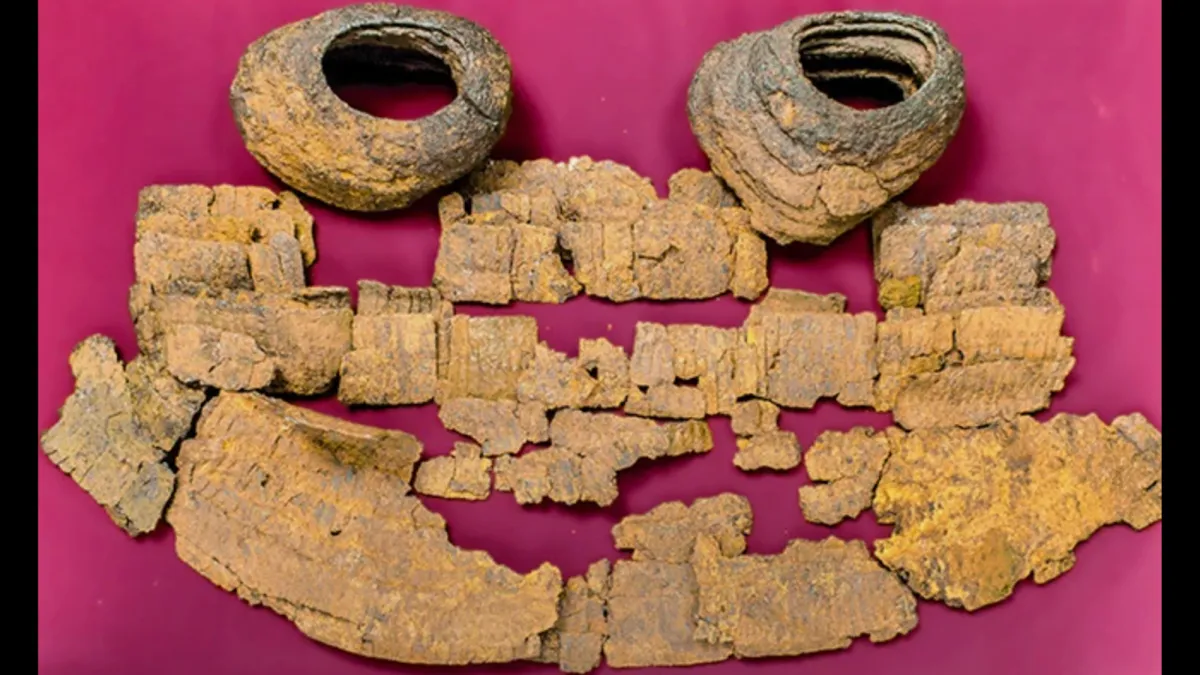
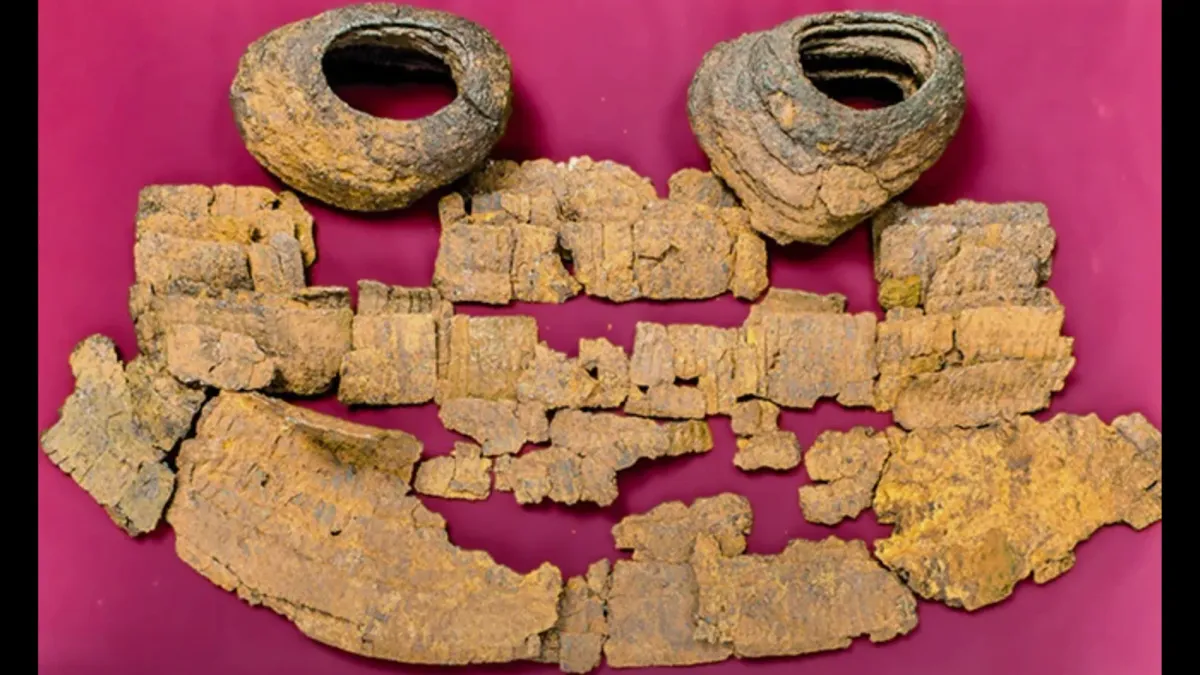
Turns out, even island nations aren't entirely islands when it comes to culture. Case in point: a suit of 1,400-year-old armor, unearthed nearly 70 years ago beneath one of Japan's most revered historical sites, has finally spilled its secrets. Researchers have now definitively traced its intricate craftsmanship back to the ancient Baekje Kingdom of Korea.
This isn't just about old metal; it's about a massive cultural exchange. Buddhism truly took root in Japan around the 6th century CE, thanks to monks from mainland China and, crucially, Korea. Few places embody this shift quite like the Asuka-dera Temple complex, about 23 miles southeast of Osaka. Established in the early 7th century, it was Japan's very first full-scale Buddhist temple.
Ancient texts, including Japan's second-oldest history, Nihon Shoki, always hinted that craftsmen and monks from the Baekje Kingdom helped build the temple. Baekje was one of the "Three Kingdoms of Korea," flourishing until 660 CE. But proving that connection with a suit of armor found in 1957? That took some serious technological upgrades.
We're a new kind of news feed.
Regular news is designed to drain you. We're a non-profit built to restore you. Every story we publish is scored for impact, progress, and hope.
Start Your News DetoxThe Ironclad Evidence
Archaeologists from the Nara National Research Institute for Cultural Properties first found the armor fragments under a pagoda's foundation. While it looked like Baekje armor, 1950s tech couldn't give a definitive answer. Fast forward to 2015, and suddenly X-ray and 3D imaging became standard archaeological tools.
These modern marvels confirmed it: like Baekje armor, the Asuka-dera pieces were made by interlacing small iron plates with cords into a "lamellar structure." This design offered excellent protection without sacrificing flexibility, especially since the torso, upper arm, and shoulder sections were all connected into one shirt-like piece. Which, if you think about it, is both impressive and slightly terrifying.

Further evidence emerged from the Gongsanseong Fortress, a Baekje compound about 50 miles southeast of Seoul, where similar armor was excavated between 2011 and 2014. Inscriptions on those plates dated to 645 CE — right around the time Asuka-dera was being built. Archaeologist Takehiro Hasumura confirmed the overlaps after examining the Gongsanseong specimens firsthand in 2024.
By the 7th century, elite Japanese warriors were adopting keiko-style armor, which, surprise, also featured those interwoven, flexible lamellar iron scales. It's now clearer than ever that Baekje artisans, specifically armorers, traveled alongside Buddhist monks and emissaries. Because apparently, cultural diffusion isn't just about ideas; sometimes it comes with full-body protection. Expect more discoveries as archaeologists continue to dig into these fascinating cross-cultural ancient connections.